




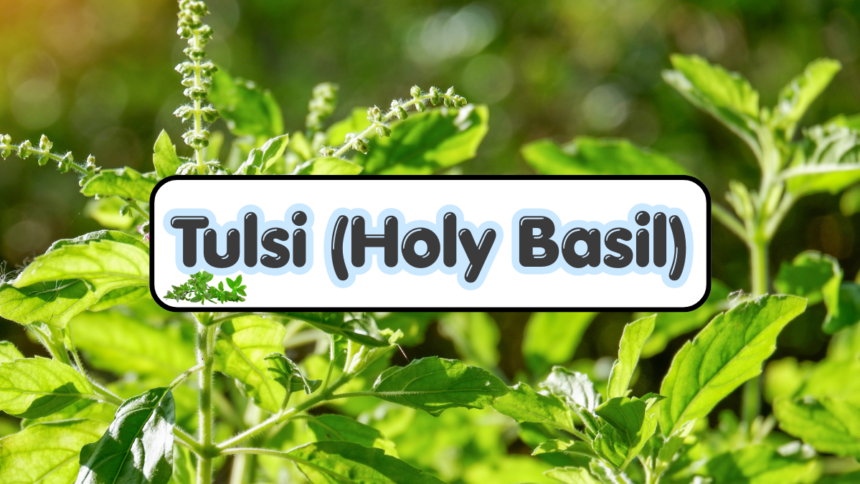
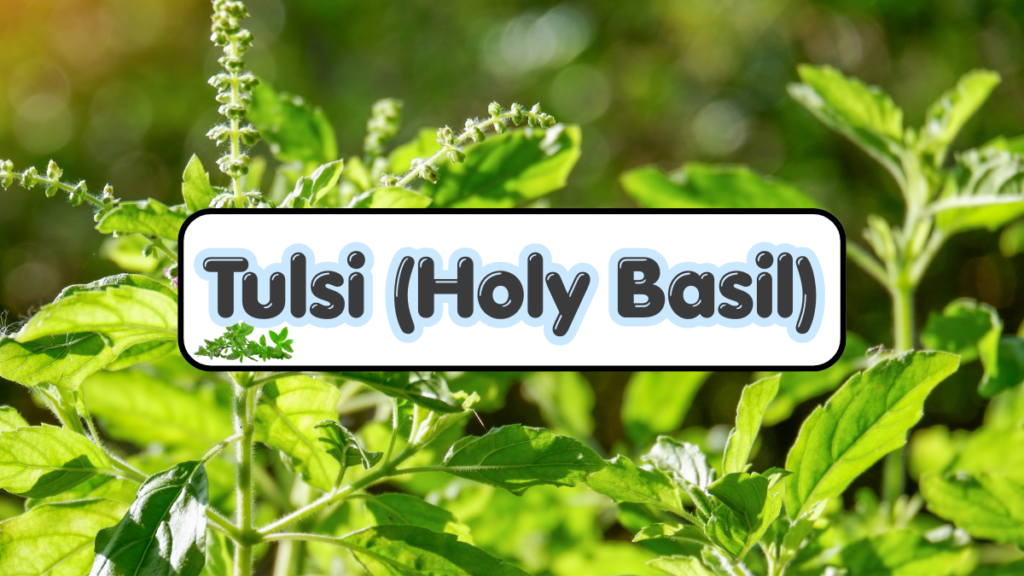
Tulsi (Holy Basil)
A comprehensive, evidence-informed guide to Tulsi (Holy Basil) exploring the pharmacology, clinical research, and practical wisdom behind Ayurveda’s most revered medicinal plant
In virtually every traditional Hindu home across India, a Tulsi plant occupies a place of honour typically in a clay pot on the verandah, in a dedicated courtyard planter, or beside the entrance, tended daily, watered with reverence, and incorporated into both morning prayers and the family medicine cabinet with an ease that speaks to centuries of intimate, practical relationship. Children are given Tulsi leaves when fevers appear. Elders drink Tulsi tea through winter. Weddings include Tulsi. Funerals include Tulsi. The plant is woven into the rhythm of Indian life in a way that no other herb not even the celebrated ashwagandha or the nutritionally remarkable amla quite matches.
For years, this reverence was easily dismissed by sceptics as purely religious sentiment, a cultural practice that happened to involve a pleasant-smelling plant. Then the pharmacologists got involved. And what they found, examining Tulsi (Holy Basil) through the rigorous lens of molecular biology, randomised controlled trials, and pharmacokinetic analysis, was something unusual: a plant whose traditional health claims held up to scientific scrutiny with remarkable consistency across multiple biological domains. Not in every application, not always with the clinical effect sizes that enthusiastic advocates claimed, but with a breadth and depth of pharmacological activity that has now made Tulsi (Holy Basil) one of the most extensively studied medicinal plants in scientific literature with over a thousand published research papers examining its chemistry, mechanisms, and clinical applications.
This is the comprehensive guide that both the traditional reverence and the modern research support.
Tulsi (Holy Basil): Botanical Identity and Traditional Classification
Tulsi (Holy Basil) Ocimum tenuiflorum, also known by its earlier synonym Ocimum sanctum is a member of the Lamiaceae (mint) family, related to culinary basil (Ocimum basilicum) but pharmacologically and aromatically distinct from it. Three primary varieties are cultivated and used medicinally in India, each with somewhat different phytochemical profiles: Rama Tulsi (green leaves, milder flavour, most commonly found in household settings), Krishna Tulsi (purple-tinged leaves, more pungent and considered medicinally more potent in classical Ayurvedic practice), and Vana Tulsi (forest basil, a wilder variety considered the most potent of the three in some traditional formulations).
In Ayurvedic classification, Tulsi (Holy Basil) is categorised as having Katu (pungent) and Tikta (bitter) Rasa (taste), Laghu (light) and Ruksha (dry) Guna (qualities), Ushna Virya (heating potency), and Katu Vipaka (pungent post-digestive effect) a combination that makes it primarily Kapha and Vata reducing, with appropriate caution for excess Pitta in some individuals at high doses, an important caveat for the clinical application of Tulsi (Holy Basil) in individuals with significant Pitta dominance.
The herb is classified in Ayurveda as a Rasayana (rejuvenative), an adaptogen, and specifically as one of the most important herbs for Pranavaha Srotas (the respiratory channel system) a traditional classification that, as subsequent sections will show, is supported by modern pharmacological research with remarkable consistency.
The Phytochemistry of Tulsi (Holy Basil): What Creates the Medicine
Understanding what makes Tulsi (Holy Basil) pharmacologically active requires familiarity with its primary bioactive compounds, each contributing distinct biological activity to the herb’s overall therapeutic profile.
Eugenol the compound responsible for much of Tulsi (Holy Basil)’s characteristic clove-like aroma is present in concentrations of 40–70% in the essential oil of most varieties and has been extensively studied for its anti-inflammatory (COX-2 inhibitory), antimicrobial, antifungal, analgesic, and antioxidant properties. Eugenol is the same compound that gives cloves their medicinal properties, and its concentration in Tulsi (Holy Basil) makes the herb one of the richest natural food-grade sources of this pharmacologically active phenylpropanoid.
Rosmarinic acid a potent polyphenolic antioxidant and anti-inflammatory compound also found in rosemary and other Lamiaceae members is a significant constituent of Tulsi (Holy Basil) with documented anti-inflammatory, antiallergic, and neuroprotective properties, relevant to several of the clinical applications discussed below.
Ursolic acid, a pentacyclic triterpenoid present in the leaves of Tulsi (Holy Basil), has demonstrated anti-inflammatory, antitumour, hepatoprotective, and antimicrobial activities in research models, contributing to the herb’s hepatoprotective and general anti-inflammatory applications.
Ocimumosides A and B, flavonoids specific to Tulsi (Holy Basil), are among the compounds most directly studied in the context of the herb’s documented adaptogenic activity specifically their role in normalising stress-induced corticosterone changes and modulating neurotransmitter levels relevant to stress adaptation.
Beta-caryophyllene, a sesquiterpene present in the essential oil, demonstrates significant anti-inflammatory activity through CB2 (cannabinoid receptor type 2) agonism an anti-inflammatory mechanism that is both pharmacologically distinct from and complementary to eugenol’s COX-2 inhibitory action, providing a mechanistic basis for the synergistic anti-inflammatory effects documented with whole Tulsi (Holy Basil) preparations compared to isolated compounds.
This phytochemical complexity multiple distinct bioactive compounds operating through multiple complementary mechanisms is precisely why whole-plant Tulsi (Holy Basil) preparations often outperform isolated single compounds in research settings, and why the clinical research on Tulsi (Holy Basil) is best interpreted through the lens of this multi-compound, multi-mechanism pharmacological profile.
Tulsi (Holy Basil) as an Adaptogen: The Stress Research
The adaptogenic classification of Tulsi (Holy Basil) its capacity to normalise physiological responses to stress, support HPA axis regulation, and build stress resilience is one of its most clinically significant and most extensively researched properties, and one that directly complements the ashwagandha research discussed in an earlier article in this series.
A landmark clinical trial by Bhattacharyya et al. published in the Journal of Ayurveda and Integrative Medicine examined standardised Tulsi (Holy Basil) leaf extract in patients with generalised anxiety disorder, finding significant reductions in anxiety scores, cognitive impairment, and depressive symptoms, alongside improvements in stress-related psychosomatic symptoms including sleep disturbance and sexual dysfunction a broad-spectrum stress adaptation profile consistent with the adaptogenic classification.
A separate randomised, placebo-controlled trial published in the Journal of Ayurveda and Integrative Medicine specifically examined Tulsi (Holy Basil) in patients with metabolic syndrome-related stress parameters, finding significant improvements in fasting blood glucose, total cholesterol, triglycerides, and blood pressure alongside reductions in perceived stress an unusually comprehensive set of stress-related metabolic improvements from a single herbal intervention.
The proposed mechanisms for Tulsi (Holy Basil)’s adaptogenic activity include modulation of cortisol secretion through hypothalamic-pituitary effects, normalisation of monoamine neurotransmitter levels (dopamine, serotonin, and norepinephrine) in stress-relevant brain regions, and the direct anti-inflammatory activity that reduces the chronic neuroinflammatory burden that both drives and perpetuates chronic stress reactivity, paralleling mechanisms discussed extensively in the gut-brain connection and anxiety articles in this series.
Tulsi (Holy Basil) for Respiratory Health: The Strongest Evidence Domain
Respiratory health applications represent arguably the domain where the evidence base for Tulsi (Holy Basil) is both most traditionally prominent and most convincingly supported by modern research, extending from antimicrobial activity directly relevant to respiratory infection management through bronchodilatory, mucolytic, and anti-inflammatory mechanisms directly relevant to chronic respiratory conditions.
The antimicrobial evidence for Tulsi (Holy Basil) against respiratory pathogens is substantial: research has documented significant antibacterial activity against Streptococcus pneumoniae, Haemophilus influenzae, and Klebsiella pneumoniae three of the most clinically significant bacterial respiratory pathogens alongside antiviral activity against influenza A (H1N1) and, in research stimulated by the COVID-19 pandemic, preliminary evidence of activity against SARS-CoV-2 spike protein binding through molecular docking studies, though this latter finding remains computational rather than clinical and should be interpreted accordingly.
The bronchodilatory properties of Tulsi (Holy Basil), attributed primarily to eugenol’s relaxant effects on bronchial smooth muscle, have been documented in animal models and supported by clinical observations across multiple traditional medicine systems. A clinical study examining Tulsi (Holy Basil) in asthma patients found significant improvements in peak expiratory flow rate a direct measure of airway opening compared to baseline and placebo, providing clinical support for this traditionally emphasised bronchodilatory application.
For the air pollution-exposed urban Indian population discussed in an earlier article in this series on air pollution and lung health, Tulsi (Holy Basil)’s combination of antimicrobial, anti-inflammatory, and bronchodilatory properties makes it particularly relevant and the additional finding that growing Tulsi (Holy Basil) plants actively absorbs PM2.5 particulate matter from ambient air (documented in research by Singh et al., 2022) adds an environmental dimension to the herb’s respiratory health relevance that extends beyond its direct pharmacological properties.
Tulsi (Holy Basil) for Blood Sugar Management
The metabolic and blood sugar-related properties of Tulsi (Holy Basil) deserve specific attention as a distinct evidence domain, contributing to the comprehensive metabolic support profile established across the diabetes management articles in this series.
Research examining Tulsi (Holy Basil) in Type 2 diabetes patients, most notably a clinical trial by Agrawal et al. published in the Journal of Clinical Biochemistry and Nutrition, found significant reductions in fasting blood glucose (21% reduction) and post-meal blood glucose (15% reduction) compared to placebo over a three-month period, with proposed mechanisms including alpha-glucosidase inhibitory activity (slowing carbohydrate digestion and glucose absorption), pancreatic beta-cell protective effects through antioxidant activity, and improvements in peripheral glucose utilisation through insulin-sensitising mechanisms.
The combination of blood sugar management properties alongside the stress-reducing adaptogenic properties given chronic stress’s well-documented contribution to insulin resistance through cortisol-mediated mechanisms discussed in earlier articles makes Tulsi (Holy Basil) particularly well-positioned as a comprehensive metabolic support herb, addressing both the metabolic and the stress-insulin resistance dimensions of blood sugar dysregulation through a single, culturally accessible daily practice.
Tulsi (Holy Basil) for Immune Function and Anti-Inflammatory Support
The immunomodulatory properties of Tulsi (Holy Basil) represent another well-documented evidence domain, with multiple clinical and preclinical studies examining the herb’s effects on both innate and adaptive immune parameters.
A randomised, double-blind, placebo-controlled trial by Mondal et al. published in the Journal of Ethnopharmacology examined Tulsi (Holy Basil) extract supplementation in healthy adults over four weeks, finding significant increases in natural killer cell activity, T-helper cell counts (CD4+), and cytotoxic T-cell counts (CD8+) compared to placebo directly relevant immune parameter improvements suggesting meaningful enhancement of both innate and adaptive immune surveillance through Tulsi (Holy Basil) supplementation.
The anti-inflammatory mechanisms of Tulsi (Holy Basil) operating through COX-2 inhibition by eugenol, NF-κB suppression by ursolic acid, and complement system modulation by rosmarinic acid provide a multi-pathway anti-inflammatory profile that explains the herb’s traditional use across a wide range of inflammatory conditions, from respiratory to metabolic to dermatological, and that positions Tulsi (Holy Basil) as a broadly relevant anti-inflammatory herb whose daily inclusion in diet or tea provides consistent, low-level anti-inflammatory support across multiple biological domains simultaneously.
The Kadha Tradition: Tulsi (Holy Basil) in Compound Preparations
No discussion of Tulsi (Holy Basil) is complete without acknowledging the Kadha the traditional Ayurvedic decoction discussed in the traditional herbs article in this series where Tulsi (Holy Basil) typically serves as the foundational herb, combined with ginger, black pepper, cinnamon, and cloves in a preparation that combines synergistic bioactive compounds from multiple anti-inflammatory, antimicrobial, and adaptogenic botanical sources simultaneously.
The specific combination of Tulsi (Holy Basil) with black pepper is particularly pharmacologically relevant: piperine from black pepper inhibits CYP3A4 enzymes involved in the metabolism of multiple compounds, potentially extending the bioavailability of Tulsi (Holy Basil)’s active constituents and increasing their effective tissue exposure, a synergistic effect similar to the well-documented turmeric-black pepper bioavailability enhancement discussed in earlier articles in this series.
Practical Use: Forms, Dosing, and Daily Integration of Tulsi (Holy Basil)
Tulsi (Holy Basil) is available in multiple forms, each with different convenience, dose consistency, and potentially different phytochemical profiles depending on the processing method applied.
Fresh leaves remain the most traditionally revered and most phytochemically complete form five to ten fresh leaves consumed daily, either chewed directly, brewed as tea (steep in freshly boiled water for five minutes, do not boil the leaves, as prolonged high-heat exposure degrades volatile aromatic compounds including eugenol), or incorporated into chutneys and other culinary preparations. Consuming fresh Tulsi (Holy Basil) in the morning, often the first thing before breakfast in traditional practice, aligns with the classical Ayurvedic emphasis on beginning the day with Ojas-supporting and immune-activating practices.
Dried Tulsi (Holy Basil) tea, available as loose-leaf or tea bags from numerous Indian brands, provides convenient daily dosing with reasonable phytochemical preservation adequate for general health maintenance applications though potentially less pharmacologically complete than fresh preparations given the loss of volatile essential oil components during drying.
Standardised extract capsules typically standardised to ursolic acid, rosmarinic acid, or total phenolic content provide the most consistent dosing for therapeutic applications, particularly for the stress, blood sugar, and immune applications documented in clinical trials. Most clinical trials have used doses of 300mg to 600mg of standardised extract daily, typically taken in divided doses with meals. The MINSA and similar standardised extracts used in published research are available through reputable Indian Ayurvedic supplement manufacturers.
Tulsi (Holy Basil) essential oil is used primarily in aromatherapy and topical applications (always appropriately diluted in a carrier oil before skin contact) rather than internal consumption, as the concentration of essential oil compounds requires careful dilution for safe use.
Safety Profile, Contraindications, and Important Considerations
The safety profile of Tulsi (Holy Basil) at conventional dietary and supplemental doses is well-established through both traditional use data and clinical trial monitoring, with the herb widely considered safe for daily use by most healthy adults when used as a food or tea.
Several considerations warrant specific mention for Tulsi (Holy Basil) users. Anticoagulant interaction: eugenol has documented mild antiplatelet activity, suggesting that high-dose Tulsi (Holy Basil) supplementation alongside pharmaceutical anticoagulants (warfarin, aspirin, clopidogrel) warrants monitoring and medical coordination rather than combination without clinical oversight. Blood-sugar-lowering interaction: given the documented hypoglycaemic effects discussed above, individuals on diabetes medications should monitor blood glucose with increased frequency when adding therapeutic doses of Tulsi (Holy Basil), to avoid additive lowering effects requiring medication dose adjustment.
Thyroid caution: isolated research has suggested mild inhibitory effects on thyroid peroxidase activity at high doses, warranting caution for individuals with hypothyroidism, particularly those taking thyroid hormone replacement though this finding requires clinical significance confirmation and is unlikely to be relevant at typical dietary doses of five to ten leaves daily.
Pregnancy and lactation: while traditional Ayurvedic use includes some applications during pregnancy, the antiplatelet and potential uterotonic properties of high-dose Tulsi (Holy Basil) preparations warrant specific medical guidance before use beyond typical dietary amounts in pregnant women.
The Honest Bottom Line
Tulsi (Holy Basil) has earned its status as Queen of Herbs not through cultural myth alone, but through a convergence of three-thousand-year traditional wisdom and a modern research base that now spans over a thousand published studies. Its adaptogenic, antimicrobial, anti-inflammatory, bronchodilatory, immunomodulatory, and blood-sugar-lowering properties are each supported by meaningful clinical and pharmacological evidence. Its phytochemical complexity multiple bioactive compounds operating through multiple complementary mechanisms simultaneously produces a breadth of biological activity that makes it genuinely difficult to categorise and easy to underestimate if examined through the lens of single-mechanism pharmaceutical thinking.
Tulsi (Holy Basil) works best not as a dramatic intervention deployed in moments of acute illness, but as a daily constitutional practice a cup of tea in the morning, leaves added to food, a plant growing in a clay pot by the entrance whose cumulative, consistent presence in daily life builds the resilience, reduces the baseline inflammatory burden, and supports the stress-regulatory and respiratory systems that determine long-term health trajectory.
Your grandmother was right about the Tulsi plant. The science is now explaining exactly why.
Did this comprehensive guide to Tulsi (Holy Basil) give you a new appreciation for the plant that has been growing in Indian homes for millennia? Share it with someone who walks past their Tulsi plant every morning without quite knowing what it can do for them. Leave a comment with your own family’s Tulsi traditions, or subscribe to our newsletter for more deeply researched content honouring the intersection of Ayurvedic wisdom and modern pharmacological science.