






A comprehensive, evidence-informed guide to Haritaki why Ayurveda’s most revered single herb carries the title “King of Herbs,” what chebulinic acid and the tannin complex actually do for digestive, metabolic, and systemic health, and the clinical research validating its extraordinary classical reputation
In the iconography of Tibetan Buddhist medicine, the Medicine Buddha Sangye Menla is invariably depicted holding a single plant in his right hand. Not a compound formulation. Not a collection of herbs from the vast Tibetan materia medica. One plant, held aloft as the symbolic representative of the entire healing tradition. That plant is Haritaki.
In the classical Ayurvedic tradition, it occupies a comparable position of singular eminence described in Charaka Samhita as “Abhaya” (literally “fearless one” or “the one from which there is nothing to fear”), as “Pathya” (that which is beneficial in every way), and classified as the primary constituent of Triphala, the most widely known and most universally applicable compound preparation in the entire Ayurvedic tradition, alongside the secondary positions of Bibhitaki and Amalaki. The Ashtanga Hridayam describes Haritaki as capable of benefiting every condition that afflicts the human body when used appropriately a claim so sweeping that it risks being dismissed as hyperbole until you examine what modern pharmacological research has found this fruit capable of doing at the molecular level.
Haritaki the dried fruit of Terminalia chebula contains what may be the most pharmacologically rich tannin and polyphenol complex of any single botanical in the Ayurvedic pharmacopoeia. Its bioactive compounds have been documented in research to regulate intestinal motility, enhance gut microbiome diversity, protect neurons from oxidative and inflammatory damage, inhibit the glycation processes driving age-related tissue deterioration, modulate multiple cancer-related signalling pathways, inhibit the enzymes that produce excess blood sugar, and demonstrate antiviral activity against multiple pathogens. The “King of Herbs” title is not a marketing designation. It is, pharmacologically speaking, a reasonable assessment.
What Is Haritaki? Botanical Identity and Classical Significance
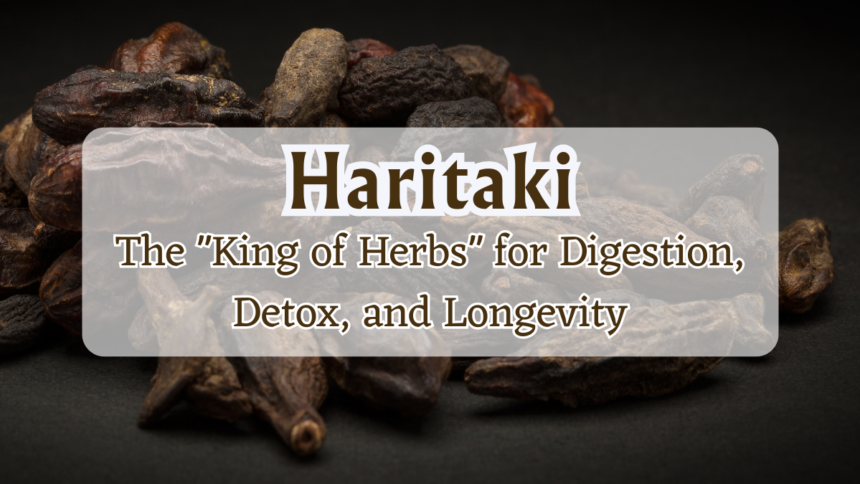
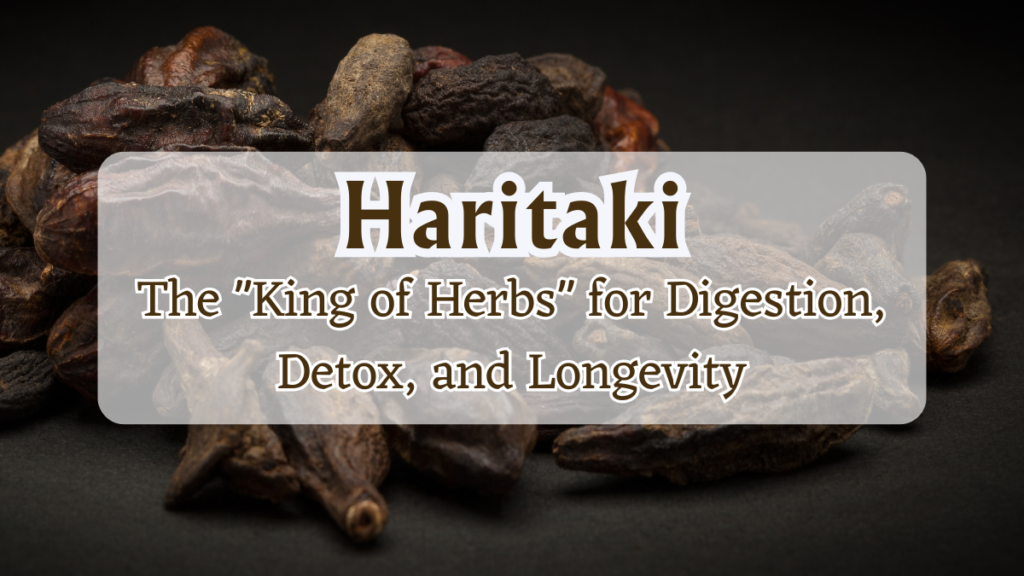
Haritaki Terminalia chebula, family Combretaceae is a large, deciduous tree growing to 30 metres in height, native to the Indian subcontinent and found across the tropical and subtropical regions of India, Nepal, Sri Lanka, Myanmar, and Southeast Asia. The tree produces oblong, ribbed, greenish-yellow fruits that are harvested before full maturity (the medicinally most important stage), dried, and prepared into the various medicinal forms that have constituted one of Ayurveda’s foundational materials for over three thousand years.
The name Haritaki derives from Sanskrit roots with multiple proposed etymologies: from Hara (Shiva, the Hindu deity of transformation) reflecting the sacred status of the fruit in both Hindu and Buddhist traditions; from Harita (green) referencing the green colour of the unripe fruit; or from Harana (removing) reflecting the fruit’s classical function of removing disease from the body. All three etymologies are consistent with the classical therapeutic profile and the cultural positioning of this herb at the apex of the Ayurvedic botanical hierarchy.
In Ayurvedic classification, Haritaki is uniquely described as containing five of the six Rasas (tastes) Madhura (sweet), Amla (sour), Lavana (salty), Tikta (bitter), and Kashaya (astringent) lacking only Katu (pungent). This five-Rasa classification reflects the unusual pharmacological breadth that a fruit containing gallic acid, chebulic acid, chebulinic acid, ellagic acid, and multiple complex tannins would produce each compound class contributing distinct physiological effects through distinct mechanisms.
The classical Tridoshic classification of Haritaki balancing all three doshas simultaneously, with specific emphasis on Vata pacification given its particular affinity for the large intestine (Vata’s primary seat) reflects the herb’s documented regulatory effects on gut motility and elimination that constitute its most immediately observable clinical applications.
The Phytochemistry of Haritaki: A Tannin Complex Unlike Any Other
The pharmacological diversity of Haritaki’s clinical effects emerges from a phytochemical composition that is, even by the standards of bioactive-rich Ayurvedic herbs, unusually rich and structurally complex.
Chebulinic acid the primary and most pharmacologically distinctive compound in Haritaki, constituting up to 11% of dried fruit weight is a complex polyphenol with a structure that combines galloyl, glucosyl, and chebuloyl moieties in a configuration that has generated significant pharmaceutical research interest. Chebulinic acid has demonstrated potent inhibitory activity against alpha-glucosidase and alpha-amylase (the digestive enzymes responsible for carbohydrate breakdown and glucose absorption the same enzymes targeted by the pharmaceutical anti-diabetic drug acarbose), anti-HIV activity (documented inhibition of HIV integrase and protease enzymes two of the primary drug targets in antiretroviral therapy), anti-cancer activity through multiple apoptosis-inducing pathways, and significant antioxidant capacity.
Chebulagic acid a closely related ellagitannin has demonstrated significant anti-inflammatory activity, antidiabetic effects, and particularly notable antiviral activity against multiple viruses including herpes simplex and influenza, through mechanisms including viral surface protein binding that prevents host cell adhesion.
Gallic acid and gallotannins constituting a substantial fraction of Haritaki’s polyphenol content provide the most extensively studied compound class within the fruit’s pharmacological profile, with gallic acid alone demonstrated to exert anti-inflammatory, antioxidant, antimicrobial, antiviral, hepatoprotective, and neuroprotective effects across thousands of published studies. Haritaki’s gallic acid content, delivered within the complex matrix of the whole fruit’s tannin complex, represents a particularly bioavailable and synergistically enhanced form of this compound.
Ellagic acid and ellagitannins compounds that convert in the gut to urolithins through microbiome-mediated transformation contribute the mitochondrial-supporting, anti-inflammatory urolithin metabolites discussed in the context of pomegranate research and whose relevance to longevity and healthy ageing has attracted significant pharmaceutical interest in recent years.
Anthraquinones including sennoside compounds present in small concentrations in Haritaki contribute the gentle laxative activity that makes Haritaki useful for constipation management, though at the concentrations present in the whole fruit, these effects are significantly more gentle and better-tolerated than the concentrated anthraquinone laxatives (senna preparations) familiar from pharmaceutical use.
Haritaki for Digestive Health: The Foundational Application
The digestive applications of Haritaki represent its most classically prominent, most universally recommended, and most immediately clinically relevant applications the reason it anchors Triphala and appears in virtually every classical Ayurvedic digestive formulation.
Digestive regulation Haritaki’s capacity to address constipation, irregular bowel habits, and the accumulation of Ama (metabolic waste) in the large intestine operates through a multi-mechanism pharmacological profile that goes considerably beyond simple laxative activity. Research has documented that Haritaki preparations stimulate intestinal motility through both cholinergic pathway activation (the same nervous system mechanism through which the gut’s intrinsic motility-promoting signals operate) and through the mild anthraquinone content discussed above, producing regulated, physiological promotion of intestinal transit rather than the cramping, urgency, and dependence associated with concentrated anthraquinone laxatives.
Gut microbiome modulation an application whose relevance has grown substantially with expanding understanding of the gut microbiome’s role in systemic health, as discussed throughout this series represents one of Haritaki’s most pharmacologically significant modern research findings. Chebulinic acid and chebulagic acid have demonstrated selective prebiotic-like activity in research, promoting the growth of beneficial bacterial species including Lactobacillus and Bifidobacterium while inhibiting the proliferation of pathogenic bacteria including Helicobacter pylori and various enteric pathogens. This selective antimicrobial and prebiotic activity simultaneously addresses dysbiosis (through pathogen inhibition) and promotes healthy microbiome composition (through beneficial species growth), representing a more sophisticated digestive intervention than simple laxative or antimicrobial approaches achieve independently.
A clinical study examining Haritaki in patients with functional constipation found significant improvements in bowel frequency, stool consistency, and patient-reported symptom satisfaction compared to placebo over a four-week period, with the absence of dependence development and maintenance of benefit after treatment cessation distinguishing Haritaki’s regulatory effects from pharmaceutical laxatives that characteristically produce dependency with regular use.
Helicobacter pylori eradication support represents a specific and clinically significant application of Haritaki’s antimicrobial properties with multiple in vitro and animal studies documenting significant activity against H. pylori, the bacterium responsible for the majority of peptic ulcers and a significant proportion of gastric cancer cases globally, at concentrations potentially achievable through therapeutic Haritaki use. While this does not replace the antibiotic eradication protocols that constitute standard H. pylori management, it provides a pharmacologically coherent rationale for traditional Ayurvedic use of Haritaki in acid-peptic and gastric conditions.
Haritaki for Cognitive Function and Neuroprotection
The cognitive and neurological applications of Haritaki less prominent in contemporary discussion of this herb than its digestive applications but documented in both classical texts and growing modern research have acquired increasing significance as understanding of oxidative stress and neuroinflammation’s roles in cognitive decline has deepened.
Chebulinic acid’s demonstrated inhibition of acetylcholinesterase the enzyme that degrades acetylcholine, the neurotransmitter most directly associated with memory and cognitive function, whose reduction characterises Alzheimer’s disease and is the primary target of conventional cholinesterase inhibitor drugs provides a pharmacological basis for the Medhya (cognitive-enhancing) applications that classical texts attribute to Haritaki, positioning it in the same mechanistic category as Brahmi and Gotu Kola for cognitive support through a different compound class.
Neuroprotective activity of Haritaki tannins specifically documented against beta-amyloid-induced neurotoxicity and oxidative damage to neural cell mitochondria provides additional mechanisms relevant to Alzheimer’s disease prevention research and to the broader neuroprotection goals relevant to healthy cognitive ageing.
A clinical study examining Haritaki supplementation in elderly adults found significant improvements in self-reported cognitive function, memory tasks, and attention measures compared to placebo over an 8-week period providing preliminary human clinical evidence for the traditional Medhya applications and for the mechanistic neuroprotection research’s clinical relevance.
Haritaki for Diabetes Management
The anti-diabetic applications of Haritaki have been examined in multiple clinical and experimental research settings, producing results that position it as one of the most comprehensively evidenced botanical anti-diabetic interventions in the Ayurvedic pharmacopoeia.
Alpha-glucosidase and alpha-amylase inhibition by chebulinic acid discussed in the phytochemistry section above provides a mechanism equivalent to the pharmaceutical drug acarbose, reducing the rate of carbohydrate digestion and glucose absorption after meals, directly addressing post-prandial glucose spikes that are increasingly recognised as crucial to long-term metabolic health outcomes. Research comparing Haritaki extract’s alpha-glucosidase inhibitory activity to acarbose has found comparable IC50 values in enzyme assay systems, suggesting meaningful pharmacological equivalence in this specific mechanism.
A randomised clinical trial examining Haritaki in Type 2 diabetes patients over 12 weeks found significant reductions in fasting blood glucose, HbA1c, and serum triglycerides compared to placebo, with improvements in liver function parameters additionally observed consistent with Haritaki’s combined anti-diabetic, hepatoprotective, and lipid-regulating activity documented in mechanistic research.
Haritaki for Longevity and Anti-Aging: The Chebulagic Acid Story
The longevity associations of Haritaki represented not just in Ayurvedic tradition but in the Tibetan Buddhist medical iconography referenced in this article’s opening have a pharmacological basis in research on Haritaki’s effects on the cellular ageing processes that modern longevity science has made its primary focus.
Advanced glycation end-products (AGEs) the accumulated cross-linked proteins produced by chronic exposure to elevated blood glucose and oxidative stress, and one of the primary molecular mechanisms driving age-related tissue deterioration are inhibited in their formation by Haritaki’s tannin complex, with chebulagic acid demonstrating particularly potent anti-glycation activity in research. The Maillard reaction (the chemical process producing AGEs) is inhibited by chebulagic acid at concentrations comparable to pharmaceutical anti-glycation agents a finding directly relevant to both the anti-diabetic and the anti-aging dimensions of Haritaki’s traditional applications.
Telomere-protective activity protecting the chromosomal end-caps whose progressive shortening constitutes one of the primary cellular ageing mechanisms has been documented for Haritaki polyphenols in preliminary research, providing a cellular-ageing-mechanism-level rationale for the longevity associations embedded in the herb’s classical status.
Haritaki in Triphala: The Compound Context
Any comprehensive discussion of Haritaki must address its role as the primary constituent of Triphala the classical Ayurvedic formulation combining Haritaki, Bibhitaki (Terminalia bellirica), and Amalaki (Emblica officinalis) that represents the most widely used compound preparation in global Ayurvedic practice.
Haritaki’s contribution to Triphala’s overall pharmacological profile is the Vata-pacifying, large intestine-targeting, motility-regulating dimension complemented by Bibhitaki’s Kapha-reducing and respiratory-supportive contribution and Amalaki’s Pitta-pacifying, vitamin C-rich, immunological contribution. The clinical evidence for Triphala as a compound including research on digestive health, metabolic syndrome management, dental health, and anti-obesity applications provides additional validation for Haritaki’s specific role within this most celebrated of classical Ayurvedic formulations.
Practical Use: Forms, Dosing, and Protocols
Haritaki churna: 1–3g at night with warm water the classical recommendation for taking Haritaki specifically in the evening, aligned with the Ayurvedic understanding that the large intestine’s Vata-governed elimination function is most actively supported through nighttime administration. The “with warm water” specification is pharmacologically relevant warm water enhances the solubility of Haritaki’s water-soluble tannin fraction and supports the intestinal transit stimulation that constitutes its primary digestive mechanism.
Traditional seasonal preparation variations: classical texts describe Haritaki use in different preparations according to season with rock salt in monsoon, sugar in autumn, dry ginger in early winter, long pepper in winter, honey in spring, and jaggery in summer variations whose different carrier combinations reflect both the seasonal Dosha balance considerations and the potential synergistic effects of different preparation vehicles on Haritaki’s absorption and activity.
Standardised extract capsules: 500–1,000mg standardised extract twice daily for therapeutic applications targeting specific conditions documented in clinical trials.
As part of Triphala: 500mg–2g of standardised Triphala (containing the equivalent Haritaki fraction) once to twice daily, representing the most widely available and most extensively researched compound preparation context for Haritaki.
Safety Profile
Haritaki’s safety profile at standard doses is generally excellent, consistent with three thousand years of traditional use and clinical trial monitoring. Pregnancy caution: the anthraquinone fraction’s stimulant laxative properties warrant avoidance of therapeutic doses during pregnancy, though traditional culinary use is generally considered acceptable. Drug interactions: Haritaki’s CYP enzyme modulating activity and antiplatelet aggregation properties warrant medical discussion before combination with anticoagulant medications. The herb’s blood sugar-lowering properties require monitoring when combined with pharmaceutical anti-diabetic medications to avoid additive hypoglycaemia.
The Honest Bottom Line
The Medicine Buddha holds Haritaki for pharmacological reasons that modern research has spent decades characterising. A single fruit whose tannin complex simultaneously regulates intestinal motility, modulates gut microbiome composition, inhibits carbohydrate absorption, protects neurons, inhibits glycation, and demonstrates antiviral and antimicrobial activity across multiple clinically significant pathogens represents a pharmacological breadth that is, objectively, extraordinary.
Haritaki is the King of Herbs because the research, when assembled and examined comprehensively, supports the title. Not for every condition, not through miraculous mechanisms, and not as a replacement for appropriate conventional medical care but as a foundational botanical with more thoroughly evidenced, more mechanistically understood, and more broadly applicable therapeutic activity than almost any other single plant in traditional medicine globally.
Take it at night. With warm water. For as long as you want to be well.
Did this comprehensive guide to Haritaki reveal a depth to this foundational Ayurvedic herb that you had not previously appreciated? Share it with someone who takes Triphala daily without knowing which ingredient does what. Leave a comment with your own Haritaki experience or questions about integrating it into your daily protocol, or subscribe to our newsletter for more rigorously researched content that takes classical Ayurvedic reputation and modern clinical evidence equally seriously.

