





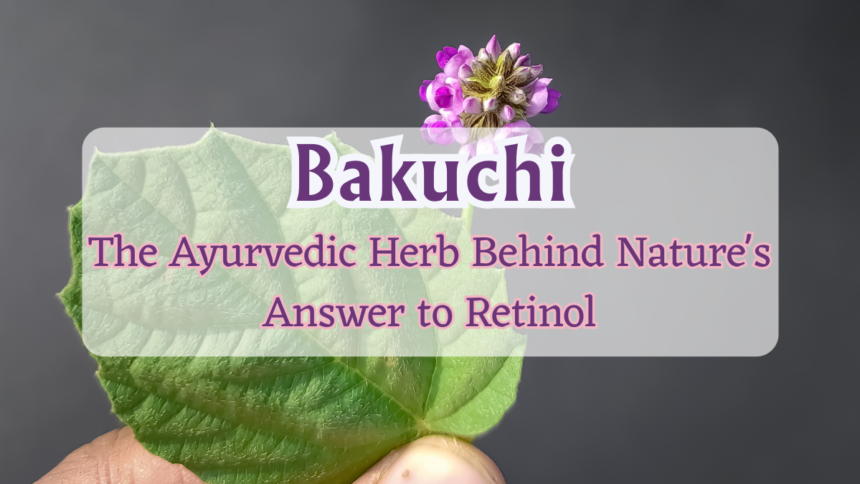
A comprehensive, evidence-informed guide to Bakuchi the ancient Ayurvedic seed whose bakuchiol compound has generated extraordinary scientific excitement as the first botanical proven to replicate retinol’s anti-aging skin effects without its notorious side effects
If you have spent any time in skincare circles whether dermatologist waiting rooms, beauty editorial pages, or the corner of the internet dedicated to evidence-based cosmetics you will have encountered the phrase “natural retinol alternative” applied to many ingredients over the past decade, usually with promises that do not survive contact with actual dermatological scrutiny. Rosehip oil. Sea buckthorn. Bakuchiol.
Two of those claims have not held up particularly well. One of them has generated one of the most genuinely exciting clinical validation stories in natural skincare in recent memory and the ingredient that produced it is the same one that Ayurvedic medicine has been using for vitiligo, skin disorders, and dermatological conditions for over two thousand years without anybody in the modern world particularly noticing.
In 2018, a randomised, double-blind, controlled trial published in the British Journal of Dermatology compared bakuchiol a meroterpene compound extracted from the seeds of Psoralea corylifolia directly to retinol 0.5% in a 12-week face application trial measuring wrinkle depth, skin pigmentation, elasticity, firmness, photodamage, and overall skin tone. The results were remarkable: bakuchiol and retinol showed statistically equivalent improvements across all skin parameters measured. And bakuchiol produced significantly fewer side effects less scaling, less photosensitivity, less irritation, less dryness than the retinol group experienced.
The cosmetic dermatology community took notice. The skincare industry took notice considerably faster. Bakuchiol went from an obscure Ayurvedic seed compound to a prominently featured ingredient in premium skincare formulations across multiple global markets within approximately twenty-four months of that publication.
What most of the resulting marketing copy did not include and what this article remedies is the Ayurvedic context from which bakuchiol emerged, and the full pharmacological picture that makes Bakuchi’s skin applications more comprehensive and more interesting than the retinol comparison alone suggests.
What Is Bakuchi? Botanical Identity and Ayurvedic Context
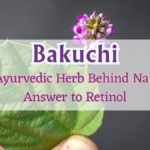
Bakuchi Psoralea corylifolia, family Fabaceae (the legume family) is an annual herb growing to approximately one metre in height, native to the Indian subcontinent and found growing in disturbed soils, field margins, and sandy riverbanks across India, Sri Lanka, Pakistan, and parts of Southeast Asia. Its blue-purple flower clusters produce the small, dark, aromatic seeds Bakuchi seeds that constitute the primary medicinally active portion, though the leaves and roots also carry pharmacological activity used in classical Ayurvedic preparations.
The plant’s taxonomic names carry history: Psoralea from the Greek for “scabby” or “scurfy” (referencing the glandular dots on the leaves’ surface that characterise the genus), and corylifolia meaning “hazel-leaved.” But its traditional names are more pharmacologically informative: Bakuchi in Sanskrit derives from roots referencing its application to skin conditions characterised by discolouration, while its regional names in Hindi and other Indian languages often translate variations on “black seed” or references to its skin-affecting properties.
In Ayurvedic classical texts, Bakuchi occupies a specific clinical position focused on Kushtha (skin disorders), with particular emphasis on Shvitra (vitiligo the classical Ayurvedic skin condition characterised by depigmented patches, directly corresponding to the modern autoimmune condition vitiligo) and conditions involving abnormal skin pigmentation, texture, and inflammatory skin manifestations. Classical texts including Charaka Samhita and Sushruta Samhita describe Bakuchi preparations both internal and topical for these conditions, with an empirical accuracy that modern pharmacology has substantially validated.
In Ayurvedic classification, Bakuchi is described as Tikta (bitter) and Katu (pungent) in Rasa, Laghu (light) and Ruksha (dry) in Guna, Ushna Virya (heating potency), and Katu Vipaka a combination associated with Pitta and Kapha pacification and specific actions on Rasa and Rakta dhatu (plasma and blood tissues) relevant to its skin applications.
The Phytochemistry of Bakuchi: Bakuchiol and Beyond
Bakuchi’s extraordinary dermatological applications rest on a phytochemical profile that is more complex and more pharmacologically rich than the single-compound narrative of “bakuchiol = natural retinol” suggests, though bakuchiol is undoubtedly the compound that has driven the most significant modern research attention.
Bakuchiol the primary meroterpene phenol extracted from Bakuchi seeds is not structurally related to retinol at all. This is one of the most important and most frequently misunderstood points in bakuchiol’s scientific narrative: bakuchiol does not produce its retinol-like effects by sharing retinol’s chemical structure or by binding to retinoid receptors through the same mechanism as retinoic acid. Instead, bakuchiol produces anti-aging skin effects through mechanistic convergence multiple independent pathways that arrive at similar outcomes (collagen stimulation, wrinkle reduction, hyperpigmentation modulation) through entirely different molecular routes. This distinction matters both for understanding why bakuchiol lacks retinol’s characteristic side effects and for understanding why its pharmacological profile extends beyond simple retinol imitation.
Psoralens specifically psoralen, isopsoralen, bergapten, and xanthotoxin are furanocoumarins present in Bakuchi seeds that are responsible for its classical vitiligo application. Psoralens are photosensitising compounds that, when applied topically and exposed to UVA radiation, stimulate melanocyte proliferation and melanin synthesis in depigmented skin the photochemotherapy mechanism underlying both classical Ayurvedic Bakuchi-plus-sun-exposure protocols and the modern PUVA (psoralen plus UVA) therapy used in vitiligo and psoriasis treatment. These psoralen compounds are notably absent from the bakuchiol extracts used in modern cosmetic anti-aging applications purification processes specifically remove the psoralens to eliminate the photosensitising risk, leaving bakuchiol without the photosensitivity concerns that characterise the whole-seed preparations used for vitiligo.
Corylin and neobavaisoflavone isoflavone compounds in Bakuchi seeds demonstrate significant antioxidant, anti-inflammatory, and tyrosinase inhibitory activity (the enzyme pathway relevant to hyperpigmentation control, discussed extensively in the Manjistha article) that contribute to Bakuchi’s dermatological applications independently of bakuchiol’s retinol-like mechanism.
Bavachin and isobavachalcone prenylated chalcone compounds provide additional anti-inflammatory, antimicrobial, and anti-tumour activity that extend Bakuchi’s pharmacological relevance beyond its dermatological applications into the immunomodulatory and anti-infective domains more closely associated with its traditional applications in infectious skin conditions.
The Landmark Clinical Trial: Bakuchiol versus Retinol
The 2018 Dhaliwal et al. study published in the British Journal of Dermatology represents the cornerstone of the clinical evidence base for Bakuchiol as a dermatological active, and its methodology and findings deserve careful examination rather than the abbreviated summary they typically receive in cosmetic marketing copy.
The study was a randomised, double-blind, controlled trial the highest quality clinical design available for comparing topical interventions in which 44 participants with self-perceived facial ageing applied either bakuchiol 0.5% twice daily or retinol 0.5% once daily (the different application frequencies reflecting the different tolerability profiles of the two compounds) over 12 weeks. Facial photographs were assessed at baseline and endpoint by blinded evaluators using standardised scoring systems for wrinkle depth, skin pigmentation, skin elasticity, skin firmness, photodamage severity, and overall evenness of skin tone.
The primary finding statistically equivalent improvements across all measured parameters between bakuchiol and retinol groups was remarkable for a botanical compound. Wrinkle depth reduced comparably in both groups. Hyperpigmentation improved similarly. Skin elasticity and firmness improvements were equivalent. Photodamage scores improved with equal magnitude in both groups.
The secondary finding was equally significant: the bakuchiol group reported significantly fewer side effects than the retinol group, including significantly less facial skin scaling, significantly less photosensitivity, and significantly less irritation and dryness. For the very substantial proportion of skin care users who find retinol’s side effects either unacceptable (pregnant women, for whom retinoids are contraindicated) or too significant to tolerate at effective concentrations, bakuchiol’s equivalent efficacy at dramatically better tolerability represents a genuinely meaningful clinical advancement.
A subsequent study by Chaudhuri and Bojanowski, published in the International Journal of Cosmetic Science, examined bakuchiol’s gene expression effects on skin cells, finding upregulation of retinol-related gene expression pathways including type I, III, and IV collagen synthesis genes, regulation of fibronectin and elastin through mechanisms that did not require retinoic acid receptor activation, providing the mechanistic explanation for the functional equivalence observed clinically without the receptor-mediated irritation mechanism that makes retinol intolerable for many users.
How Bakuchiol Works: The Multi-Mechanism Anti-Aging Profile
Understanding Bakuchiol’s mechanisms provides important context for its clinical applications and for appreciating why it produces anti-aging effects without retinol’s side effect profile.
Collagen synthesis stimulation represents bakuchiol’s most clinically relevant mechanism for wrinkle reduction and skin firming. Research has documented bakuchiol’s stimulation of type I and type III collagen synthesis in dermal fibroblast cell cultures through multiple pathway activations: upregulation of procollagen gene expression, stimulation of TGF-β (transforming growth factor beta) signalling that drives collagen production, and inhibition of MMP (matrix metalloproteinase) enzymes that degrade existing collagen and elastin in the extracellular matrix. The net effect increased collagen synthesis alongside reduced collagen degradation is mechanistically equivalent to retinol’s fibroblast-stimulating effects but achieved through complementary pathway activation rather than retinoic acid receptor binding.
Antioxidant protection of skin cells provides a second mechanism directly relevant to both anti-aging and skin tone applications. Bakuchiol’s phenolic structure confers direct free radical scavenging activity, reducing the oxidative stress that accelerates dermal matrix degradation, disrupts melanocyte regulation, and contributes to the chronic low-grade inflammation underlying skin ageing. Research documenting bakuchiol’s antioxidant capacity across multiple in vitro assay systems supports this mechanism.
Anti-inflammatory activity through NF-κB inhibitory pathways reduces the inflammatory signalling that drives both ageing-related skin deterioration (inflammaging the chronic, low-grade inflammatory contribution to skin ageing) and pigmentation disorders (post-inflammatory hyperpigmentation). Bakuchiol’s documented inhibition of pro-inflammatory cytokine production in skin cells parallels its antioxidant mechanism in addressing the inflammatory dimension of both conditions.
Tyrosinase inhibition providing the mechanistic basis for bakuchiol’s hyperpigmentation effects has been documented in enzyme assay research, with bakuchiol demonstrating direct inhibition of the melanin synthesis enzyme through a different binding interaction than the skin-brightening compounds like kojic acid and alpha-arbutin, providing potentially additive effects when bakuchiol is used in combination with these conventional actives.
Bakuchi for Vitiligo: The Classical Application
Before bakuchiol’s modern cosmetic prominence, Bakuchi was primarily known in classical Ayurvedic medicine for vitiligo management and this traditional application deserves specific examination both for its own clinical significance and for demonstrating the pharmacological depth of the herb beyond its retinol-comparison framing.
The psoralen compounds in whole Bakuchi seed extract specifically psoralen and its analogues have been used in traditional Ayurvedic practice for vitiligo management through a process that classical texts describe with remarkable precision: application of Bakuchi paste or oil to depigmented patches followed by controlled sun exposure, producing gradual repigmentation through melanocyte stimulation. This classical protocol is, in mechanism, essentially identical to the modern PUVA (Psoralen plus UVA) phototherapy that constitutes the standard dermatological treatment for vitiligo globally a case of traditional medicine empirically identifying and applying the same photochemotherapy mechanism that modern dermatology independently developed and validated.
Research on Bakuchi-based vitiligo preparations, including several clinical studies conducted in India examining both oral and topical psoralen-containing Bakuchi preparations alongside phototherapy, has documented significant repigmentation in vitiligo patients, with outcomes comparable to synthetic PUVA therapy in several investigations.
Bakuchi in Psoriasis and Inflammatory Skin Conditions
Classical Ayurvedic indications for Bakuchi extend beyond vitiligo to multiple inflammatory skin conditions classified under the broad Kushtha category, including conditions corresponding to modern psoriasis. The immunomodulatory activity of Bakuchi’s isoflavone and chalcone fractions along with the anti-inflammatory activity of bakuchiol provides pharmacological rationale for these broader dermatological applications, with modern research specifically documenting anti-psoriatic activity in relevant experimental models.
Practical Use: Topical Applications, Products, and Protocols
Bakuchiol cosmetic products: The rapidly expanding range of commercial bakuchiol serum, oil, and cream formulations now available from both luxury and accessible price points typically contain bakuchiol at 0.5–1% concentration, the range studied in clinical trials. Key formulation considerations include: bakuchiol is oil-soluble and most effectively delivered in serum or oil base products rather than water-based products without appropriate solubilisation technology; look for products that specify bakuchiol percentage and ideally that have undergone independent stability testing demonstrating adequate preservation of the compound.
Application protocol (based on clinical trial design): twice daily application (morning and evening) is supported by the clinical evidence and does not require the sun-avoidance restriction that retinol requires, though general sun protection practice remains sensible as part of any comprehensive anti-aging routine.
Traditional Bakuchi preparations: for vitiligo and classical Ayurvedic applications involving the full-seed psoralen fraction, preparations should only be used under qualified Ayurvedic physician guidance given the photosensitisation considerations detailed in the safety section these are distinct applications from the cosmetic bakuchiol context and require appropriate clinical supervision.
Internal Bakuchi use: classical Ayurvedic applications include internal preparations for systemic skin disorders typically as part of compound formulations under physician guidance rather than as self-directed supplementation, given the psoralen content’s systemic photosensitising effects when taken internally.
The Crucial Distinction: Bakuchiol Extract vs. Whole Bakuchi Preparations
Throughout this article, the distinction between purified bakuchiol extract (used in modern cosmetic applications) and whole Bakuchi seed preparations (used in traditional vitiligo and skin disorder management) has been referenced repeatedly because it carries direct practical and safety significance that any responsible guide to this herb must address clearly.
Purified bakuchiol: extracted and purified specifically to remove the photosensitising psoralen compounds, leaving bakuchiol without the photosensitivity risk that characterises whole-seed preparations. This is the form appropriate for the cosmetic anti-aging applications documented in the clinical trial literature, appropriate for twice-daily use without solar precautions beyond normal UV protection practice.
Whole Bakuchi seed preparations: contain both bakuchiol and psoralens, and therefore carry the photosensitisation risk that requires clinical supervision, sun exposure timing protocols, and monitoring of photosensitisation reactions. These are the preparations appropriate for vitiligo management under qualified Ayurvedic or dermatological supervision.
Confusing these two formulations using whole Bakuchi preparations as if they were cosmetic bakuchiol serum, or expecting cosmetic bakuchiol products to address vitiligo represents a clinically significant misunderstanding that this article’s readers are now equipped to avoid.
Safety Profile
Bakuchiol (purified): exceptionally well-tolerated topically based on clinical trial evidence and post-market use experience, with significantly fewer side effects than retinol at equivalent efficacy. No significant photosensitisation risk at current cosmetic use concentrations. Safe in pregnancy (a significant advantage over retinol, which is absolutely contraindicated in pregnancy). Rare cases of contact sensitisation reported, warranting patch testing before full application in sensitive individuals.
Whole Bakuchi preparations: significant photosensitisation risk from psoralen content requiring appropriate medical supervision and solar precautions. Internal psoralen use carries additional risks including hepatotoxicity at high doses, warranting medical oversight rather than self-directed use.
The Honest Bottom Line
Bakuchi has earned two distinct clinical validations in modern research: one from dermatological photochemotherapy, which independently arrived at the same psoralen-plus-UVA mechanism that classical Ayurvedic vitiligo treatment had been applying for millennia; and one from the cosmetic dermatology community, which discovered in bakuchiol a compound whose anti-aging efficacy matches retinol’s gold standard while dramatically improving on its tolerability profile.
Both validations are genuine, and both matter. For the tens of millions of people who have found retinol intolerable, or who are pregnant and seeking effective anti-aging skincare without pharmaceutical retinoid risk, bakuchiol represents a pharmacologically credentialed alternative that the 2018 British Journal of Dermatology trial has moved from marketing claim to clinical evidence.
And behind the bakuchiol extract in modern skincare formulations is a small, unassuming seed that Ayurvedic practitioners prescribed for skin disorders two thousand years before cosmetic dermatology existed as a discipline. That context the convergence of traditional empirical observation and modern clinical validation is precisely the kind of story that the best evidence-based integrative medicine has always been trying to tell.
Did this comprehensive guide to Bakuchi give you the scientific clarity you needed on what bakuchiol actually is and what it genuinely does for skin health? Share it with someone navigating the retinol-vs-bakuchiol conversation who deserves the full evidence-based picture. Leave a comment with your own bakuchiol experience, or subscribe to our newsletter for more rigorously researched content giving Ayurveda’s most dermatologically significant herbs the careful, evidence-grounded attention they deserve.

