






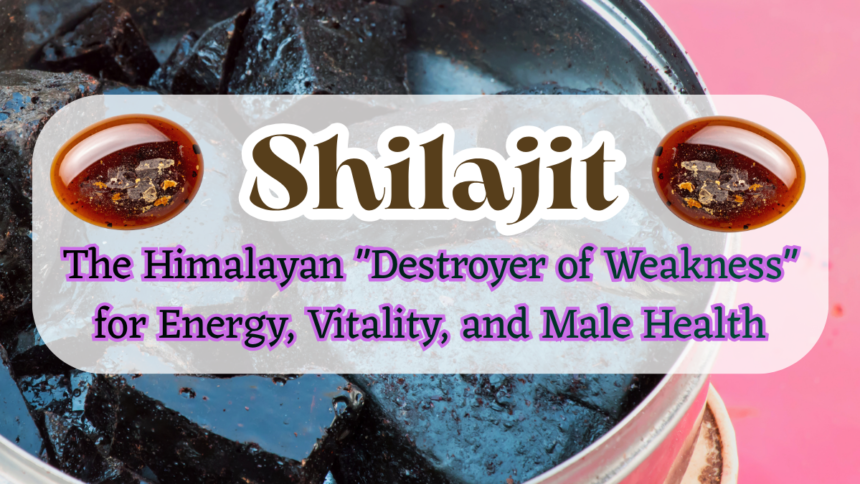
Shilajit
A comprehensive, evidence-grounded guide to Shilajit what this ancient mineral-organic exudate actually contains, what the clinical research shows for energy, testosterone, fertility, and cognitive function, and the critical quality and safety considerations that separate genuine therapeutic use from dangerous counterfeits
High in the Himalayan ranges, during the summer months when temperatures rise enough to soften the ancient rock formations, a dark, tar-like substance seeps from the crevices of mountain cliff faces at altitudes between 1,000 and 5,000 metres. It collects in small pools and deposits on rock surfaces, exposed to high-altitude ultraviolet radiation and extreme temperature variation. Local mountain communities have harvested this substance for centuries, consuming it dissolved in warm milk as a foundational health tonic, a performance enhancer, a tonic for sexual vitality, and a remedy for the altitude-related ailments that living at extreme elevation inevitably produces.
Modern analytical chemistry, applied to this substance, revealed something unexpected: a biochemically complex matrix unlike virtually any other substance in traditional medicine’s pharmacopoeia. Not a plant extract. Not an animal product. Not a mineral in the conventional sense. Shilajit the substance’s Sanskrit name, translating as “conqueror of mountains” or “destroyer of weakness” depending on etymological interpretation is the product of millions of years of microbial activity transforming organic plant and geological material under the specific geological conditions of high-altitude mountain ranges, producing a substance whose primary organic component, fulvic acid, is simultaneously one of the most fascinating and most therapeutically interesting compounds in current biochemical research.
What follows is an honest, evidence-grounded examination of what Shilajit actually is, what it actually does, and critically the quality and safety considerations that matter enormously for this particular substance in ways that apply less urgently to most herbal supplements.
What Is Shilajit? Origin, Composition, and Traditional Context
Shilajit is not, despite frequent characterisation, simply a mineral supplement. It is a humic substance specifically an exudate formed over geological timescales through the humification of organic material, primarily composed of decomposed plant matter from Himalayan vegetation that was compressed between rock layers, subjected to microbial transformation, and progressively modified over millions of years into the complex organic-mineral matrix that seeps from cliff faces today.
Its composition varies meaningfully by geographic source Himalayan, Altai, Tibetan, and South American varieties each have somewhat different mineral profiles but the primary active components present across geographic sources include fulvic acid (40–60% of dry weight in quality preparations), humic acid, dibenzo-alpha-pyrones (DBPs) and their metabolites, a complex array of minerals and trace elements (including iron, zinc, magnesium, copper, manganese, selenium, and dozens of others in chelated, organically complexed forms), and various plant-derived metabolites including hippuric acid, terpenoids, and phenolic compounds whose total count in comprehensive analytical studies exceeds eighty distinct identified compounds.
In Ayurvedic classification, Shilajit is categorised as a Rasayana of the highest order specifically classified under the Khanija (mineral/geological) Rasayana category, distinct from the herbal Rasayanas that constitute the majority of Ayurvedic rejuvenative preparations. Classical texts including the Charaka Samhita and Ashtanga Hridayam describe Shilajit as effective for virtually every disease when properly purified and administered a claim that modern pharmacological research has interpreted not as a literal cure-all assertion but as a recognition of Shilajit’s broad-spectrum effects on fundamental cellular energy metabolism, mineral status, and the multiple biological systems these foundational processes support.
The Fulvic Acid Mechanism: What Makes Shilajit Unique
Understanding Shilajit pharmacologically begins with fulvic acid the primary bioactive compound, the one present in the highest concentration, and the one whose mechanisms most convincingly explain Shilajit’s diverse documented effects.
Fulvic acid is a low-molecular-weight humic substance with an extraordinary capacity to chelate minerals binding mineral ions in a form that is simultaneously water-soluble and highly bioavailable, capable of crossing cellular membranes to deliver chelated minerals directly into cells. This mineral transport function is central to Shilajit’s role as an energy and vitality tonic, because many of the minerals most important for mitochondrial energy production iron (for electron transport chain complexes), magnesium (for ATP synthesis), zinc (for multiple energy metabolism enzymes), and copper (for cytochrome c oxidase) are frequently suboptimally available in standard diets despite apparent adequate intake, because their absorption is limited by factors including phytic acid in grains, competitive absorption between minerals, and the relatively poor bioavailability of inorganic mineral salts in conventional supplements.
Shilajit’s fulvic acid provides these minerals in organically chelated forms that research has documented as more bioavailable than inorganic mineral forms in several comparative absorption studies potentially explaining the disproportionate vitality and energy improvements that individuals with latent mineral insufficiencies report from Shilajit supplementation compared to what standard mineral supplements had previously provided.
Beyond mineral transport, fulvic acid has demonstrated direct electron-carrying capacity acting as an electron shuttle that can transfer electrons between donors and acceptors in biochemical redox reactions, functioning analogously to the electron carrier molecules in the mitochondrial electron transport chain. This electron-shuttle property has led researchers to propose that fulvic acid may directly support mitochondrial function by facilitating electron transport, providing a mechanism for Shilajit’s documented effects on mitochondrial energy production that is independent of its mineral delivery role.
Dibenzo-alpha-pyrones (DBPs) and their metabolites a class of compounds found in Shilajit that are produced by the microbial transformation of plant material during its geological processing appear to enhance the electron-carrying activity of fulvic acid and contribute additional mitochondrial-supportive effects, representing a class of bioactive compounds essentially unique to Shilajit among medicinal substances.
Shilajit for Energy and Mitochondrial Function
The energy and fatigue applications of Shilajit perhaps its most broadly relevant therapeutic dimension given the epidemic of chronic fatigue, energy insufficiency, and mitochondrial dysfunction that characterises much of modern health are supported by both the mechanistic considerations discussed above and growing clinical evidence.
A randomised, double-blind, placebo-controlled trial published in the Journal of the International Society of Sports Nutrition examined Shilajit supplementation in healthy male volunteers over 8 weeks, finding significant improvements in maximum muscular strength, fatigue recovery, and total exercise capacity compared to placebo, with the researchers attributing improvements to Shilajit’s mitochondrial-supportive and mineral-delivery mechanisms.
Separately, research examining Shilajit’s effects on Chronic Fatigue Syndrome a condition whose pathophysiology is increasingly understood to involve mitochondrial dysfunction and disrupted cellular energy metabolism has documented significant improvements in subjective energy, reduced fatigue scores, and improvements in objective measures of physical performance, providing clinical correlate to the mitochondrial mechanism and directly relevant support for Shilajit’s traditional “destroyer of weakness” characterisation.
The mitochondrial mechanism has been further supported by research examining Shilajit’s effects at the cellular level: in vitro studies have documented preservation of mitochondrial membrane potential under stress conditions, enhanced ATP production, and protection against oxidative damage to mitochondrial components effects that collectively constitute genuinely useful mitochondrial support at the cellular level and that translate, in the clinical studies discussed, into measurable improvements in the energy-dependent physiological capacities that mitochondrial health governs.
Shilajit for Male Health: Testosterone and Fertility Evidence
The most extensively marketed and, it turns out, among the most specifically evidenced applications of Shilajit is its effects on male health specifically, testosterone enhancement and male fertility improvement with clinical trial data that is more directly and specifically targeted than many of the testosterone-supporting supplements and herbs that crowd the male health marketplace.
A landmark randomised, double-blind, placebo-controlled study by Pandit et al., published in Andrologia, examined purified Shilajit supplementation (250mg twice daily) in 90 infertile male subjects over 90 days, finding significant improvements across multiple semen parameters: total sperm count increased significantly, motility improved significantly, normal sperm morphology improved significantly, and serum testosterone levels increased significantly compared to placebo. These simultaneous improvements across sperm quantity, quality, and the hormonal environment that governs sperm production provide a comprehensive male fertility support profile that encompasses both the endocrine and the spermatogenic dimensions of male reproductive health.
A separate randomised, double-blind, placebo-controlled trial specifically examining testosterone effects of Shilajit in healthy male volunteers (aged 45–55 years, a population particularly relevant given age-related testosterone decline), published in Andrologia, found significant increases in total testosterone, free testosterone, and DHEA levels compared to placebo after 90 days with free testosterone (the biologically active fraction unbound to sex hormone-binding globulin) increasing by approximately 19% in the Shilajit group compared to approximately 8% in the placebo group. These are clinically meaningful improvements in the hormonal markers most directly associated with the vitality, muscle maintenance, libido, and body composition changes that declining testosterone drives in ageing men.
The proposed mechanisms for Shilajit’s testosterone-supporting activity include direct steroidogenic enzyme support specifically, enhancement of the enzymatic conversion steps in testosterone biosynthesis alongside the mitochondrial energy support that is also relevant here, since steroidogenesis is an energy-intensive process and mitochondrial function in Leydig cells (the primary testicular testosterone-producing cells) directly governs their steroidogenic capacity.
Shilajit for Cognitive Function and Brain Health
An emerging and particularly interesting research direction for Shilajit involves cognitive function and neurological health with fulvic acid demonstrating specific properties relevant to the prevention of the protein aggregation processes central to neurodegenerative disease, alongside more general neuroprotective and cognitive-enhancing effects.
A study published in the Journal of Alzheimer’s Disease examined fulvic acid’s effects on tau protein aggregation the formation of neurofibrillary tangles that constitute one of the defining pathological features of Alzheimer’s disease alongside beta-amyloid plaques finding that fulvic acid directly inhibited tau aggregation and disaggregated existing tau aggregates at physiologically relevant concentrations. This is a mechanistically specific and clinically significant finding for a natural compound, given the central role of tau pathology in Alzheimer’s and the very limited pharmaceutical options that address this specific pathological process.
A clinical study examining Shilajit in individuals with mild cognitive impairment found significant improvements in cognitive performance measures, reduced fatigue, and improvements in general wellbeing over the treatment period, providing preliminary human clinical evidence that complements the mechanistic research and supports ongoing clinical investigation in neurodegenerative disease prevention contexts.
Shilajit for Altitude Adaptation
One of the most traditionally prominent and most frequently reported experiential benefits of Shilajit is its capacity to support adaptation to high altitude reducing the severity and duration of altitude sickness (acute mountain sickness) that affects many individuals when ascending rapidly to elevations above 2,500–3,000 metres.
The traditional association of Shilajit specifically with high-altitude mountain communities is itself suggestive of a practical altitude-adaptation role observed empirically over centuries. Modern mechanistic research has proposed that Shilajit’s mitochondrial support, iron delivery (relevant to erythropoiesis and haemoglobin synthesis), and antioxidant properties collectively support the physiological adaptations including increased red blood cell production, improved cellular oxygen utilisation, and resistance to hypoxia-induced oxidative stress that constitute successful altitude acclimatisation. A clinical study examining Shilajit in mountaineers descending to lower altitudes found improvements in several haematological parameters consistent with enhanced erythropoietic adaptation, supporting this traditional altitude application.
The Critical Quality Issue: Why Shilajit Must Be Purified and Authenticity Verified
No discussion of Shilajit is complete without addressing what is arguably the most important practical consideration for anyone considering supplementation: the quality, purity, and authenticity of the product, which matters for this particular substance far more urgently than for most herbal preparations.
Raw, unpurified Shilajit as collected from cliff faces contains heavy metals including lead, arsenic, and mercury in concentrations that can be clinically significant, along with mycotoxins, free radicals, and other contaminants that accumulate in a geological substance from a mountain environment containing industrial and natural pollution sources. Traditional Ayurvedic preparation of Shilajit involves an extensive purification process Shodhana that includes multiple cycles of dissolution in water, filtration, exposure to sunlight, and treatment with specific herbal decoctions, designed specifically to reduce heavy metal content and other contaminants to safe levels while preserving the bioactive fulvic acid and mineral profile.
The commercial Shilajit market has a significant counterfeiting problem that is not merely a quality concern but a genuine safety issue. Adulterated products have been found to contain heavy metal concentrations substantially exceeding safe limits; products sold as Shilajit have been found to contain little to no authentic Shilajit material; and improperly processed raw material is sold in forms that bypass the purification designed to make the substance safe.
The practical guidance for anyone considering Shilajit is therefore straightforward: purchase only from manufacturers who provide third-party laboratory testing documentation confirming heavy metal levels (specifically lead, arsenic, mercury, and cadmium) within established safety limits; look for standardised preparations specifying fulvic acid percentage; choose purified resin from manufacturers with transparent sourcing and processing documentation; and approach exceptionally inexpensive Shilajit products with significant scepticism given the cost of authentic sourcing and proper purification.
Practical Use: Forms, Dosing, and Protocols
Purified Shilajit is available in two primary forms: resin (the most traditional and, many experts consider, most phytochemically complete form) and standardised powdered extract in capsules (more convenient and more precisely dosed).
For resin preparations: a pea-sized amount (approximately 300–500mg) dissolved in warm (not boiling) water, milk, or tea, taken once or twice daily. The traditional preparation in warm milk with honey represents both a palatable and pharmacologically sensible delivery method, as the fat content of milk may support the bioavailability of Shilajit’s fat-soluble components.
For standardised extract capsules: 300–500mg daily of a preparation standardised to a specified fulvic acid percentage (most commonly 50–60%), taken with meals. Most clinical trials have used doses in the 250–500mg daily range.
Duration and realistic expectations: the mitochondrial, hormonal, and fertility effects documented in clinical trials required 60–90 days of consistent daily use to manifest, consistent with mechanisms that work through gradual mineral repletion, hormonal recalibration, and mitochondrial adaptive processes rather than through acute pharmacological effects. Shilajit is most appropriately understood as a long-term Rasayana a rejuvenative tonic requiring sustained use for cumulative benefit rather than an acute supplement with immediate perceptible effects.
Safety Considerations
Beyond the quality concerns discussed above (which dominate Shilajit’s safety profile at the population level), several specific physiological considerations warrant mention. Shilajit’s iron content makes it potentially contraindicated in individuals with haemochromatosis (iron overload disorder). Its effects on hormone levels specifically testosterone and DHEA are relevant considerations for individuals with hormone-sensitive conditions. Pregnancy and lactation: insufficient safety data warrants avoidance. Drug interactions: potential interactions with anticoagulant and antihyperglycaemic medications warrant medical discussion before combination use.
The Honest Bottom Line
Shilajit occupies a genuinely unusual position in the landscape of traditional medicine and modern supplement research: a substance with sufficient biochemical complexity and mechanistic novelty to attract serious pharmacological interest, sufficient clinical trial evidence to justify evidence-based recommendation for specific applications, and sufficient quality variability in the commercial market to make product selection a matter of genuine health significance rather than mere consumer preference.
The clinical evidence for Shilajit in male fertility and testosterone support is among the most directly targeted and specifically evidenced in the entire Ayurvedic supplement space. The mitochondrial energy mechanisms are biochemically coherent and experimentally supported. The fulvic acid research on tau aggregation represents a potentially significant advance in natural compound neurology research.
Use it properly sourced, properly purified, at evidence-aligned doses, over the sustained periods that its mechanisms require. The mountains preserved something genuinely interesting over those millions of years. It deserves to be used with the care that rarity and complexity warrant.
Did this deep-dive into Shilajit give you the evidence-grounded understanding you needed before considering supplementation? Share it with someone interested in energy, male health, or the extraordinary biochemistry of traditional medicines. Leave a comment with your own experience or questions about Shilajit quality and sourcing, or subscribe to our newsletter for more rigorously researched herb and supplement deep-dives that prioritise honest evidence over enthusiasm.