








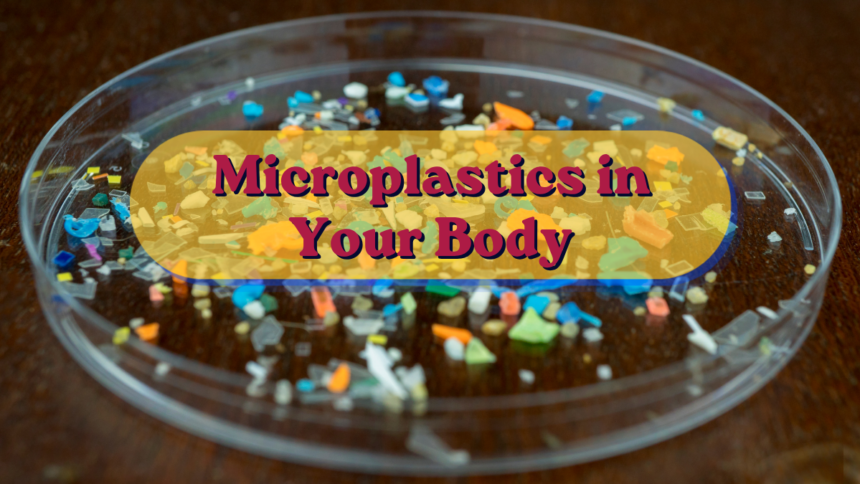
Microplastics in Your Body
What the science is finding inside human blood, lungs, and placentas and the practical steps you can take today to meaningfully reduce your microplastic burden
In 2022, a team of researchers in the Netherlands published a paper in the journal Environment International that quietly changed the conversation about plastic pollution. They had taken blood samples from 22 healthy adult volunteers people with no unusual occupational exposures, no obvious risk factors, just ordinary people living ordinary lives. In 17 of the 22 samples, they found measurable concentrations of microplastic particles. In blood. Flowing through the circulatory system. Microplastics in Your Body
The same year, a separate team found microplastics in human lung tissue — including in the deepest regions of the lung, where particles of that size were not previously thought capable of penetrating. Other research teams had already documented microplastics in human placentas, in breast milk, in testicular tissue, in the walls of coronary arteries, and in stool samples from infants who had never consumed anything other than breast milk. Microplastics in Your Body
Let that last detail sit for a moment. Babies, in their first weeks of life, are already carrying microplastic particles in their bodies — accumulated either through the placenta during foetal development, through breast milk after birth, or both. Microplastics in Your Body
We are, without having consented to the experiment, all participants in the largest uncontrolled toxicological study in human history. Plastic was mass-produced for approximately eight decades. We have been accumulating its breakdown products in our bodies throughout, and we are only now beginning to understand what that means for long-term health. Microplastics in Your Body
This article is not intended to generate panic. The honest scientific position on microplastics and human health is that we know enough to be concerned, not enough to be certain about specific disease outcomes, and enough to take practical, meaningful steps to reduce exposure. That is exactly what this guide covers.
What Are Microplastics and Where Do They Come From?
Plastics do not biodegrade in any meaningful timeframe. Instead, they undergo photodegradation and mechanical fragmentation breaking into progressively smaller pieces that retain the chemical composition of the original polymer. Microplastics are defined as plastic particles smaller than 5 millimetres. Nanoplastics are a subset of these, measuring less than 1 micrometre — small enough to cross cell membranes and the blood-brain barrier. Microplastics in Your Body
The sources of microplastic contamination are so pervasive in modern life that complete avoidance is not currently possible. They include the fragmentation of larger plastic items bottles, packaging, bags, synthetic clothing under UV radiation and mechanical stress; microbeads, the tiny plastic spheres formerly used in cosmetics and personal care products (now banned in many countries but still present in the environment); tyre and road wear particles, which constitute one of the largest sources of microplastic pollution globally; synthetic textile fibres shed during laundering (a single wash of polyester clothing can release hundreds of thousands of fibres); food packaging leaching particles into food and drink, particularly under heat; and the breakdown of single-use plastic items in the ocean, which then enter the food chain through fish and shellfish. Microplastics in Your Body
The scale of environmental contamination is extraordinary. A 2019 analysis by the World Wildlife Fund estimated that the average person ingests approximately five grams of plastic per week roughly the equivalent of a credit card through food, water, and air. Subsequent research has both challenged and supported this figure, but the directional conclusion is consistent: microplastic ingestion and inhalation are daily, cumulative occurrences for virtually everyone on earth. Microplastics in Your Body
Where Microplastics Have Been Found in the Human Body
The list of tissues in which microplastics have now been detected reads like an inventory of the body’s most critical systems which is precisely what makes it so concerning. Microplastics in Your Body
Human blood was perhaps the most alarming finding because blood represents systemic distribution microplastics that reach the bloodstream can, in principle, be carried to any organ. The 2022 Amsterdam study found polyethylene terephthalate (PET the plastic used in water bottles), polystyrene, and polyethylene in human blood samples, with concentrations ranging from 1.1 to 7.4 micrograms per millilitre. Microplastics in Your Body
Human lung tissue studies including a 2022 paper in Science of the Total Environment found microplastics in 11 of 13 lung tissue samples, with polypropylene and polyethylene terephthalate most commonly detected. Their presence in the lower lung is particularly significant because this region has limited clearance mechanisms and sustained particle exposure drives chronic inflammation. Microplastics in Your Body
Human placentas were examined in a 2020 Italian study that found microplastic particles in all six placentas analysed on both the foetal and maternal sides, as well as in the membrane that separates them. The foetal placenta findings were described by the researchers as “a matter of great concern” given the vulnerability of foetal development to chemical and inflammatory disruption. Microplastics in Your Body
Human breast milk samples from 34 women were found to contain microplastics in a 2022 Italian study the first of its kind with polyethylene, polypropylene, and PVC detected in 75% of samples. The implication is that infants are receiving microplastic exposure from the first days of life through even the most protective nutritional medium available to them.
Human coronary artery plaques were examined in a landmark 2024 study published in the New England Journal of Medicine perhaps the most clinically impactful microplastics study yet conducted. Researchers found microplastics and nanoplastics within atherosclerotic plaques in the carotid arteries of 257 patients. Those whose plaques contained detectable microplastics had a 4.5-fold higher risk of heart attack, stroke, or death from any cause over approximately 34 months of follow-up, compared to those without detected plastics. This was not a mechanistic study it does not prove causation but the clinical signal is striking. Microplastics in Your Body
Testicular tissue studies have found higher microplastic concentrations in human testes than in any other tissue examined to date, with a 2024 study in Toxicological Sciences reporting average concentrations of 329 micrograms per gram of tissue — substantially higher than concentrations found in animal testes from the same study. The same paper correlated higher microplastic concentrations with lower sperm counts in dogs, raising questions about implications for human male fertility. Microplastics in Your Body
The Health Risks: What We Know and What We Suspect
It is important to be precise about the state of evidence here. Most of what we know about microplastic toxicity comes from in vitro (cell culture), animal studies, and epidemiological correlations. The New England Journal of Medicine coronary artery study is one of the first to demonstrate a clinical outcome association in humans. Establishing definitive causation in human populations — the gold standard of medical evidence — requires long-term prospective studies that have not yet had time to complete. Microplastics in Your Body
That said, the mechanistic evidence for potential harm is substantial and comes through several distinct pathways. Microplastics in Your Body
Physical and mechanical effects occur when microplastic particles accumulate in tissues and provoke inflammatory responses. The foreign body response — the immune system’s reaction to non-biological particles it cannot degrade — drives chronic low-grade inflammation in whatever tissue the particles accumulate. This is particularly concerning in lung tissue, where chronic particle-driven inflammation is a well-established pathway to pulmonary fibrosis, chronic obstructive disease, and lung cancer — analogous to the mechanisms through which asbestos and silica dust cause occupational lung disease.
Chemical toxicity is a second pathway that is distinct from the physical presence of the particles themselves. Plastics contain, and continuously leach, a complex mixture of chemical additives — plasticisers (including phthalates and bisphenols), flame retardants, UV stabilisers, colourants, and polymerisation residues. Many of these compounds are endocrine disruptors — interfering with oestrogen, testosterone, and thyroid hormone receptor signalling. Phthalates, for example, are consistently associated with reduced testosterone and sperm quality in epidemiological research, premature puberty in girls, and disrupted foetal reproductive development. Bisphenol A (BPA) and its replacements (BPS, BPF) exert oestrogenic activity and have been associated with metabolic disruption, cardiovascular disease, and reproductive toxicity.
Microplastics as vectors for other pollutants represent a third concern. Their hydrophobic surfaces attract and concentrate persistent organic pollutants PCBs, dioxins, pesticide residues that adsorb to plastic surfaces in the environment. When these particles are ingested or inhaled, the concentrated chemical cargo may be released at tissue interfaces, effectively delivering a concentrated dose of otherwise dilute environmental toxicants to specific organs.
Gut microbiome disruption has been documented in animal studies where microplastic exposure altered gut bacterial composition, reduced microbial diversity, and increased intestinal permeability raising the possibility of systemic inflammatory consequences mediated through the gut-immune axis. Human gut microbiome studies on this question are still early but are accumulating rapidly.
Cellular and mitochondrial toxicity has been demonstrated in cell culture studies where nanoplastic particles cross cell membranes, accumulate in mitochondria, impair cellular energy production, and increase reactive oxygen species the same oxidative stress pathway implicated in cancer, metabolic disease, and accelerated ageing.
How to Meaningfully Reduce Your Microplastic Exposure
The goal here is realistic harm reduction not anxiety-producing perfectionism. Several practical, evidence-consistent steps are available that collectively make a meaningful difference to cumulative exposure.
Stop Drinking Water From Single-Use Plastic Bottles
PET plastic water bottles are one of the most significant sources of microplastic ingestion. A 2018 study found that bottled water contained microplastic concentrations roughly twice those of tap water and that concentrations increased substantially when bottles were subjected to heat (left in a warm car, for example) or physical stress (squeezed during drinking). Switching to filtered tap water in glass or stainless steel containers is one of the highest-leverage single changes available. A quality water filter reverse osmosis or a certified activated carbon filter further reduces both microplastic and chemical contaminant exposure from municipal water supplies.
A practical note for Indian households: many depend on large plastic water dispensers (20-litre PET jars) as their primary drinking water source. These are significant microplastic exposure points, particularly as the jars age, are refilled repeatedly, and are stored in warm conditions. Transitioning to a high-quality countertop filtration system where possible represents a significant exposure reduction.
Never Heat Food in Plastic Containers
Heat dramatically accelerates the leaching of both microplastic particles and chemical additives from plastic into food. A 2023 study in Environmental Science & Technology found that heating food in polypropylene containers in a microwave produced particle concentrations that significantly exceeded safety thresholds estimated for infants. Using glass, ceramic, or stainless steel for food heating and storage is a non-negotiable practical step. The same applies to plastic cling film on hot food, plastic cups for hot beverages, and takeaway containers all of which leach more extensively when warm.
Reduce Ultra-Processed and Packaged Food Consumption
Heavily packaged and processed foods have longer and more extensive contact with plastic packaging under varying conditions of temperature and pressure conditions that promote leaching. Fresh, whole foods with minimal packaging are not only nutritionally superior but carry significantly lower microplastic burdens. Markets and sabzi vendors offering loose fresh produce are genuinely preferable to supermarket-wrapped equivalents from a microplastics perspective, in addition to supporting local supply chains.
Sea salt a widely used condiment globally has been identified as a significant microplastic source in several studies, given that it is harvested from marine environments where plastic concentrations are high. Himalayan rock salt or mineral salts from non-marine sources carry negligible microplastic burdens by comparison.
Filter Your Indoor Air
Indoor air is typically more contaminated with microplastic fibres than outdoor air because of the fibres shed by synthetic carpets, upholstery, curtains, and clothing in enclosed spaces. Regular vacuuming with a HEPA-filtered vacuum cleaner reduces fibre accumulation. HEPA air purifiers meaningfully reduce airborne particle concentrations including plastic fibres. Increasing natural ventilation opening windows in lower-pollution periods reduces indoor air stagnation and fibre build-up. Choosing natural fibre furnishings (cotton, wool, jute, linen) over synthetic alternatives reduces the continuous shedding source.
Address Synthetic Textiles
Synthetic fabrics polyester, nylon, acrylic shed plastic microfibres continuously, both during wear (fibres are inhaled and deposited on skin) and dramatically during laundering (washing a single polyester garment releases hundreds of thousands of fibres per wash cycle). Practical steps include: using a microfibre-catching laundry bag (such as the Guppyfriend bag), which captures fibres before they enter the water system; washing synthetics at lower temperatures and with shorter cycles; and gradually transitioning a wardrobe toward natural fibre clothing cotton, wool, linen, silk which shed no plastic fibres.
Be Cautious With Receipts and Handled Plastics
Thermal receipt paper is coated with BPA or BPS and skin absorption of these compounds from receipts is a documented and non-trivial exposure route, particularly when hands are damp or when hand lotion is applied. Declining paper receipts where possible, or handling them minimally without touching the printed surface, reduces this exposure meaningfully. Washing hands before eating after handling plastics, packaging, or receipts is simple but effective.
Support Antioxidant Defences
Given that oxidative stress is a key mechanism through which microplastics cause cellular damage, maintaining robust antioxidant defences through diet is a sensible complementary strategy — not a solution, but a form of damage mitigation. The dietary antioxidant principles discussed throughout this series apply here: diverse plant foods, adequate vitamin C and E, selenium, zinc, and CoQ10 from whole food sources and targeted supplementation where needed.
What We Do Not Yet Know and Why That Matters
Scientific honesty requires acknowledging the limits of the current evidence. We do not yet know what body burden of microplastics constitutes a clinically significant health risk threshold. We do not have long-term prospective cohort data definitively linking specific microplastic exposures to specific disease outcomes in humans with the rigour required for causal inference. Different types of plastic different polymers, different sizes, different chemical additive profiles likely have different toxicological profiles that have not yet been individually characterised.
What this uncertainty does not mean is that evidence of harm is absent. The weight of mechanistic, animal, and emerging human epidemiological evidence is sufficient to justify precautionary action particularly for vulnerable populations including pregnant women, infants, and those with pre-existing cardiovascular or inflammatory conditions.
The precautionary principle in environmental health holds that where there is credible mechanistic evidence of potential harm and meaningful opportunity to reduce exposure at low cost, waiting for certainty is not a neutral position. The cost of the practical steps outlined in this article is low. The potential benefit reduced cumulative exposure to a class of contaminants whose health consequences are still being mapped is real.
The Honest Bottom Line
The microplastics story is one of the most consequential environmental health developments of our era and one that most people are still not taking seriously because the harm is invisible, gradual, and diffuse rather than dramatic and immediate.
You cannot eliminate microplastic exposure in 2026. The contamination is too systemic, too pervasive, and too deeply embedded in modern food, water, and material systems for individual action alone to achieve zero exposure. But you can meaningfully reduce your daily and cumulative burden through the practical steps outlined here filtered water in glass, food stored and heated in non-plastic vessels, natural fibre clothing and furnishings, less packaged food, better indoor air quality, and the antioxidant nutritional foundation that supports your body’s capacity to manage cellular stress.
These are not dramatic lifestyle overhauls. They are sensible, low-cost adjustments that collectively shift your exposure profile in the right direction while the larger systemic responses of regulation, manufacturing reform, and plastic alternatives continue to develop.
Your body is not a passive recipient of whatever the environment delivers to it. Act accordingly.
Did this article change how you think about the plastics in your daily life? Share it — this is information that deserves to be widely known. Leave a comment with the changes you are making, or subscribe to our newsletter for more honest, evidence-based health and environmental writing that keeps you informed without the panic.