




Kalmegh (Andrographis paniculata)
A comprehensive, evidence-informed guide to Kalmegh the intensely bitter Ayurvedic herb whose andrographolide compound has attracted global pharmaceutical research interest for its liver protection, immune stimulation, and anti-infective properties
There is a moment in the experience of taking Kalmegh for the first time that tends to be rather memorable. Unlike the mild bitterness of turmeric or the gentle astringency of Triphala, the bitterness of Andrographis paniculata the plant behind Kalmegh’s formidable therapeutic reputation is immediate, intense, and comprehensive. It occupies the entire palate simultaneously and lingers with a persistence that makes a cup of black coffee taste, by comparison, like something you might give a child. Traditional practitioners in India and Southeast Asia describe this intensity not as an unpleasant side effect to be minimised but as the medicinal quality itself: the bitterness is the medicine, they say, and its very intensity signals the concentration of active compounds within.
In this case, they are right and modern pharmacology has been characterising exactly which compounds are responsible for that bitterness, and exactly what those compounds do in the body, with results that have made Kalmegh one of the most internationally researched Ayurvedic herbs in contemporary pharmacology. The primary compound, andrographolide a diterpene lactone that constitutes the primary bioactive component and the primary source of the bitterness has been the subject of thousands of published studies examining its effects on immune function, liver health, inflammation, and infectious disease management.
A herb so intensely bitter that traditional names for it across South and Southeast Asia translate variations on the same theme: “King of Bitters” in English common usage; Bhunimba (“earth neem”) in Sanskrit, acknowledging a bitterness comparable to neem; Chuan Xin Lian (“thread through the heart lotus”) in Traditional Chinese Medicine, where it has been used for millenia for infectious disease management; and in Scandinavian countries, where a specific proprietary Andrographis extract achieved commercial prominence in the 1990s under the name Kan Jang, a herbal cold remedy whose evidence base eventually attracted systematic research attention that has substantially advanced the global understanding of this herb’s clinical applications.
This is the comprehensive guide that Kalmegh’s remarkable pharmacological profile deserves.
What Is Kalmegh? Botanical Identity and Traditional Context
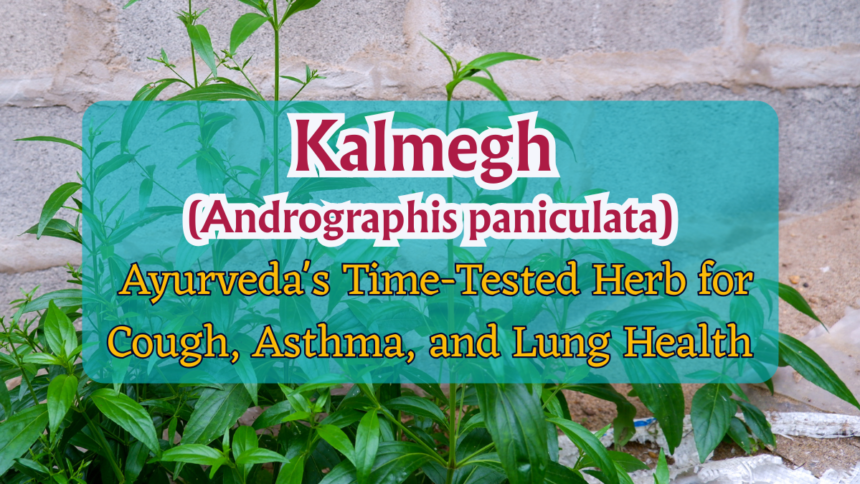
Kalmegh Andrographis paniculata, family Acanthaceae (making it a botanical relative of Vasaka, discussed in the previous article in this series) is an annual, erect herb growing to 30-90 cm in height, found across the Indian subcontinent, Sri Lanka, and throughout Southeast Asia in disturbed soils, roadsides, and low-altitude tropical environments. Its small, opposite, lanceolate leaves and tiny white-to-pinkish flowers produce no visual drama that might suggest its pharmacological significance the intensity of this plant is entirely hidden within its chemistry rather than expressed in its appearance.
The entire aerial portion of the plant leaves, stems, and young shoots is medicinally relevant, with the leaves containing the highest concentration of andrographolide and related compounds. Harvesting typically occurs before or at the beginning of flowering, when andrographolide concentration is at its peak, before the plant’s metabolic resources are redirected toward seed production.
In Ayurvedic classical texts, Kalmegh occupies a specific and well-defined clinical space among the bitter herbs differentiated from its fellow Tikta (bitter) herbs including Neem, Kutki, and Chiretta by its specific affinity for the liver, immune system, and infectious conditions, a specificity that modern pharmacological research has validated with unusual precision. Classical texts including Charaka Samhita describe Kalmegh for Jwara (fever), Yakrit vikara (liver disorders), and conditions involving purulent discharge and infection a traditional therapeutic cluster that maps directly onto andrographolide’s documented antipyretic, hepatoprotective, and antimicrobial mechanisms.
The Phytochemistry of Kalmegh: Andrographolide and Beyond
Kalmegh’s extraordinary pharmacological activity derives from a phytochemical profile dominated by diterpene lactones a compound class essentially characteristic of Andrographis paniculata in the medicinal plant kingdom, where their concentrations and specific structural variety are unmatched by related botanical species.
Andrographolide the primary and most extensively studied diterpene lactone, constituting 0.5–6% of dried leaf weight depending on geographic source, cultivation conditions, and harvest timing is responsible for the majority of Kalmegh’s documented pharmacological activity through mechanisms examined in detail in subsequent sections. Its distinctive labdane diterpene lactone structure confers specific molecular interactions with inflammatory signalling pathways and immune regulatory networks that have made it the subject of intensive pharmaceutical research interest globally.
Dehydroandrographolide and neoandrographolide related diterpene lactones present alongside andrographolide contribute complementary and partially distinct pharmacological activity, with dehydroandrographolide demonstrating particular potency in antiviral applications and neoandrographolide showing pronounced cardioprotective and anti-platelet aggregation properties.
Andrographiside and other andrographolide glycosides water-soluble conjugates of andrographolide with various sugar residues provide potentially improved oral bioavailability compared to parent andrographolide and may contribute to the clinical efficacy of aqueous preparations (decoctions, fresh juice) that would be expected to have poor andrographolide absorption based on its lipophilic chemistry.
Flavonoids including apigenin, luteolin, quercetin, and their glycosides contribute antioxidant, anti-inflammatory, and antiviral activity to Kalmegh’s overall profile, with the flavone fraction specifically documented as contributing to the herb’s fever-reducing effects through prostaglandin synthesis inhibition.
Polyphenolic acids including caffeic acid and chlorogenic acid provide additional antioxidant and hepatoprotective contributions relevant to Kalmegh’s liver health applications.
Kalmegh for Liver Protection: The Hepatoprotective Evidence
Liver protection is the domain where Kalmegh’s evidence is most extensive, most mechanistically detailed, and most directly comparable to and in some dimensions superior to the conventional pharmaceutical hepatoprotective drugs used in clinical practice.
Andrographolide’s hepatoprotective mechanism has been characterised across multiple converging pathways. At the primary mechanistic level, andrographolide activates the Nrf2 pathway the master transcription factor for cellular antioxidant response, also activated by sulforaphane from broccoli discussed in the gut health article and by curcumin from turmeric throughout this series enhancing the liver’s own antioxidant enzyme systems (superoxide dismutase, catalase, glutathione peroxidase, and glutathione-S-transferase) that constitute the primary defence against hepatocyte oxidative damage. Simultaneously, andrographolide inhibits NF-κB-mediated hepatic inflammatory signalling, reducing the chronic inflammatory component that drives progression from fatty liver through fibrosis to cirrhosis.
Research on Kalmegh in paracetamol-induced hepatotoxicity models the most clinically relevant experimental model for drug-induced liver injury, given paracetamol’s status as the most common cause of acute liver failure globally has demonstrated hepatoprotective activity comparable to or exceeding the pharmaceutical reference compound silymarin (milk thistle’s primary active compound) in several comparative studies, with andrographolide’s earlier activation of Nrf2 antioxidant defences providing hepatocyte protection even against doses of paracetamol that would otherwise produce irreversible liver damage.
A randomised clinical trial examining Kalmegh extract in patients with elevated liver enzymes secondary to various hepatic stressors found significant reductions in ALT, AST, and GGT enzyme levels over an eight-week treatment period, with improvements in hepatic symptoms and subjective wellbeing accompanying the laboratory improvements directly relevant human clinical evidence for the hepatoprotective applications that the mechanistic research predicts.
For the liver detox naturally context discussed in an earlier article in this series, Kalmegh provides a mechanism particularly complementary to Bhumi Amla and Kutki: while Bhumi Amla primarily provides antiviral hepatoprotection and Kutki primarily provides biliary-tract and Phase I detoxification support, Kalmegh’s andrographolide specifically addresses the NF-κB-mediated inflammatory pathway and Nrf2-mediated antioxidant response that constitute the liver’s primary defence against oxidative hepatic injury.
Kalmegh for Respiratory Infections: The Clinical Trial Evidence That Changed the Conversation
The respiratory infection applications of Kalmegh specifically its evidence for reducing the severity and duration of upper respiratory tract infections (colds and flu) represent the domain where the herb’s clinical evidence base has been most rigorously examined by the standards of evidence-based medicine, producing results that have meaningfully shifted the conversation about herbal medicine’s role in acute infection management.
The Kan Jang proprietary Andrographis extract developed and studied primarily by Scandinavian researchers beginning in the 1990s has been the subject of multiple randomised, placebo-controlled clinical trials examining its effects on acute upper respiratory infection. A landmark systematic review and meta-analysis by Coon and Ernst, published in the Cochrane-adjacent journal Lancet Infectious Diseases precursors and subsequently updated by multiple research groups, pooled data from multiple randomised controlled trials and found that Andrographis paniculata preparations significantly reduced symptom severity scores, significantly reduced the duration of upper respiratory infection symptoms, and significantly reduced complications rates compared to placebo with effect sizes that the reviewing authors considered clinically meaningful and statistically robust.
A randomised, double-blind, placebo-controlled study by Poolsup et al., published in the Journal of Clinical Pharmacy and Therapeutics, specifically examined Andrographis in acute upper respiratory infection and found significant reductions in throat symptoms, nasal symptoms, and overall symptom burden within 48–72 hours of initiating treatment an onset speed that directly challenges the stereotype that herbal medicines necessarily require weeks to produce clinically perceptible effects.
Separate clinical trials have examined Kalmegh specifically in influenza management, pharyngotonsillitis, and sinusitis, with positive findings across these distinct upper respiratory infection presentations suggesting a broad-spectrum anti-infective efficacy rather than narrow condition-specific effects consistent with andrographolide’s multi-mechanism anti-infective profile including direct antiviral activity, immune stimulation, and anti-inflammatory effects on respiratory mucosal tissue.
Kalmegh for Immune Stimulation: The Immunological Mechanisms
Kalmegh’s immune-stimulating properties positioned within the broader framework of immune enhancement relevant to both infection prevention and recovery operate through specific immunological mechanisms that distinguish it from the general “immunity boosting” claims common in supplement marketing.
Andrographolide has demonstrated specific stimulatory effects on macrophage activation enhancing phagocytic activity, respiratory burst capacity (the oxidative mechanism through which macrophages kill engulfed pathogens), and pro-inflammatory cytokine production in the acute, appropriate immune activation context rather than the chronic, disease-promoting inflammatory context where NF-κB inhibition is beneficial. This context-dependent immune modulation stimulating appropriate immune activation against infection while inhibiting pathological chronic inflammation is characteristic of the immunomodulatory rather than purely immunostimulatory classification that most accurately describes Kalmegh’s immunological activity.
Natural killer (NK) cell activity enhancement has been documented in research examining Andrographis effects on lymphocyte populations, with significant increases in NK cell cytotoxicity against virally infected cells providing a mechanism directly relevant to the antiviral applications most prominently studied in clinical trials.
T-lymphocyte proliferation enhancement and B-lymphocyte antibody production support have been documented in immunological research, providing adaptive immune system stimulation relevant to both active infection management and immune memory development directly relevant to the post-infection recovery and immune resilience applications that traditional Ayurvedic practice has long emphasised for Kalmegh.
Kalmegh’s Anti-Inflammatory Properties: NF-κB and Beyond
Andrographolide’s NF-κB inhibitory activity detailed in the liver protection section above in the hepatic context extends across multiple tissue types and inflammatory conditions to provide a broad-spectrum anti-inflammatory mechanism relevant to conditions well beyond the liver and respiratory system.
Research has documented significant andrographolide-mediated NF-κB inhibition in intestinal epithelial cells (relevant to inflammatory bowel disease), in synovial tissue (relevant to rheumatoid arthritis), in vascular endothelium (relevant to atherosclerosis and cardiovascular inflammation), and in neural tissue (relevant to neuroinflammation underlying conditions including Alzheimer’s disease and multiple sclerosis). Each of these tissue-specific applications represents an active area of research building on the fundamental mechanism characterised for andrographolide’s primary anti-inflammatory activity.
A particularly significant research direction involves Kalmegh in autoimmune conditions specifically multiple sclerosis, where two clinical trials (including one published in Multiple Sclerosis Journal) examining andrographolide supplementation found significant reductions in disease activity measures and improvements in fatigue scores in relapsing-remitting MS patients, providing preliminary human clinical evidence for andrographolide’s neurological anti-inflammatory activity in an autoimmune condition of significant unmet therapeutic need.
The COVID-19 Research Context
The COVID-19 pandemic produced a surge of research interest in Kalmegh that generated more scientific data in two years than the previous two decades of research. Clinical trials examining Andrographis in COVID-19 management were conducted in Thailand, India, and several other countries, with the Thai study a government-sponsored randomised trial producing results suggesting significant reductions in COVID-19 symptom duration and severity with Andrographis treatment compared to standard supportive care.
Mechanistic research identified multiple potential mechanisms for andrographolide’s anti-SARS-CoV-2 activity, including protease inhibition (relevant to viral replication), spike protein binding inhibition (relevant to viral cell entry), and immunomodulatory effects on the cytokine response relevant to severe COVID-19’s “cytokine storm” mechanism.
These findings are preliminary and require interpretation with appropriate caution the clinical trials conducted were generally smaller and less methodologically rigorous than would be required for definitive clinical recommendations. But they represent genuine preliminary evidence that has appropriately stimulated continued investigation and have substantially expanded the global research interest in Kalmegh as a potential adjunct in infectious disease management.
Practical Use: Forms, Dosing, and Integration
Kalmegh churna (powder): 1–3g twice daily, typically taken with warm water or honey to moderate the intense bitterness. Traditional Ayurvedic preparations often combine Kalmegh with jaggery or honey specifically to make the bitterness tolerable while providing the herb’s full phytochemical spectrum.
Standardised extract capsules: 200–400mg of andrographolide-standardised extract (typically standardised to 10–30% andrographolide), twice daily with meals. This is the form most directly comparable to the clinical trial preparations and provides the most consistent dosing for therapeutic applications.
Fresh Kalmegh juice: 10–20ml of expressed fresh leaf juice, typically taken in the morning on an empty stomach for acute infection management. While most challenging in terms of palatability, this preparation provides the full spectrum of Kalmegh’s phytochemicals in their most bioavailable form.
Duration guidance: for acute infection management (colds, respiratory infections, fever), clinical trials have typically used 5–7 day courses at therapeutic doses. For liver health and chronic anti-inflammatory applications, longer courses of 4–12 weeks are appropriate under Ayurvedic physician guidance.
Safety Profile and Contraindications
Kalmegh’s safety profile at standard doses is generally favourable based on clinical trial monitoring and traditional use data. Key considerations include: pregnancy Kalmegh is contraindicated in pregnancy due to documented uterotonic and potential abortifacient activity of andrographolide; autoimmune conditions while the preliminary evidence discussed above suggests potential benefit in MS, caution is warranted in other autoimmune conditions given the immune-stimulating activity; drug interactions andrographolide’s CYP enzyme modulatory activity creates potential interactions with pharmaceutical drugs metabolised through these pathways; and prolonged high-dose use associated with occasional reports of allergic reactions and elevated liver enzymes in isolated cases, warranting periodic monitoring for extended therapeutic use.
The Honest Bottom Line
Kalmegh occupies a position in Ayurvedic medicine and in contemporary pharmacological research that its intense bitterness perhaps appropriately signals: this is a serious herb with serious pharmacological activity, multiple well-characterised mechanisms, and a clinical evidence base for respiratory infection management and liver protection that stands up to scrutiny considerably better than most herbs marketed for similar applications.
The bitterness is the medicine. The andrographolide producing that bitterness protects hepatocytes from oxidative injury, stimulates macrophage and NK cell activity against respiratory pathogens, inhibits the NF-κB inflammatory signalling that drives chronic disease across multiple tissue types, and reduces upper respiratory infection severity in randomised trials with effect sizes that even sceptical systematic reviewers have described as clinically meaningful.
King of Bitters. The title is pharmacologically deserved.
Did this comprehensive guide to Kalmegh give you a new appreciation for what intense bitterness signals about a plant’s pharmacological depth? Share it with someone managing chronic liver challenges or frequent respiratory infections. Leave a comment with your own experience with this herb, or subscribe to our newsletter for more rigorously researched content giving Ayurveda’s most pharmacologically potent herbs the precise, evidence-grounded attention they deserve.