





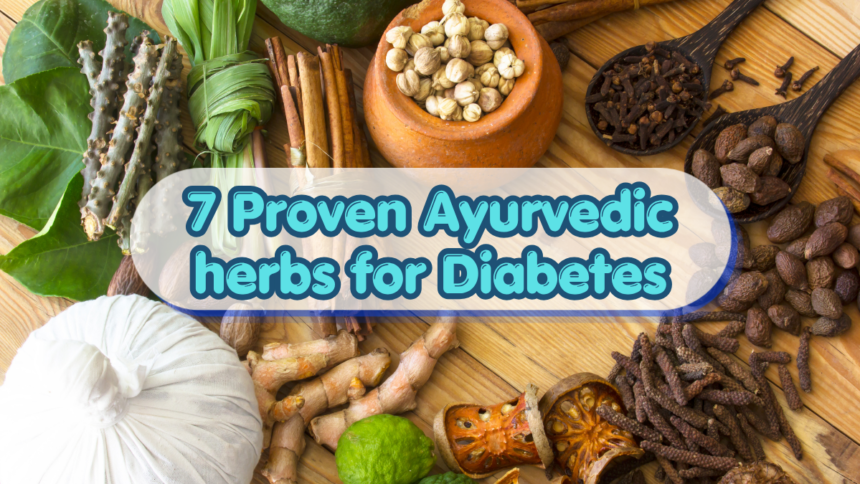
Ayurvedic herbs for Diabetes
A rigorously honest, evidence-informed guide to the Ayurvedic herbs with the strongest research behind them for blood sugar management what they do, how they work, and how to use them safely alongside conventional care Ayurvedic herbs for Diabetes
His grandmother had managed her blood sugar for over two decades without ever taking a pharmaceutical drug. Every morning she drank a small cup of bitter karela juice, chewed two leaves of fresh methi, and took a spoonful of a dark bitter churna that had been prepared by the same Ayurvedic practitioner for thirty years. Her HbA1c when her grandson, a physician, finally persuaded her to get it tested was 6.8%. Controlled. Stable. Managed with herbs, discipline, and a diet that would make any endocrinologist approve.Ayurvedic herbs for Diabetes
He tells this story not to suggest that pharmaceutical treatment for diabetes is unnecessary as a doctor he knows better than that but because it changed the way he thought about what is possible with traditional medicine when it is applied with knowledge, consistency, and appropriate oversight. His grandmother’s herbs were not working by magic. They were working by pharmacology. They contained bioactive compounds with measurable, mechanistically understood effects on glucose metabolism, insulin sensitivity, and pancreatic function. The fact that they were traditional did not make them less scientifically interesting. In many cases, it made them more so because their centuries of empirical refinement had already identified the compounds most likely to produce clinical benefit.Ayurvedic herbs for Diabetes
This article examines seven of the best-evidenced Ayurvedic and traditional herbs for blood sugar management not all herbs that have ever been claimed to help, but the seven with the most substantial clinical and mechanistic evidence. Each one has human trial data. Each one has identified bioactive compounds and understood mechanisms. And each one deserves to be part of the serious conversation about integrative diabetes management. Ayurvedic herbs for Diabetes
One important framing before we begin: these herbs work best as adjuncts to not replacements for conventional medical care, dietary management, and physical activity. If you are on diabetes medication, never change your regimen without consulting your doctor. Some of these herbs have meaningful glucose-lowering effects that can interact with medication and require monitoring. That is a sign of their efficacy, not a reason to avoid them but it is a reason to use them with awareness and medical collaboration.
Why Ayurvedic Herbs Deserve Serious Scientific Attention for Blood Sugar
Before examining individual herbs, it is worth understanding why this category of research is genuinely exciting from a pharmacological perspective.Ayurvedic herbs for Diabetes
Ayurvedic herbs for Diabetes Type 2 diabetes involves multiple interconnected pathological mechanisms: insulin resistance at the cellular level, impaired insulin secretion from pancreatic beta cells, excessive hepatic glucose production, chronic low-grade inflammation, oxidative stress, gut dysbiosis, and increasingly understood contributions from the gut-brain axis and adipose tissue endocrinology. No single pharmaceutical drug addresses all of these mechanisms simultaneously. This is why combination therapy is the rule rather than the exception in clinical diabetes management different drug classes target different mechanisms.
Many traditional herbs, by contrast, contain dozens of bioactive compounds that operate through multiple mechanisms simultaneously reducing glucose absorption in the gut, improving insulin sensitivity in peripheral tissues, reducing hepatic glucose output, protecting beta cells from oxidative damage, and modulating the inflammatory pathways that drive insulin resistance. This multi-target pharmacology is increasingly recognised as a genuine therapeutic advantage rather than a sign of non-specificity, and it is a significant reason why research interest in botanical medicines for metabolic disease has grown substantially in the past two decades. Ayurvedic herbs for Diabetes
The 7 Herbs: Evidence, Mechanism, and Practical Use
1. Bitter Melon (Karela / Momordica charantia) The Pancreatic Protector
Karela is perhaps the most iconic blood-sugar herb in the Indian tradition, consumed in households across the subcontinent as both food and medicine. Its intensely bitter taste characteristic of Tikta rasa in Ayurveda, a taste category consistently associated with blood-sugar management comes from a complex of bioactive compounds including charantin, polypeptide-p, momordicin, and vicine that exert glucose-lowering effects through multiple pathways. Ayurvedic herbs for Diabetes
Charantin has demonstrated hypoglycaemic activity comparable in some studies to the oral drug tolbutamide. Polypeptide-p is structurally analogous to insulin an insulin-like peptide that can stimulate glucose uptake in peripheral tissues. Momordicin activates AMP-activated protein kinase (AMPK) the same enzyme activated by metformin, one of the most widely prescribed diabetes drugs in the world promoting glucose uptake and reducing hepatic glucose production. Together, these compounds improve insulin sensitivity, protect pancreatic beta cells from oxidative damage, and reduce the rate of carbohydrate absorption in the gut. Ayurvedic herbs for Diabetes
A 2011 randomised controlled trial published in the Journal of Ethnopharmacology found that bitter melon significantly reduced fasting blood glucose and improved glucose tolerance in patients with Type 2 diabetes over a four-week period. A 2020 meta-analysis in PLOS ONE examined multiple trials and found consistent, statistically significant reductions in fasting blood glucose with bitter melon supplementation, though effect sizes varied across studies. Ayurvedic herbs for Diabetes
Practically, karela is most commonly consumed as fresh juice (30–50ml of raw juice on an empty stomach in the morning), cooked as a vegetable in stir-fries and curries, or as standardised extract capsules (standardised to 10% charantin equivalents). The bitter taste, while challenging for many, can be moderated by pairing with lemon juice and a small amount of salt.
2. Fenugreek (Methi / Trigonella foenum-graecum) The Fibre-Rich Insulin Sensitiser
Fenugreek methi occupies a unique position in the blood-sugar herb category because its primary mechanism is not primarily a pharmacological compound but rather a remarkable soluble fibre called galactomannan, which constitutes approximately 45% of fenugreek seed by weight. This viscous fibre slows gastric emptying and glucose absorption in the small intestine, flattening the post-meal glucose spike in a manner analogous to pharmaceutical alpha-glucosidase inhibitors but through a simple, food-based mechanism.
Beyond its fibre content, fenugreek contains 4-hydroxyisoleucine a unique amino acid found almost exclusively in fenugreek among food plants which has demonstrated direct insulin secretagogue activity in isolated pancreatic cells and improved insulin sensitivity in peripheral tissues in animal models. Trigonelline, another fenugreek alkaloid, has shown protective effects on pancreatic beta cells and improvements in glucose metabolism in multiple animal studies.
Human clinical evidence for fenugreek is among the strongest in the blood-sugar herb category. A landmark study by Sharma et al. published in the European Journal of Clinical Nutrition found that 100g of defatted fenugreek seed powder daily significantly reduced fasting blood glucose, improved glucose tolerance, and reduced LDL cholesterol in Type 2 diabetes patients. A subsequent dose-finding study found that even 15–25g of seeds daily produced significant improvements in fasting glucose and post-meal glucose response. A 2009 meta-analysis confirmed consistent glucose-lowering effects across multiple controlled trials.
Practical use: soaking one to two teaspoons of fenugreek seeds in water overnight and consuming the seeds and the water first thing in the morning is a simple and effective preparation. Fenugreek powder sprinkled on food, used in cooking, or taken as standardised extract capsules are additional options. The seeds have a mildly bitter, maple-like flavour that integrates easily into Indian cooking pairing naturally with dals, curries, and bread preparations.
3. Gurmar (Gymnema sylvestre) The Sugar Destroyer
Gurmar which translates literally as “destroyer of sugar” in Hindi is one of the most intriguing herbs in the entire blood-sugar botanical pharmacopoeia, and one of the most specifically targeted. Its primary bioactive compounds, the gymnemic acids, have a molecular structure remarkably similar to glucose molecules so similar that they competitively block glucose receptors in the intestinal mucosa, reducing the amount of glucose absorbed from the gut into the bloodstream after meals.
Gymnemic acids also bind to taste receptors on the tongue and in doing so, temporarily abolish the ability to taste sweetness. A piece of gurmar leaf held on the tongue for sixty seconds will prevent a person from tasting sugar for the next thirty to sixty minutes. This is not a trick or placebo it is a direct pharmacological demonstration of gymnemic acid’s receptor-blocking activity, and it is identical in mechanism to what the herb does in the intestine.
Beyond gut-level glucose absorption inhibition, gymnemic acids have demonstrated regenerative effects on pancreatic beta cells in animal studies an action that, if confirmed in humans, would make gurmar unique among blood-sugar herbs in addressing the beta cell decline that is central to the progression of Type 2 diabetes. Preliminary human research suggests improvements in both fasting and post-meal blood glucose, as well as reductions in HbA1c with standardised Gymnema extract.
A 2001 study by Baskaran et al. published in the Journal of Ethnopharmacology found that patients with insulin-dependent (Type 1) diabetes taking Gymnema sylvestre extract required lower insulin doses, had reduced fasting blood glucose, and showed improvements in HbA1c and serum lipids. A separate study in Type 2 diabetes patients found HbA1c reduction from 11.9% to 8.48% over eighteen months of treatment with Gymnema extract alongside conventional therapy.
Practical use: standardised Gymnema extract (400–800mg daily, standardised to 25% gymnemic acids) is the most consistently dosed form. Gurmar leaves can be chewed fresh (one to two leaves before meals), though the bitter taste and the loss of sweet taste perception make this a challenging preparation for regular use. The sweet-taste blocking effect can be used practically chewing gurmar before a meal that will contain carbohydrates reduces the palatability of sweet and starchy foods, providing behavioural as well as metabolic support.
4. Vijaysar (Pterocarpus marsupium) The Beta Cell Regenerator
Vijaysar Indian Kino tree is less internationally known than the previous three herbs but holds a prominent place in classical Ayurvedic diabetes treatment and has attracted serious pharmacological investigation. Its heartwood the dense central wood of mature trees contains a rich complex of pterostilbene, epicatechin, marsupin, and pterosupin that exert multiple complementary effects on glucose metabolism.
Epicatechin also found in dark chocolate and green tea has demonstrated beta cell regenerative and protective activity in animal studies that has not been shown by most other antidiabetic compounds. In diabetic animal models, epicatechin treatment was associated with restoration of beta cell mass, improvement in insulin secretion, and normalisation of blood glucose. Pterostilbene, a close structural analogue of resveratrol (the famous grape polyphenol), has demonstrated improvements in insulin sensitivity, reductions in hepatic glucose production, and antioxidant protection of pancreatic tissue.
A clinical trial published in the Journal of Research in Ayurveda found that Vijaysar heartwood powder (3–6g daily) significantly reduced fasting blood glucose and post-prandial blood glucose in Type 2 diabetes patients over twelve weeks, with improvements in HbA1c and lipid profiles. One of the classical Ayurvedic preparations of Vijaysar filling a wooden tumbler (Vijaysar tumbler) with water and allowing it to soak overnight, then drinking the infused water in the morning is both a culturally elegant and pharmacologically coherent delivery method, as the water-soluble compounds leach from the wood into the drinking water over the soaking period.
5. Cinnamon (Dalchini / Cinnamomum zeylanicum / verum) The Insulin Sensitiser in Your Spice Rack
Cinnamon is the most accessible and widely consumed herb on this list present in virtually every Indian kitchen and its blood-sugar-lowering effects are supported by one of the largest bodies of human clinical research of any spice or herb.
The primary active compounds responsible for cinnamon’s antidiabetic effects are hydroxychalcone polymers particularly MHCP (methylhydroxychalcone polymer) which have demonstrated insulin-mimetic activity, activating the insulin receptor signalling pathway and GLUT-4 glucose transporter expression in skeletal muscle cells, thereby improving cellular glucose uptake independently of insulin. Cinnamaldehyde, which gives cinnamon its characteristic flavour, has demonstrated AMPK activation, inhibition of protein tyrosine phosphatase 1B (a negative regulator of insulin signalling), and improvements in lipid metabolism.
The human clinical evidence is substantial. A landmark 2003 study by Khan et al. in Diabetes Care found that 1–6g of cinnamon daily for forty days significantly reduced fasting blood glucose (18–29%), triglycerides (23–30%), LDL cholesterol (7–27%), and total cholesterol (12–26%) in Type 2 diabetes patients. A 2012 meta-analysis in the Journal of Medicinal Food examining multiple randomised controlled trials found that cinnamon supplementation significantly reduced fasting blood glucose, total cholesterol, LDL cholesterol, and triglycerides while increasing HDL. A 2019 meta-analysis specifically examining HbA1c found a statistically significant reduction with cinnamon supplementation, though effect sizes were modest.
An important caveat: the two main commercial cinnamon species Cinnamomum verum (Ceylon cinnamon, or true cinnamon) and Cinnamomum cassia (cassia cinnamon, the most common form in Indian kitchens) differ significantly in their coumarin content. Cassia contains high levels of coumarin, which can be hepatotoxic at high supplemental doses over extended periods. Ceylon cinnamon contains negligible coumarin and is the safer choice for daily supplemental use above culinary amounts. At culinary doses of half to one teaspoon in cooking, the distinction is less clinically significant.
Practical use: half to one teaspoon of Ceylon cinnamon in morning chai, oatmeal, or warm milk daily provides consistent low-dose exposure to bioactive compounds. Standardised Ceylon cinnamon extract capsules (1–3g daily) are appropriate for supplemental use.
6. Amla (Indian Gooseberry / Emblica officinalis) The Antioxidant Anchor
Amla has appeared in multiple articles in this series for liver health, respiratory protection, and immune support because its extraordinary antioxidant profile, anchored by the highest natural vitamin C concentration of any food and a rich complex of tannins, flavonoids, and polyphenols, creates broad-spectrum biological benefits that touch virtually every organ system. For blood sugar management specifically, amla’s relevance operates through several distinct mechanisms.
Chromium, present in meaningful concentrations in amla, is an essential trace mineral that potentiates insulin action by facilitating insulin receptor signalling chromium deficiency is associated with impaired glucose tolerance, and repletion improves insulin sensitivity. Amla’s tannin-protein complexing activity slows carbohydrate digestion and absorption a mechanism similar to alpha-glucosidase inhibitors. Its exceptional antioxidant capacity protects pancreatic beta cells from the oxidative stress that is a primary driver of beta cell decline in Type 2 diabetes. And its anti-inflammatory effects reduce the chronic low-grade inflammation that drives insulin resistance.
A 2011 randomised controlled trial in the European Journal of Clinical Nutrition found that amla supplementation significantly reduced fasting blood glucose, post-prandial blood glucose, total cholesterol, LDL, and triglycerides in patients with Type 2 diabetes, while increasing HDL and improving antioxidant markers. A follow-up study specifically compared amla at two doses to standard diabetes medication (glibenclamide) and found comparable glucose-lowering effects at the higher dose a remarkable finding for a food-grade supplement with an exceptional safety profile.
Practical use: one to two fresh amla daily (the fresh fruit is available seasonally), amla juice (20–30ml on an empty stomach), amla powder (one teaspoon in warm water), or standardised amla extract supplements. In combination with other herbs particularly as the foundational ingredient in Chyawanprash amla’s bioavailability enhancement effects and antioxidant protection may amplify the efficacy of accompanying compounds.
7. Berberine-Containing Herbs: Daruharidra (Berberis aristata) The Metformin Analogue from Nature
Berberine a bright yellow alkaloid found in Daruharidra (Indian barberry, Berberis aristata) and closely related species including Berberis vulgaris has generated perhaps more scientific excitement in the metabolic disease field than any other plant compound in the past two decades. And for good reason: its primary mechanism of action AMPK activation is identical to that of metformin, the first-line pharmaceutical drug for Type 2 diabetes and one of the most prescribed drugs in the world.
AMPK (AMP-activated protein kinase) is a cellular energy sensor that, when activated, promotes glucose uptake into skeletal muscle, reduces hepatic glucose production, improves insulin sensitivity, promotes fatty acid oxidation, and reduces lipid synthesis addressing multiple core mechanisms of Type 2 diabetes simultaneously. Metformin was the first drug identified to work primarily through AMPK activation, and this mechanism is now understood to underlie many of its metabolic and potentially longevity-associated effects. Berberine activates AMPK through the same downstream pathway.
A landmark 2008 meta-analysis published in Metabolism examined multiple randomised controlled trials comparing berberine to standard diabetes drugs and found that berberine produced equivalent reductions in fasting blood glucose, post-prandial glucose, and HbA1c compared to metformin, glipizide, and rosiglitazone with comparable or better effects on lipid profiles and a favourable side effect profile. This is not a modest finding it places berberine in a category of clinical evidence that very few natural compounds have achieved.
Subsequent meta-analyses have consistently supported berberine’s glucose-lowering efficacy. A 2015 meta-analysis in Evidence-Based Complementary and Alternative Medicine analysed 27 randomised controlled trials and found significant reductions in HbA1c, fasting glucose, post-prandial glucose, total cholesterol, LDL, and triglycerides with berberine treatment.
Daruharidra is the classical Ayurvedic source of berberine used in Ayurvedic formulations including Rasayana preparations for metabolic and liver conditions for centuries. It is available as standardised berberine extract (typically from Berberis species) at doses of 500mg two to three times daily with meals, which is the most studied protocol in clinical trials.
An important interaction note: berberine inhibits CYP3A4 and P-glycoprotein enzyme systems involved in drug metabolism potentially increasing the blood levels and effects of several medications including cyclosporine, certain statins, and anticoagulants. Anyone on multiple medications should discuss berberine use with their physician before starting.
How to Use These Herbs Safely and Intelligently
Start One Herb at a Time
Introducing multiple blood-sugar-lowering herbs simultaneously makes it impossible to identify which is responsible for any observed change or any adverse effect. Begin with one herb for four to six weeks, monitoring fasting glucose and post-meal glucose if you have a glucometer, before adding a second. This systematic approach also allows dose adjustment and identification of any digestive sensitivity, which is occasionally reported with bitter herbs.
Monitor Your Blood Sugar More Frequently
If you are on diabetes medication and add any of these herbs to your regimen, increase your blood glucose monitoring frequency particularly fasting glucose and two-hour post-meal readings. The combined glucose-lowering effect of medication and herbs may be additive, and hypoglycaemia (excessively low blood sugar) is a real risk that requires monitoring and potential medication adjustment by your doctor. This is a positive problem but it requires medical collaboration to manage safely.
Quality and Standardisation Matter
The active compound content of herbal supplements varies enormously between products and manufacturers. Seek supplements from reputable manufacturers with third-party testing, transparent labelling of active compound content, and standardised extracts where available. GMP-certified facilities and products with FSSAI approval in India provide a quality assurance baseline. Avoid unregulated churnas from unknown sources for therapeutic use, particularly when trying to achieve consistent clinical effects.
Seasonal and Culinary Integration
Several of these herbs cinnamon, fenugreek, amla, and karela can be incorporated into daily cooking at meaningful doses without requiring supplement purchases. This approach has the advantage of providing consistent low-level exposure within a food matrix, which may improve bioavailability and reduce the risk of excessive doses. It also integrates blood sugar support into a broader whole-food dietary pattern the nutritional context in which these herbs have always historically operated.
The Honest Bottom Line
The seven herbs examined in this article karela, methi, gurmar, vijaysar, dalchini, amla, and Daruharidra are not folk remedies waiting to be validated. Several of them have clinical trial evidence comparable in quality and consistency to pharmaceutical drugs in their category. Their mechanisms are understood at the molecular level. Their safety profiles, used at appropriate doses with appropriate awareness of interactions, are favourable.
What they are not is a substitute for the foundational interventions that constitute the real medicine for Type 2 diabetes: a whole-food dietary pattern with reduced refined carbohydrates, regular physical activity, weight management, quality sleep, and stress reduction. No herb however well-evidenced will compensate for a lifestyle that continuously drives the insulin resistance these herbs are trying to address.
Used intelligently as adjuncts to lifestyle management and conventional medical care, introduced systematically, monitored appropriately, sourced from quality manufacturers, and discussed openly with your healthcare team these herbs represent a meaningful, evidence-consistent, culturally resonant layer of support for blood sugar management.
Your grandmother may have known what she was doing all along. Science is simply catching up.
Did this article give you something to discuss with your doctor or nutritionist? Share it with someone managing diabetes who is looking for evidence-based options beyond conventional medication alone. Leave a comment with your own experience with any of these herbs, or subscribe to our newsletter for more rigorously honest health writing at the intersection of Ayurveda and modern medicine.