




Panchakarma
Beyond the spa treatment and the wellness trend what Panchakarma actually is, what the science says about it, and whether this ancient system of therapeutic purification has something genuine to offer the modern body
She had heard about Panchakarma from three different people in the same month. A colleague who had done a seven-day programme at a Kerala retreat and described coming back “like a different person.” A functional medicine doctor who mentioned it in the context of chronic inflammatory conditions. And a magazine article that used the words “ancient detox ritual” alongside photographs of warm oil being poured over a serene forehead.
None of these descriptions quite told her what she wanted to know. Was it a medical treatment or a luxury holiday? Was there actual science behind it or was it the Ayurvedic equivalent of a juice cleanse elaborate, expensive, and ultimately unsubstantiated? What did it actually involve, and was it appropriate for someone with her specific health concerns?
These are precisely the right questions to ask. And they deserve serious, honest answers.
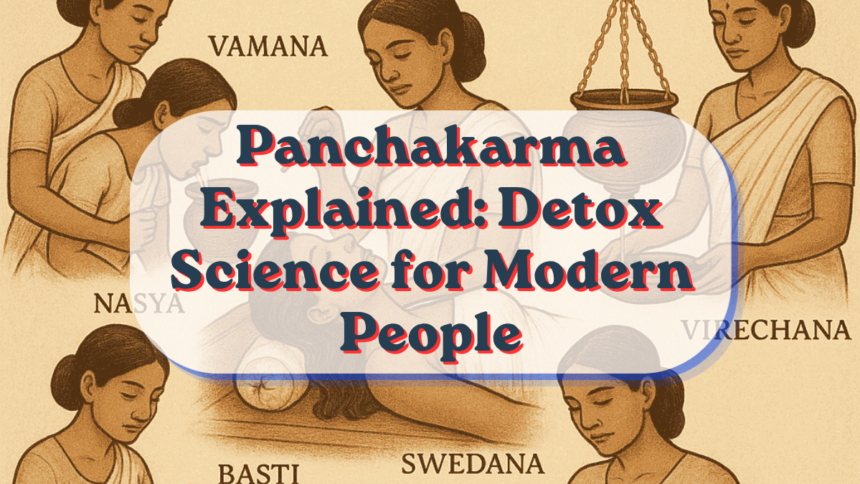
Panchakarma which translates from Sanskrit as “five actions” or “five procedures” is one of the most sophisticated and systematically developed therapeutic protocols in the classical Ayurvedic tradition. It is not a single treatment, not a weekend retreat experience, and emphatically not a casual wellness activity. It is a comprehensive, medically prescribed, sequentially administered set of therapeutic procedures designed to deeply cleanse the body of accumulated metabolic waste and toxins, restore doshic balance, and reset the physiological baseline in ways that simpler interventions cannot achieve. And it is supported by a growing body of modern research that, while not yet definitive, provides a more substantial scientific foundation than most people including most wellness consumers are aware of.
The Ayurvedic Framework: What Panchakarma Is Trying to Accomplish
To understand Panchakarma, you need to understand the Ayurvedic concept it is designed to address: Ama.
Ama literally “undigested” or “unripe” refers to the toxic metabolic residue that accumulates in the body when digestive fire (Agni) is insufficient, when intake exceeds the body’s capacity to process and assimilate, or when tissues produce more waste than the elimination channels can adequately clear. Ama is described in classical texts as sticky, heavy, and dull properties that cause it to accumulate in the channels (Srotas) of the body, obstructing normal physiological flow and creating the conditions for disease.
From a modern metabolic perspective, the concept of Ama has interesting parallels with what biomedical science understands as metabolic waste accumulation the products of incomplete digestion and cellular metabolism including advanced glycation end products (AGEs), reactive oxygen species, lipopolysaccharides from gut dysbiosis, lipid peroxidation products, and various inflammatory mediators that accumulate faster than the body’s detoxification and elimination systems can clear them in conditions of chronic stress, poor diet, and sedentary modern living.
Panchakarma is designed to accomplish three sequential objectives: Purvakarma (preparatory procedures that mobilise Ama from peripheral tissues into the digestive tract for elimination), the five Pradhana Karmas themselves (the primary elimination procedures), and Paschatkarma (post-treatment rejuvenation and dietary rehabilitation). This three-phase structure mobilisation, elimination, and restoration is conceptually sophisticated and clinically logical in ways that become clearer as each phase is examined.
The Three Phases of Panchakarma
Purvakarma: Preparing the Body for Deep Cleansing
Purvakarma the preparatory phase is, in many ways, the most important part of the Panchakarma process, and the one most commonly skipped or abbreviated in spa-format programmes. It involves two primary procedures administered over three to seven days before the main treatments.
Snehana oleation involves the administration of medicated ghee or oils internally and externally to saturate tissues with lipid-soluble substances. Internally, the patient drinks progressively increasing doses of medicated ghee (Sneha) on an empty stomach over several consecutive days. Externally, Abhyanga full-body massage with warm medicated oils is performed daily. The rationale for this lipid saturation is that many of the most persistent endogenous toxins are lipid-soluble sequestered in adipose tissue and cellular membranes rather than water-soluble compartments, and therefore inaccessible to elimination without prior lipid mobilisation. Modern toxicology confirms that persistent organic pollutants PCBs, dioxins, many pesticides, heavy metals sequestered in fat are indeed stored primarily in adipose tissue and require lipid-phase mobilisation for effective excretion. The medicated ghee protocol is physiologically coherent as a mobilisation strategy for lipid-soluble toxins, though the specific dynamics require further clinical investigation.
Swedana sudation or therapeutic sweating follows Snehana, using steam, herbal decoctions, or specific heat therapies to open the channels, promote vasodilation, further mobilise toxins from peripheral tissues, and drive them toward the digestive tract where elimination procedures will act on them. The combination of Snehana and Swedana is specifically designed to create the conditions for efficient elimination by the subsequent Pradhana Karmas.
The Five Pradhana Karmas: The Core Procedures
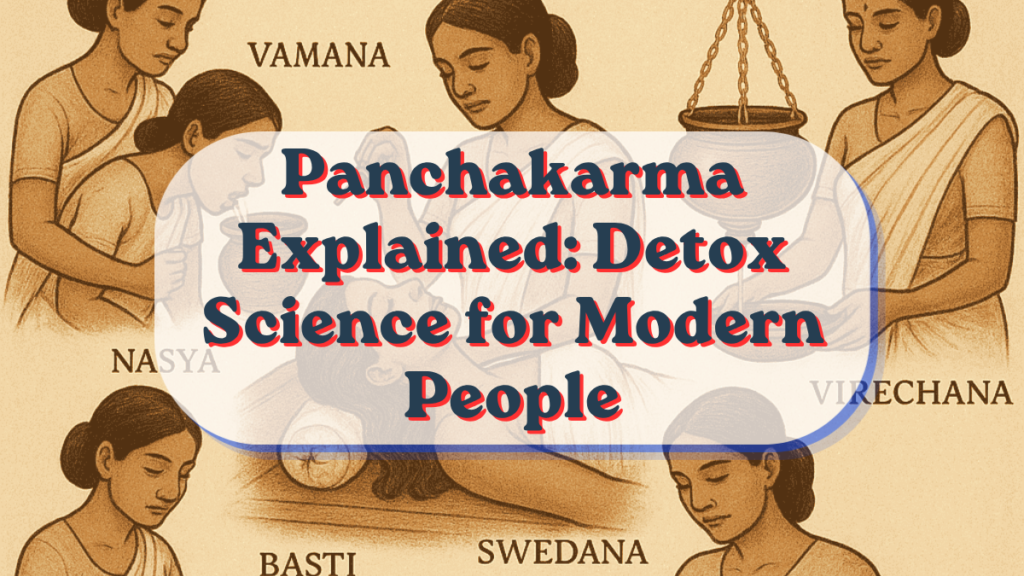
The five primary procedures of Panchakarma each address elimination through a different physiological route, and each is prescribed according to the patient’s constitution (Prakriti), current doshic imbalance (Vikriti), specific health conditions, and the time of year.
Vamana Therapeutic Emesis
Vamana controlled, medically supervised therapeutic vomiting is the primary treatment for conditions involving excess Kapha dosha: chronic respiratory congestion, asthma, chronic sinusitis, certain skin conditions, and digestive disorders characterised by sluggishness and mucus accumulation.
The procedure involves ingesting a specific medicated preparation typically a decoction of Madhanaphala (emetic nut) or other Vamaka drugs that induces controlled emesis, clearing accumulated Kapha from the stomach and upper respiratory tract. It is performed in a clinical setting with medical supervision, preceded by full Purvakarma preparation, and followed immediately by Samsarjana Krama a graduated dietary rehabilitation protocol.
In modern clinical practice, Vamana is arguably the least widely administered of the five procedures, both because its indications are specific and because it requires careful patient selection and precise administration. It is not appropriate for elderly patients, children, those with cardiovascular disease, severe debility, or various other contraindications making practitioner expertise and medical assessment essential prerequisites.
Research on Vamana is limited but suggestive. A clinical study published in the Journal of Ayurveda and Integrative Medicine found that Vamana significantly improved peak expiratory flow rate and reduced symptom scores in bronchial asthma patients, with benefits persisting at follow-up assessments. Additional studies have documented improvements in lipid profiles and inflammatory markers following Vamana therapy in appropriate patients.
Virechana Therapeutic Purgation
Virechana medically supervised therapeutic purgation using specifically selected Virechana drugs is the primary treatment for conditions involving excess Pitta dosha: liver and gallbladder disorders, skin diseases (psoriasis, eczema, acne), inflammatory conditions, hormonal imbalances, and various digestive disorders involving heat and inflammation.
Unlike Vamana, Virechana is more widely applicable and is considered one of the most important and frequently administered of the five Karmas. The purgative procedure is carefully calibrated to the patient’s constitution and condition, using agents ranging from gentle (Triphala, castor oil) to more potent (Trivrit, Senna) depending on clinical requirements. The goal is not simply to produce bowel movements it is a specifically dosed, timed, and supervised procedure that clears accumulated Pitta from the small intestine and liver, restoring the bile production and flow that is central to Pitta’s physiological function.
Modern research on Virechana has produced some of the most compelling clinical data in the Panchakarma literature. A randomised controlled trial published in the Ancient Science of Life found that Virechana therapy significantly reduced blood glucose levels, HbA1c, and lipid profiles in Type 2 diabetes patients compared to controls. Multiple studies have documented significant reductions in inflammatory markers including CRP, IL-6, and TNF-α following Virechana, with effects lasting months beyond the treatment period. Research on psoriasis has been particularly notable a 2020 study found that Virechana-based treatment produced significantly better outcomes than conventional topical treatment alone over a six-month follow-up period.
Basti Medicated Enema Therapy
Basti medicated enema therapy using herbal decoctions and medicated oils is described in Ayurvedic texts as the most important and broadly applicable of all five Panchakarma procedures. It is the primary treatment for Vata disorders: musculoskeletal conditions, neurological conditions, chronic pain, constipation, reproductive disorders, and the general deterioration associated with Vata aggravation in ageing.
There are two primary forms of Basti. Anuvasana Basti involves the administration of medicated oils retained in the colon nourishing, lubricating, and pacifying Vata through direct lipid-phase contact with the colonic mucosa and absorption into pelvic tissues. Niruha or Asthapana Basti involves the administration of herbal decoctions with various medicated additions cleansing, reducing, and eliminating accumulated Vata from the colon.
The colon is considered Vata’s primary seat in Ayurvedic physiology its health directly governs the quality of absorption, the regularity of elimination, and the stability of the entire nervous system. Modern research on the gut microbiome and the gut-brain axis has provided unexpected biological support for this ancient anatomical priority, with colonic health now understood to influence neurological, immune, and metabolic function through mechanisms that would have been completely opaque to classical Ayurvedic practitioners but that align closely with their clinical observations.
Research on Basti therapy is accumulating across several clinical domains. Studies in rheumatoid arthritis have found significant reductions in inflammatory markers and joint pain scores following Basti protocols. Research on lumbar spondylosis and sciatica has documented meaningful improvements in pain and functional capacity. A particularly interesting line of research examines Basti’s effects on gut microbiome composition with preliminary data suggesting that medicated Basti therapy alters microbial populations in directions consistent with reduced dysbiosis.
Nasya Nasal Administration of Medicated Substances
Nasya the administration of medicated oils, herbal preparations, or dry powders through the nasal route is the primary treatment for conditions affecting the head, neck, and sensory organs: chronic sinusitis, migraines, cervical spondylosis, certain neurological and psychiatric conditions, and the general category of disorders above the shoulders.
The nasal route is described in Ayurvedic texts as the “gateway to the head” providing direct access to the brain, sinuses, and central nervous system through the olfactory epithelium and the cribriform plate. Modern neuroscience has confirmed the anatomical basis for this claim: the olfactory nerve provides a uniquely direct pathway from the nasal epithelium to the brain that bypasses the blood-brain barrier a route now being actively investigated for drug delivery to the central nervous system.
Research on Nasya has documented improvements in migraine frequency and intensity, reductions in sinusitis symptoms, and improvements in certain neurological parameters. Its application in the earlier article’s discussion of air pollution protection represents one of its most practically relevant modern applications providing both mechanical filtration enhancement and pharmacological respiratory protection through the same nasal route that serves as the brain’s back door.
Raktamokshana Bloodletting
Raktamokshana therapeutic bloodletting is the fifth and least commonly administered of the Panchakarma procedures in modern clinical practice, involving the removal of small quantities of blood through various classical techniques including leech therapy (Jalaukavacharana), venepuncture, or surgical venesection.
It is specifically indicated for conditions involving blood-borne toxicity and Pitta disorders: certain chronic skin diseases including psoriasis and eczema, inflammatory conditions with a blood-heat component, and specific vascular disorders. Leech therapy in particular has attracted modern medical attention medicinal leeches produce hirudin (a direct thrombin inhibitor), hyaluronidase, and various anti-inflammatory compounds in their saliva that have documented therapeutic effects. Leech therapy is now used in reconstructive surgery to salvage compromised skin flaps and reattached digits, and research on its anti-inflammatory and anticoagulant mechanisms is ongoing.
What Modern Research Says: An Honest Assessment
The evidence base for Panchakarma is growing but heterogeneous a mix of high-quality clinical studies, smaller pilot trials, mechanistic research, and case series that collectively provide a more substantial scientific foundation than popular dismissals suggest, while falling well short of the large-scale randomised controlled trial evidence that modern evidence-based medicine ideally demands.
Several research findings merit specific attention. A 2002 study published in Alternative Therapies in Health and Medicine — one of the most-cited Panchakarma research papers found that a five-day Panchakarma programme significantly reduced blood levels of lipid-soluble toxicants including PCBs and beta-HCH (a pesticide residue), with reductions of 46–58% compared to controls. This is a remarkable finding because these are among the most persistent and biologically active environmental toxins known, normally considered essentially permanent once sequestered in adipose tissue. The Purvakarma oleation and sweating protocol, combined with the elimination procedures, appears to genuinely mobilise these sequestered toxins for excretion in ways that conventional medicine has no equivalent approach to.
A 2019 study in the Journal of Clinical and Diagnostic Research found that a comprehensive Panchakarma programme significantly reduced markers of oxidative stress including malondialdehyde and increased antioxidant enzyme activity, with improvements in subjective wellbeing, energy, and cognitive clarity that persisted at three-month follow-up.
Research on Panchakarma’s effects in rheumatoid arthritis, psoriasis, Type 2 diabetes, metabolic syndrome, and Parkinson’s disease has collectively produced encouraging results with particularly strong signals in inflammatory and metabolic conditions where the reduction of systemic Ama burden appears to have measurable downstream effects on disease activity.
The honest limitations of the current evidence include small sample sizes in many studies, lack of adequate control conditions for the placebo response inherent in intensive therapeutic programmes, limited long-term follow-up data, and the difficulty of standardising procedures across different Ayurvedic traditions and practitioners.
Panchakarma in Practice: What to Realistically Expect
Finding a Qualified Practitioner
Panchakarma must be administered under the supervision of a qualified Ayurvedic physician a BAMS (Bachelor of Ayurvedic Medicine and Surgery) or MD Ayurveda graduate with specific training and experience in Panchakarma procedures. This is non-negotiable. The procedures involve pharmacologically active interventions with real contraindications and potential adverse effects when improperly administered. A Panchakarma programme at a genuine Ayurvedic hospital or clinic where procedures are prescribed following a thorough constitutional and clinical assessment is categorically different from a spa that offers “Panchakarma treatments” as menu items.
In India, reputable Panchakarma centres exist in Kerala (which has the most sophisticated living tradition of classical Panchakarma), across Karnataka, in Gujarat, Maharashtra, and at dedicated Ayurvedic hospitals and research institutes including those affiliated with the Central Council for Research in Ayurvedic Sciences (CCRAS). Seeking NABH-accredited facilities provides a quality assurance baseline.
Duration, Preparation, and Commitment
Authentic Panchakarma programmes typically range from seven to twenty-one days with shorter programmes providing Purvakarma and selected Pradhana Karmas and longer programmes delivering the complete classical protocol with full Paschatkarma rehabilitation. A three-day “Panchakarma weekend” is not authentic Panchakarma it may offer Ayurvedic treatments of genuine value, but it does not achieve the therapeutic depth that the classical protocol is designed to produce.
Preparation involves dietary modification beginning several days before the programme shifting toward lighter, easier-to-digest foods (kitchari, warm cooked vegetables, limited dairy) while eliminating alcohol, processed foods, heavy meats, and known digestive stressors. Mental and schedule preparation is equally important: Panchakarma requires genuine rest, reduced stimulation, and freedom from significant professional and social obligations during and immediately following treatment. The healing response including the “healing crisis” of fatigue, emotional release, and temporary symptom exacerbation that often accompanies deep purification requires time and space to complete.
Contraindications: Who Should Not Undergo Panchakarma
Panchakarma is not appropriate for everyone. General contraindications include pregnancy, active fever or acute infection, severe debility or cachexia, active cancer undergoing treatment, severe cardiovascular disease, and very elderly or very young patients. Individual procedures have additional specific contraindications Vamana in cardiac patients, Virechana in certain nutritional deficiency states, Basti in specific bowel conditions which is why practitioner assessment before beginning any programme is mandatory, not optional.
Cost and Accessibility
Authentic Panchakarma is an investment programmes at reputable Kerala Ayurvedic hospitals range from approximately ₹15,000 to ₹80,000 or more for a full programme depending on duration, location, and institutional quality. This represents meaningful cost for most Indian families and raises legitimate questions about accessibility. It is worth noting that some Ayurvedic medical colleges offer supervised Panchakarma at significantly reduced cost as part of their clinical training programmes providing access to classical treatment at more accessible price points. AYUSH hospitals in several states also offer subsidised Panchakarma services.
Paschatkarma: The Restoration Phase
The post-treatment rehabilitation phase is as important as the purification procedures themselves and is often inadequately observed in abbreviated programmes. Samsarjana Krama the graduated dietary rehabilitation begins immediately after the primary procedures with the most easily digestible foods (thin rice gruel, then gradually more substantial preparations) and progresses over several days back toward normal eating. This graduated re-feeding is specifically designed to allow the digestive fire, which has been intentionally quieted during purification, to re-establish its full strength before the demands of a normal diet are placed upon it.
Rasayana therapy the administration of specific rejuvenating herbs and preparations follows Panchakarma to rebuild ojas (vital essence), restore tissue quality, and consolidate the therapeutic gains of purification. Classical Rasayana preparations including Chyawanprash, Ashwagandha, Shatavari, and specific medicated ghees are prescribed according to the individual’s condition and goals. This rejuvenation phase is what transforms Panchakarma from a detoxification into a genuine therapeutic renewal and it is what the classical texts describe as the ultimate purpose of the entire enterprise.
Integrating Panchakarma With Modern Life
The most realistic approach for most urban professionals is a focused Panchakarma programme once or twice yearly ideally aligned with seasonal transitions (the classical recommendation is treatment at the junction of seasons, particularly the transition into summer and the post-monsoon period) combined with year-round daily practices that maintain the digestive and eliminative health that Panchakarma restores.
Daily practices that support the Panchakarma baseline between programmes include Dinacharya the Ayurvedic daily routine comprising tongue scraping on waking (removing the Ama that accumulates overnight, visible as morning tongue coating), oil pulling with sesame oil, Abhyanga self-massage before bathing, regular meal timing to support digestive rhythm, and early sleep. These practices, individually modest in effect, collectively maintain the digestive efficiency and eliminative regularity that prevents the Ama accumulation that Panchakarma is then periodically called upon to clear.
The Honest Bottom Line
Panchakarma is neither the luxury wellness indulgence that its spa-marketing reputation suggests nor the miracle cure that its most enthusiastic advocates claim. It is a sophisticated, clinically prescribed, systematically sequenced therapeutic protocol with a three-thousand-year empirical tradition and a growing modern evidence base particularly for inflammatory conditions, metabolic disorders, environmental toxin burden, and the chronic dis-ease of modern physiological overload.
What it offers that essentially no other therapeutic system provides is a systematic approach to the mobilisation and elimination of lipid-soluble environmental toxins, the restoration of digestive integrity, the reset of inflammatory tone, and the deep physiological rest that allows the body’s own repair mechanisms to operate without the constant demands of digestion, detoxification, and stress response.
For a person living in an Indian city in 2026 exposed to air pollution, microplastics, pesticide residues, chronic psychological stress, disrupted circadian rhythms, and a food environment heavily weighted toward the inflammatory the question is not whether the body accumulates a burden that periodically needs comprehensive support. It clearly does. The question is whether there is a systematic, intelligent, evidence-consistent approach to providing that support.
Panchakarma, properly administered, properly prepared for, and properly followed, is the most comprehensive answer that any therapeutic tradition has yet provided to that question.
Did this article change how you think about Panchakarma? Share it with someone considering their first programme accurate information is the most valuable preparation they can make. Leave a comment with your own Panchakarma experience or questions below, or subscribe to our newsletter for more honest, deeply researched content at the intersection of Ayurveda and modern health science.