





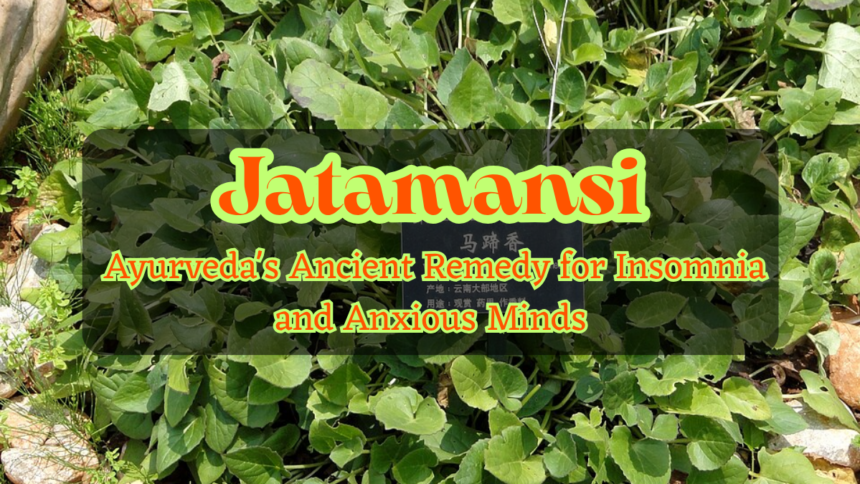
Jatamansi
A comprehensive, evidence-informed guide to Jatamansi what this rare Himalayan herb actually does for sleep, anxiety, and neurological health, with the pharmacological mechanisms, clinical research, and practical protocols behind one of Ayurveda’s most specifically targeted nervine herbs
She had tried everything the internet and her insomnia support group had suggested. Sleep hygiene so rigorous it had become a second job no screens after 8pm, temperature precisely calibrated, blackout curtains, white noise machine. Melatonin. Magnesium glycinate. An elaborate wind-down routine involving chamomile tea and guided meditation that she dutifully performed every night whether or not she felt like it. Ashwagandha for the underlying anxiety that she and her therapist both agreed was the primary driver.
Some of these helped. Marginally. The time it took to fall asleep had reduced from an hour and a half to about forty-five minutes. The 3am waking, however the lying-awake-with-racing-thoughts experience that she had come to describe as “the committee meeting,” after the committee of anxious, circular thoughts that convened uninvited in the small hours that persisted unchanged.
An Ayurvedic physician she consulted, after a thorough constitutional assessment, prescribed something she had not encountered in her extensive research: Jatamansi. A Himalayan herb she had never heard of, that he described as specifically indicated for the type of mental restlessness and sleep disruption she was experiencing not sedating in the way that pharmaceutical sleeping aids are sedating, but calming the specific neurological overactivity that was preventing her from settling.
Six weeks later, the committee meetings had become considerably quieter.
This article is the rigorous account of what Jatamansi is, what it pharmacologically does, and why the Ayurvedic physician’s precise prescription for this specific presentation made mechanistic sense.
What Is Jatamansi? Botanical Identity and Classical Significance
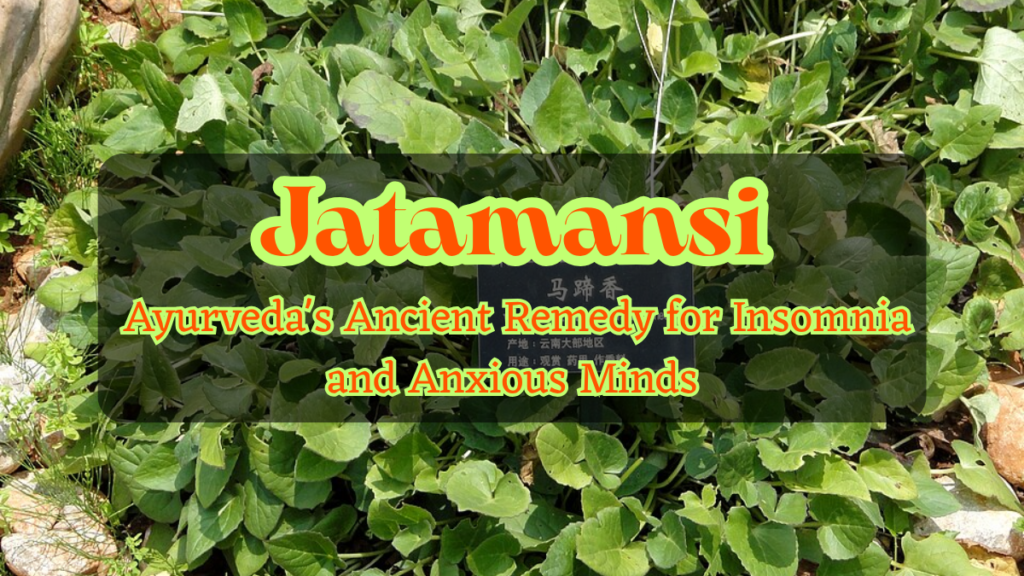
Jatamansi Nardostachys jatamansi, family Caprifoliaceae (honeysuckle family) is a small, aromatic, perennial herb growing at altitudes of 3,000–5,000 metres in the Himalayan regions of India, Nepal, Bhutan, and Tibet, requiring the specific combination of high altitude, rocky subalpine soil, and the particular climate of the high Himalayan meadows that makes its natural cultivation both geographically limited and logistically demanding.
The plant produces a distinctive rhizome its medicinally relevant portion from which grow the tufted leaf arrangements characteristic of the species. The rhizome, covered with the fibrous remains of old leaf bases that give it a distinctive jata (matted, dreadlock-like) appearance (directly reflected in the herb’s Sanskrit name: Jata = matted hair, Mansi = a fragrant root), contains the essential oils and sesquiterpenoid compounds responsible for its characteristic earthy, musky, slightly sweet fragrance and its pharmacological activity.
This same root or closely related species, particularly Nardostachys grandiflora is the spikenard of ancient history: the aromatic substance traded on ancient routes between India and the Mediterranean, referenced in ancient Egyptian texts, the Hebrew Bible, and the New Testament (where it appears as the costly ointment used to anoint Jesus at Bethany). This historical prominence as a luxury aromatic across multiple ancient civilisations reflects not just Jatamansi’s fragrance but its recognised calming and spiritually significant properties across diverse cultural contexts a cross-cultural empirical validation of its neurological effects that predates modern pharmacology by millennia.
In Ayurvedic classification, Jatamansi is described as Tikta (bitter) and Madhura (sweet) in Rasa, Laghu (light) and Snigdha (oily) in Guna, Sheeta Virya (cooling potency), and specifically classified as a premier Medhya Rasayana (brain-tonic rejuvenative) with particular indication for Unmada (mental disorders characterised by disturbed thinking and behaviour), Apasmara (epilepsy-like neurological conditions), and the specific constellation of symptoms Nidranasha (insomnia), Chittodvega (mental anxiety and restlessness), and excessive mental activity that the woman in this article’s opening story was experiencing.
This classical specificity an herb indicated not simply for “brain health” broadly but for the precise presentation of anxious mental overactivity combined with sleep disruption is precisely the kind of clinically precise traditional observation that modern pharmacology, when it examines the herb closely, increasingly finds to be mechanistically justified.
Conservation Status: An Essential Context
Before examining Jatamansi’s pharmacology, an important conservation context must be acknowledged. Nardostachys jatamansi is classified as a threatened species under Indian and international conservation frameworks, including CITES (Convention on International Trade in Endangered Species), due to decades of over-harvesting driven by demand from multiple sectors pharmaceutical, fragrance, and traditional medicine that has significantly depleted natural populations in the high-altitude Himalayan meadows where it grows.
This conservation status has two practical implications for this article’s readers. First, any commercially available Jatamansi product should be sourced from manufacturers who can document either cultivation-based sourcing (Jatamansi cultivation programmes exist in Uttarakhand and Himachal Pradesh, though at limited scale) or legally permitted, sustainably managed wild harvest, with appropriate documentation of supply chain ethics. Second, substitution with Nardostachys grandiflora (a closely related species with comparable but not identical pharmacological profile) is common in the market and should be disclosed on labelling rather than obscured under the general “Jatamansi” label a transparency issue that responsible manufacturers address but that consumers should be aware of when evaluating products.
The Phytochemistry of Jatamansi: The Sedative-Anxiolytic Pharmacological Foundation
Jatamansi’s neurological effects derive from a characteristic essential oil and sesquiterpenoid composition whose specific compounds map onto several distinct neuropharmacological mechanisms.
Jatamansone (valeranone) the primary sesquiterpenoid characteristic of Nardostachys jatamansi has demonstrated significant central nervous system activity in research, including sedative effects, anticonvulsant activity, and documented modulation of monoamine neurotransmitter systems (dopamine, serotonin, and norepinephrine) in ways relevant to both sleep architecture and anxiety pathophysiology. Jatamansone’s chemistry and pharmacological profile has drawn comparison with the sesquiterpenoids in valerian root (Valeriana officinalis), the most extensively researched Western nervine herb for insomnia, providing a pharmacological parallel that contextualises Jatamansi within the broader landscape of natural sleep-supporting compounds.
Nardosinone and related sesquiterpenoids contribute additional neuropharmacological activity including documented cholinesterase inhibitory effects relevant to cognitive function preservation and neuroprotection, extending Jatamansi’s applications beyond pure sedative-anxiolytic properties into neurodegenerative disease prevention.
Nardin and related iridoid glycosides provide anti-inflammatory activity in neural tissue, contributing to Jatamansi’s neuroprotective dimension and its traditional application in neurological conditions involving inflammatory components.
Coumarins including umbelliferone and scopoletin contribute to Jatamansi’s anti-inflammatory, antispasmodic, and mild anxiolytic properties, with scopoletin’s monoamine oxidase (MAO) inhibitory activity particularly relevant to its mood-supporting applications.
Essential oil components including pinene, beta-gurjunene, and various sesquiterpene alcohols contribute to the overall neurological activity profile and account for the aromatherapy applications of Jatamansi oil that parallel the documented anxiolytic effects of its oral preparations.
Jatamansi for Insomnia: Mechanisms and Evidence
The sleep-supporting applications of Jatamansi the most clinically prominent in contemporary Ayurvedic practice and the most relevant to the presentation described in this article’s opening story operate through mechanisms that are distinct from, and complementary to, both conventional pharmaceutical sleep aids and the more frequently discussed natural sleep interventions like melatonin and ashwagandha.
GABA receptor modulation represents the most pharmacologically important mechanism for Jatamansi’s sedative activity. Research has documented that Jatamansi extracts enhance GABAergic neurotransmission increasing the inhibitory signalling that constitutes the neurological foundation of sleep onset and sleep maintenance. This is the same receptor system targeted by benzodiazepines and Z-drugs (the most commonly prescribed pharmaceutical sleep aids), but through a different binding mechanism that as discussed in the Gotu Kola article in this series, where a similar GABAergic mechanism was identified appears to lack the tolerance, dependence, and cognitive side effect profile that characterises pharmaceutical GABAergic sleep aids.
Serotonin pathway support provides a second mechanism specifically relevant to the anxious mental overactivity that prevents sleep onset the “committee meeting” phenomenon described in this article’s opening. Jatamansi’s sesquiterpenoids have demonstrated monoamine-modulating effects including serotonin system support, directly relevant to the anxiolytic dimension of its sleep benefits. Since sleep onset difficulty driven by anxiety and racing thoughts involves inadequate serotonin-mediated calming of cortical excitability a mechanism related to but distinct from simple sedation Jatamansi’s combination of GABAergic and serotonergic mechanisms addresses both the sedation-induction and the anxiety-reduction components of sleep-onset insomnia simultaneously, a multi-mechanism profile that single-target pharmaceutical interventions typically cannot match.
Animal research documenting Jatamansi’s sleep-specific effects has found significant reductions in sleep onset latency, increases in total sleep time, and improvements in sleep architecture (ratio of deep, restorative sleep stages to total sleep time) compared to control conditions, with the effect profile showing characteristics more consistent with physiological sleep improvement than with pharmacological sedation animals sleeping more deeply and for longer without the ataxia and cognitive impairment that characterise benzodiazepine-induced sleep in the same research models.
A clinical study examining Jatamansi root extract in patients with insomnia found significant improvements in Pittsburgh Sleep Quality Index (PSQI) scores, with reductions in subjective sleep onset time, improvements in sleep quality ratings, and reduced frequency of nocturnal awakenings directly addressing the specific sleep parameters most impaired in the anxious insomnia presentation that Jatamansi is classically indicated for, and providing human clinical correlate to the animal research mechanisms.
Jatamansi for Anxiety and Mental Restlessness
Jatamansi’s anxiolytic activity documented in both research and the extensive Ayurvedic clinical observation that has consistently positioned it as specifically indicated for mental restlessness and anxiety states represents a pharmacologically distinct profile from the adaptogenic anxiety support discussed in the ashwagandha article in this series.
Where ashwagandha’s anxiety benefits operate primarily through HPA axis normalisation and cortisol reduction over weeks of consistent use, Jatamansi’s anxiolytic effects appear to operate more directly through central GABAergic and monoaminergic mechanisms that produce calming effects on anxious neural activity through a different mechanistic route one that is more specifically targeted to the neurological overactivity dimension of anxiety rather than the hormonal stress-axis dimension that ashwagandha primarily addresses.
This mechanistic distinction between Jatamansi and ashwagandha has direct clinical implications for prescribing specificity: Jatamansi is most specifically indicated for presentations characterised by mental restlessness, racing thoughts, and the cognitive hyperactivity that prevents mental settling features more directly related to GABAergic and monoaminergic dysregulation than to cortisol excess. Ashwagandha, conversely, is most specifically indicated for anxiety with prominent physiological stress symptoms elevated heart rate, physical tension, HPA dysregulation.
The Ayurvedic tradition of prescribing these herbs together for anxiety presentations with both cortisol-mediated physiological stress and neurological overactivity components a combination frequently encountered in clinical practice reflects a sophisticated understanding of complementary mechanisms that the modern pharmacological characterisation of both herbs retrospectively validates.
Jatamansi for Neurological Health and Neuroprotection
Beyond its acute sleep and anxiety applications, Jatamansi has attracted growing research interest for neuroprotective properties relevant to longer-term neurological health.
Research examining Jatamansi in experimental models of neurodegeneration has documented significant reductions in oxidative stress markers in neural tissue, protection against glutamate-induced excitotoxicity (a primary mechanism of neuronal death in conditions including stroke and neurodegenerative disease), and cholinesterase inhibitory activity (relevant to the preservation of acetylcholine-mediated cognitive function that declines in Alzheimer’s disease). A study published in the Journal of Ethnopharmacology specifically documented Jatamansi’s protective effects against aluminium-induced neurotoxicity in animal models relevant given documented associations between aluminium accumulation and neurodegenerative pathology.
The classical Ayurvedic classification of Jatamansi as a Medhya Rasayana not merely a sedative or anxiolytic but a brain-tonic with rejuvenative properties for neural tissue reflects this broader neuroprotective dimension that its sesquiterpenoid and coumarin phytochemistry supports across multiple mechanisms, positioning it as an herb whose clinical relevance extends from acute anxiety and sleep management into the longer-term neurological health territory of cognitive preservation and neuroprotection.
Jatamansi for Hyperthyroidism: A Specific Ayurvedic Application
A specific and clinically important application of Jatamansi that distinguishes it from other Ayurvedic nervines is its traditional indication in hyperthyroidism the overactive thyroid condition producing anxiety, restlessness, heat intolerance, rapid heartbeat, and insomnia that represents one of the most pharmacologically coherent Jatamansi indications from a mechanism-symptom matching perspective.
Jatamansi’s cooling Virya, calming GABAergic activity, serotonin-supporting properties, and direct cardiac-calming effects documented in research (significant reductions in heart rate in pharmacological studies of sesquiterpenoid fractions) collectively address the hyperexcitability, anxiety, insomnia, and palpitations that characterise hyperthyroidism’s symptomatic profile making it a specifically appropriate choice within Ayurvedic management of this condition. This application was referenced in the thyroid health article in this series as part of the Ayurvedic approach to hyperthyroidism specifically, and its pharmacological coherence with the condition’s pathophysiology demonstrates the precision that characterises Ayurvedic herb-condition matching at its most clinically rigorous.
Practical Use: Forms, Dosing, and Integration
Jatamansi is available in the following practical forms.
Jatamansi churna (root powder): 1–3g of dried root powder, typically taken with warm milk or honey before bedtime for sleep applications, or twice daily (morning and evening) for sustained anxiety management. The warm milk preparation supports the fat-soluble sesquiterpenoid components’ absorption.
Standardised extract capsules: 200–400mg of standardised extract, taken 1–2 hours before sleep for insomnia applications. Look for extracts specifying jatamansone or total sesquiterpenoid content to ensure pharmacologically meaningful standardisation.
Jatamansi essential oil in aromatherapy applications: 2–3 drops in a diffuser, or diluted (1–2% in a carrier oil such as sesame or coconut oil) for topical temple application, provides a distinct but complementary route of administration that the oil’s neurological activity supports through olfactory and transdermal pathways most appropriate for acute anxiety management and bedtime wind-down enhancement alongside oral preparations for insomnia.
Integration with other nervines: Jatamansi combines well with Brahmi (Bacopa monnieri) for cognitive function alongside sleep support, with Ashwagandha for presentations combining neurological overactivity with cortisol-mediated stress, and with Shankhapushpi for the comprehensive Medhya Rasayana combination that classical Ayurvedic prescribing traditions use for complex neurological presentations.
Safety Profile
Jatamansi’s safety profile at standard doses is generally favourable based on traditional use history and available research. Considerations include: potential additive effects with pharmaceutical CNS depressants including benzodiazepines, sedatives, and anticonvulsant medications requiring medical coordination rather than concurrent use without clinical oversight; pregnancy caution given insufficient specific safety data; and the conservation and sourcing considerations discussed earlier in this article, which affect product quality, authenticity, and ethical implications of use as much as direct pharmacological safety.
The Honest Bottom Line
Jatamansi occupies a specific and pharmacologically justified position within the Ayurvedic nervine pharmacopoeia that distinguishes it clearly from the other brain-supportive herbs in this series. Where Brahmi emphasises cognitive enhancement and memory consolidation, where Ashwagandha emphasises cortisol normalisation and physical stress resilience, and where Gotu Kola emphasises neuroplasticity and vascular-cognitive support, Jatamansi specifically addresses the neurological overactivity the GABAergic underfunction and monoaminergic imbalance that produces the restless, racing, settling-resistant quality of anxious insomnia that the woman in this article’s opening story was experiencing.
The committee meetings in the small hours are quieter now. That is not a metaphor for feeling slightly better. It is a specific pharmacological outcome of a herb that has been indicated for exactly this presentation by name, by description, by clinical tradition for over two thousand years, and whose mechanism modern neuropharmacology is now characterising precisely enough to explain why.
Did this deep-dive into Jatamansi identify a herb specifically matched to a sleep or anxiety presentation you or someone you know has been struggling to resolve? Share it with someone whose insomnia has not responded to the standard natural sleep interventions. Leave a comment with your own experience with Jatamansi or your questions about how it compares to other Ayurvedic nervines in your situation, or subscribe to our newsletter for more rigorously researched content giving Ayurveda’s most specifically targeted herbs the precise, evidence-grounded attention they deserve.