



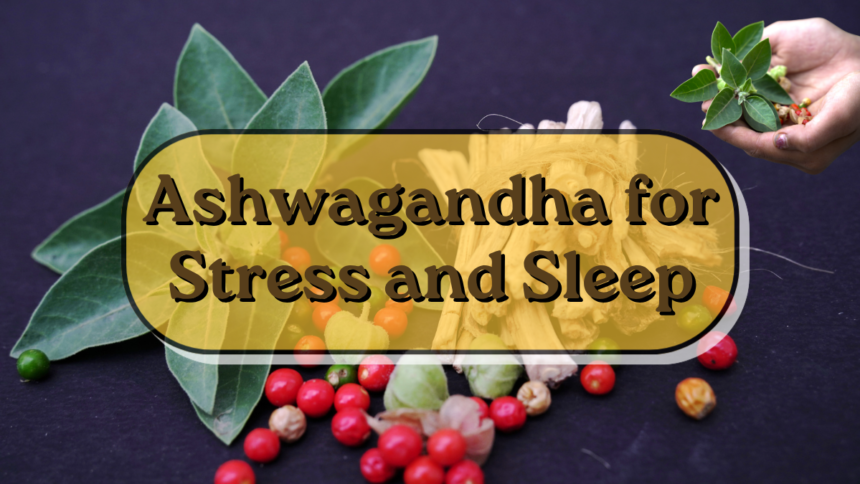
Ashwagandha for stress and sleep
A rigorous, no-hype deep-dive into Ashwagandha for stress and sleep the specific mechanisms, the actual clinical trial data, the extracts that matter, and the dosing protocols that the evidence genuinely supports
The supplement aisle in any pharmacy, health store, or e-commerce listing in 2026 makes a confident promise about ashwagandha: it will reduce your stress, fix your sleep, and probably your testosterone, your thyroid, and your immune system too, all from one capsule. This is the kind of claim that should make anyone with a basic understanding of pharmacology immediately sceptical. Very few compounds natural or pharmaceutical do everything well.
And yet. When you actually go looking for the primary research on Ashwagandha for stress and sleep specifically not the marketing copy, not the listicles, but the randomised controlled trials published in peer-reviewed journals something unusual happens. The evidence, for these two specific applications, holds up. Not perfectly. Not without caveats. But more substantially than the evidence behind the vast majority of supplements occupying adjacent shelf space.
This article is a deliberately narrow, deliberately rigorous look at Ashwagandha for stress and sleep specifically leaving aside the broader claims about thyroid function, testosterone, and immunity that deserve their own separate, equally rigorous treatment. What does the actual clinical trial literature say about Ashwagandha for stress and sleep? What are the mechanisms? What extracts were used in the studies that worked? And what should you actually expect if you try it?
Ashwagandha for Stress and Sleep: Starting With the Plant Itself
Withania somnifera its botanical name literally meaning “sleep-inducing Withania,” a naming choice made centuries before modern pharmacology existed to validate it has been used in Ayurvedic medicine for over three thousand years, classified as a Rasayana (rejuvenative) herb and specifically as one of the most important adaptogens in the classical materia medica.
The term “adaptogen” itself deserves brief clarification before diving into Ashwagandha for stress and sleep specifically, because it is frequently used loosely. An adaptogen, as originally defined by Soviet pharmacologist Nikolai Lazarev in 1947 and refined by subsequent researchers, is a substance that increases the body’s resistance to stress through non-specific mechanisms, is safe at normal doses, and produces a normalising effect on physiological function regardless of the direction of the existing imbalance meaning an adaptogen should help an overactive system calm down and an underactive system activate, rather than simply pushing in one direction. Ashwagandha for stress and sleep fits this definition more precisely than most herbs marketed under the adaptogen label, and the research increasingly explains the specific mechanisms that produce this bidirectional, normalising effect.
The active compounds responsible for Ashwagandha’s effects are a class of steroidal lactones called withanolides with withaferin A and withanolide A being the most extensively studied alongside alkaloids (including somniferine, anaferine, and withanine), saponins, and various sitoindosides. The relative concentration and ratio of these compounds varies dramatically depending on which part of the plant is used (root versus leaf), the extraction method, and the specific cultivar a variability that turns out to matter enormously when interpreting the clinical research, as later sections will explain.
Ashwagandha for Stress and Sleep: The Cortisol Mechanism, Examined Closely
The most consistently demonstrated effect of Ashwagandha for stress and sleep in the clinical literature is its impact on cortisol the primary stress hormone produced by the adrenal cortex under hypothalamic-pituitary-adrenal (HPA) axis regulation. This is worth examining mechanistically before looking at the clinical trial data, because understanding why cortisol reduction matters for both stress and sleep clarifies why a single herb might plausibly affect both.
Chronic psychological stress sustains elevated cortisol through continuous HPA axis activation. This is adaptive in short bursts cortisol mobilises glucose, sharpens alertness, and redirects resources toward immediate survival needs but chronically elevated cortisol produces a cascade of problems directly relevant to both stress symptoms and sleep quality: it disrupts the normal circadian cortisol rhythm (which should peak shortly after waking and decline progressively through the day, reaching its lowest point around bedtime), it interferes with the conversion of serotonin to melatonin, and it keeps the sympathetic nervous system in a state of heightened activation that is fundamentally incompatible with the parasympathetic state required for sleep onset.
Research on Ashwagandha for stress and sleep has consistently found measurable reductions in serum cortisol with supplementation. A landmark 2012 randomised, double-blind, placebo-controlled study by Chandrasekhar, Kapoor, and Anishetty, published in the Indian Journal of Psychological Medicine, examined 64 chronically stressed adults given high-concentration full-spectrum Ashwagandha root extract (300mg twice daily) over sixty days. The treatment group showed significant reductions in serum cortisol (a 27.9% reduction compared to placebo), alongside significant reductions on the Perceived Stress Scale and the General Health Questionnaire.
A 2019 randomised, double-blind, placebo-controlled study published in Medicine (Baltimore) by Salve et al. examined 240mg of a different standardised Ashwagandha root extract daily over sixty days in adults with self-reported stress, finding significant reductions in serum cortisol, the Perceived Stress Scale, and notably for the sleep dimension of this article the Hamilton Anxiety Scale and self-reported sleep quality measures.
What is methodologically important about both of these studies, and several others examining Ashwagandha for stress and sleep, is that they measured an objective biomarker (cortisol) alongside subjective symptom scales. This combination matters because subjective stress and sleep questionnaires alone are vulnerable to placebo response, expectation effects, and reporting bias particularly in supplement trials where blinding can be imperfect given the herb’s mild taste and texture. Concordant changes in serum cortisol provide more convincing evidence that something physiologically real is happening.

Ashwagandha for Stress and Sleep: The Sleep-Specific Trial Data
While the cortisol research provides a plausible mechanism connecting Ashwagandha for stress and sleep, the more directly relevant question for many readers is simpler: does it actually help you sleep better, and how was this tested?
The most rigorous sleep-specific trial is a 2019 randomised, double-blind, placebo-controlled study published in Cureus by Langade et al., which specifically examined Ashwagandha’s effects on sleep in 80 participants, including both healthy individuals and those with diagnosed insomnia. Participants received 300mg of standardised root extract twice daily for ten weeks. The study used validated sleep assessment tools including the Pittsburgh Sleep Quality Index (PSQI), the Sleep Onset Latency measure, and the Sleep Efficiency calculation not simply asking participants whether they felt their sleep had improved.
The results showed statistically significant improvements across multiple sleep parameters: total sleep time increased, sleep onset latency (the time taken to fall asleep) decreased, sleep efficiency improved, and importantly the improvements were significantly greater in the subgroup with diagnosed insomnia compared to healthy sleepers, suggesting the effect is most pronounced in those who actually have a sleep problem to correct, which is consistent with the adaptogenic “normalising” mechanism described earlier rather than a simple universal sedative effect.
A separate 2020 randomised, double-blind, placebo-controlled trial published in the Journal of Ayurveda and Integrative Medicine specifically examined an aqueous root extract in adults with insomnia and anxiety, finding significant improvements in sleep quality, sleep latency, and anxiety scores after eight weeks, with the magnitude of sleep improvement correlating with the reduction in anxiety scores providing further support for the mechanistic link between Ashwagandha’s stress-reducing and sleep-improving effects rather than these being two independent, coincidental benefits.
A smaller but methodologically interesting 2021 study examined Ashwagandha leaf extract (distinct from root extract a distinction explored further below) specifically for sleep onset, finding that a single evening dose improved sleep onset latency and total sleep time in a dose-dependent manner, with effects detectable even after a single administration rather than requiring weeks of cumulative dosing relevant for understanding the acute versus chronic dimensions of Ashwagandha for stress and sleep.
Ashwagandha for Stress and Sleep: Why Extract Type Matters More Than Most People Realise
One of the most important, and most frequently overlooked, considerations when evaluating Ashwagandha for stress and sleep research is that “ashwagandha” is not a single standardised product it is a plant from which multiple distinct extract types are produced, with meaningfully different chemical profiles and, the emerging research suggests, different primary effects.
Root extracts the most traditionally used part of the plant and the basis for most classical Ayurvedic formulations contain predominantly withanolide glycosides and a balanced alkaloid profile. Most of the stress-reduction research, including the Chandrasekhar and Salve studies discussed above, used standardised root extracts. KSM-66, one of the most extensively researched commercial extracts (developed by Ixoreal Biomed), is a full-spectrum root-only extract using a proprietary extraction process that preserves the natural ratio of compounds found in the root, and has the largest body of published clinical research of any commercial ashwagandha extract including several of the cortisol and stress studies cited in this article.
Root and leaf combination extracts, including Sensoril (developed by Natreon), use a different extraction process that concentrates withanolides to higher percentages and includes leaf material, producing a chemical profile with higher withaferin A content relative to root-only extracts. Sensoril has its own distinct body of clinical research, including studies specifically examining stress, anxiety, and sleep, generally using somewhat lower doses than KSM-66 studies given its higher withanolide concentration.
This distinction matters practically for anyone trying to evaluate Ashwagandha for stress and sleep research, because studies using different extracts are not directly comparable, dosing recommendations from one extract’s research do not automatically transfer to a different extract, and commercial products vary enormously in which extract they contain, at what concentration, and whether this is even clearly disclosed on the label. A 2021 analysis of commercially available ashwagandha supplements found significant variability in withanolide content between products claiming similar standardisation underscoring those that anyone seeking the specific benefits demonstrated in the Ashwagandha for stress and sleep research should look for products that specify the exact extract used (KSM-66, Sensoril, or another named, clinically studied extract) rather than generic “ashwagandha root powder” or “ashwagandha extract” without further specification.
Ashwagandha for Stress and Sleep: The Proposed Neurobiological Mechanisms Beyond Cortisol
While cortisol reduction is the most consistently measured biomarker in Ashwagandha for stress and sleep research, several additional mechanisms have been proposed and partially substantiated that may contribute to its effects, particularly on sleep architecture specifically.
GABA receptor modulation is one of the most pharmacologically interesting proposed mechanisms. GABA (gamma-aminobutyric acid) is the primary inhibitory neurotransmitter in the central nervous system, and pharmaceutical sleep medications including benzodiazepines and Z-drugs (zolpidem, zopiclone) work by enhancing GABA-A receptor activity. Preclinical research has found that triethylene glycol a compound isolated from Ashwagandha leaves and certain withanolides demonstrate GABA-mimetic and GABA-potentiating activity in animal models, providing a plausible mechanism for sedative and anxiolytic effects that operates somewhat analogously to (though almost certainly much more mildly than) pharmaceutical GABAergic sleep aids. This research remains primarily preclinical, and direct human evidence for this specific mechanism is still developing an important caveat in an otherwise reasonably solid evidence picture for Ashwagandha for stress and sleep.
Anti-inflammatory and antioxidant effects represent another mechanistic pathway relevant to both stress and sleep. Chronic stress is associated with elevated inflammatory cytokines (including IL-6 and TNF-α) that independently disrupt sleep architecture and contribute to the fatigue-yet-wired quality that chronically stressed, poor-sleeping individuals frequently describe. Withanolides have demonstrated anti-inflammatory activity through NF-κB inhibition in multiple studies, providing a secondary pathway through which Ashwagandha for stress and sleep may operate beyond direct HPA axis effects.
Thyroid modulation deserves brief mention here because of its indirect relevance to both stress and sleep, even though comprehensive examination of Ashwagandha and thyroid function belongs to a separate, dedicated discussion. Some research suggests Ashwagandha may support T4 to T3 conversion, and since thyroid dysfunction independently affects both stress resilience and sleep quality, this represents a possible tertiary mechanism relevant to the stress-sleep axis, though this should not be overstated as a primary effect for most users.
Practical Protocol: Dosing, Timing, and Realistic Expectations
Based on the specific clinical trials examining Ashwagandha for stress and sleep, several practical conclusions emerge that differ somewhat from generic supplement marketing advice.
Dosing in the studies showing the most consistent stress and sleep benefits ranged from 240mg to 600mg daily of standardised root extract, typically divided into two doses (morning and evening) rather than a single large dose, though the leaf extract sleep study found effects from single evening dosing specifically for sleep onset. For general stress reduction following the most replicated protocols, 300mg twice daily of a standardised extract (matching either the KSM-66 or comparable research) is the most evidence-aligned starting point.
Timing matters somewhat differently depending on which outcome you are prioritising. For stress and cortisol reduction, splitting the dose between morning and evening, as most successful trials did, appears most consistent with the research. For sleep specifically, taking the evening dose one to two hours before bedtime aligns with both the trial protocols and the practical pharmacokinetics of when you would want any mild sedative-adjacent effect to be active.
Duration before expecting results is an important and frequently mismanaged expectation. The studies demonstrating significant effects on Ashwagandha for stress and sleep generally ran for eight to ten weeks, with some showing detectable effects from two to four weeks but more robust and statistically reliable changes accumulating over the full study period. This is not a same-day anxiolytic in the way a benzodiazepine would be the cortisol-normalising, HPA-axis-recalibrating mechanism that the evidence best supports is a cumulative, weeks-long process rather than an acute effect, with the notable exception of the single-dose leaf extract sleep study, which suggests at least some component of sleep benefit may be more immediate.
Realistic effect sizes, based on the actual data rather than marketing claims, suggest meaningful but moderate improvements a roughly 25–30% reduction in cortisol and perceived stress scores in the better-designed trials, and clinically meaningful but not dramatic improvements in sleep onset latency and sleep efficiency in the sleep-specific trials. This is consistent with what would be expected from an adaptogen working through gradual HPA axis normalisation rather than a fast-acting pharmaceutical sedative and understanding this distinction helps calibrate expectations appropriately for anyone considering Ashwagandha for stress and sleep as part of a broader wellness strategy.
Safety Profile and Who Should Be Cautious
The safety data on Ashwagandha for stress and sleep across the clinical trials discussed is generally favourable, with mild and infrequent side effects reported primarily mild gastrointestinal upset, drowsiness (relevant and arguably desirable for the sleep application specifically), and occasional headache.
Several populations warrant specific caution. Ashwagandha has documented effects on thyroid function (as noted above) and should be used cautiously and with monitoring in those with hyperthyroidism, given its potential to further stimulate thyroid hormone activity. It is contraindicated in pregnancy, given limited safety data and traditional Ayurvedic caution regarding its use during gestation. It may have additive sedative effects when combined with other sedatives, sleep medications, or alcohol relevant for anyone using Ashwagandha for stress and sleep alongside other sleep aids, where the combination should be discussed with a physician. And it may interact with immunosuppressant medications given its immunomodulatory properties, and with thyroid medications given the effects noted above.
Case reports of liver injury associated with ashwagandha supplementation have appeared in the medical literature in recent years, though these remain rare relative to the volume of use, and several reported cases involved unclear product sourcing, contamination, or use of unusually high doses. This reinforces the broader point made throughout this series regarding herbal supplement quality: sourcing standardised, third-party-tested products from reputable manufacturers meaningfully reduces risk relative to unregulated powders or extracts of unknown composition.
What the Research Does Not Yet Show
In the interest of the rigorous, evidence-first approach this article has tried to maintain throughout, it is worth being explicit about the limitations of the current evidence on Ashwagandha for stress and sleep.
Most trials have relatively modest sample sizes (60–120 participants is typical), and while several have been replicated with consistent direction of effect, the overall evidence base, while genuinely better than most supplements, would benefit from larger, longer-duration, multi-site trials of the kind that pharmaceutical interventions typically undergo before approval. Long-term safety and efficacy data beyond roughly twelve weeks of continuous use is limited, meaning the evidence for indefinite, years-long supplementation is largely absent rather than reassuring or concerning it simply has not been adequately studied. And the mechanistic research, particularly regarding GABA receptor modulation, remains substantially preclinical, meaning the precise neurobiological explanation for some of the observed clinical effects is still being worked out rather than fully established.
None of this undermines the genuine value of the existing research on Ashwagandha for stress and sleep it simply means that “what the research actually shows,” as this article’s title promises, includes acknowledging where that research currently stops.
The Honest Bottom Line
Ashwagandha for stress and sleep represents one of the more genuinely evidence-supported applications within the often-overhyped adaptogen and herbal supplement category. Multiple randomised, double-blind, placebo-controlled trials using validated objective and subjective measures have found consistent, moderate, mechanistically plausible improvements in cortisol levels, perceived stress, sleep onset latency, sleep efficiency, and total sleep time with effects most pronounced in those with elevated baseline stress or diagnosed sleep difficulty, consistent with its classification as a normalising adaptogen rather than a universal stimulant or sedative.
The caveats are real and worth respecting: extract type and standardisation matter enormously and are inconsistently disclosed across commercial products, effects develop over weeks rather than appearing immediately, sample sizes in the existing trials are modest, and long-term data is limited. Ashwagandha for stress and sleep is not a replacement for addressing the underlying sources of chronic stress, nor for the sleep hygiene fundamentals consistent timing, light exposure management, screen reduction that remain foundational regardless of what supplement you add on top of them.
Used with realistic expectations, sourced as a clinically studied, standardised extract, and given the eight-to-ten-week timeframe the research suggests is necessary, Ashwagandha for stress and sleep is one of the few supplement claims in the contemporary wellness marketplace that the primary literature actually substantiates.
Did this deep-dive give you the evidence-based clarity you were looking for on Ashwagandha for stress and sleep? Share it with someone who has been considering trying it but wanted the research, not the marketing. Leave a comment with your own experience, or subscribe to our newsletter for more rigorously sourced, evidence-first deep-dives into the supplements and herbs everyone is talking about.