



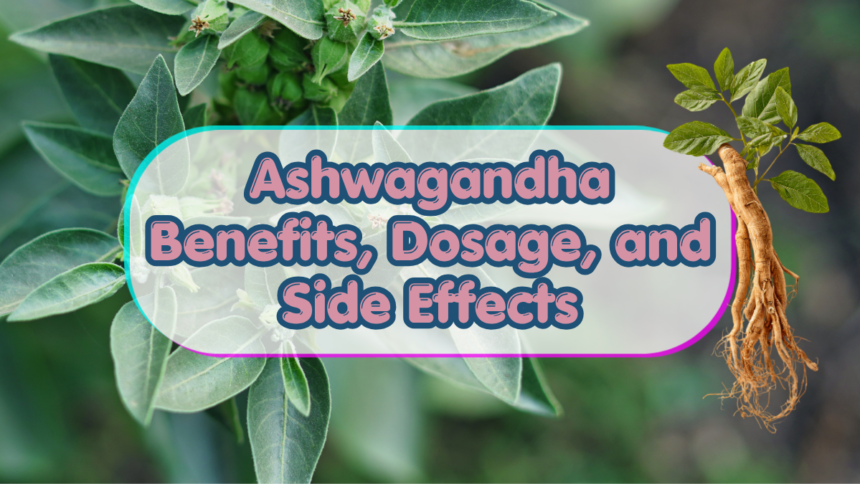
Ashwagandha Benefits, Dosage, and Side Effects
Everything you need to know before you buy what ashwagandha actually does, what the clinical research says, how much to take, and the side effects and interactions your supplement label will not tell you
Walk into any Whole Foods, Target, or CVS in America today and you will find ashwagandha in at least a dozen forms capsules, gummies, powders, tinctures, sleep formulas, stress blends, testosterone boosters, and protein shakes. It is in the celebrity wellness influencer’s morning routine. It is in the professional athlete’s recovery stack. It is in the menopausal wellness guide and the college student’s exam-prep kit. According to the American Botanical Council, ashwagandha was the second best-selling herbal supplement in the United States in 2022, with sales exceeding $90 million a figure that has continued climbing since.
And yet the majority of Americans buying ashwagandha have a surprisingly incomplete picture of what it actually is, what it genuinely does, what the science says, how much to take, and critically what the real risks and side effects are. The supplement marketing machine is extraordinarily good at amplifying benefits and extraordinarily quiet about contraindications, drug interactions, and the quality variability that makes one ashwagandha product genuinely effective and another essentially inert.
This guide is the complete, honest picture. Not the marketing version. The science version with all its nuance, its genuine excitement, and its appropriate caveats intact.
What Is Ashwagandha? Understanding the Herb Before the Hype
Ashwagandha botanical name Withania somnifera, also known as Indian ginseng or winter cherry is a small, woody shrub native to India, North Africa, and the Mediterranean. It has been used in Ayurvedic medicine for over three thousand years, primarily as a Rasayana a rejuvenating tonic classified in Ayurvedic texts as a premier adaptogen capable of enhancing resilience to physical and psychological stress, promoting vitality and strength, and supporting longevity.
The name “ashwagandha” comes from the Sanskrit for “smell of horse” a reference both to the herb’s distinctive earthy aroma and to the traditional claim that it confers the strength and vitality of a horse. Somnifera in its Latin name means “sleep-inducing” reflecting its classical use for promoting rest and recovery.
The medicinal parts of the plant are primarily the root and, to a lesser extent, the leaves and berries. The root contains the highest concentrations of the primary bioactive compounds: withanolides a class of naturally occurring steroidal lactones unique to the Withania genus along with alkaloids (including somniferine, somnine, and withanine), saponins, iron, and various other phytochemicals. Withanolides particularly withaferin A, withanolide D, and withanolide A are the compounds most extensively studied for pharmacological activity and the ones used to standardise high-quality ashwagandha extracts.
The Science of Adaptogens: What Ashwagandha Actually Does in Your Body
To understand ashwagandha, you need to understand the concept of an adaptogen and why it is more than wellness jargon.
The term “adaptogen” was coined in 1947 by Soviet pharmacologist Nikolai Lazarev to describe substances that increase the body’s non-specific resistance to stress physical, chemical, biological, and psychological while normalising physiological functions that have been disrupted by that stress. An adaptogen does not produce a single specific pharmacological effect; it modulates the body’s stress-response systems to make them more resilient and better calibrated.
Ashwagandha’s primary adaptogenic mechanisms operate through the hypothalamic-pituitary-adrenal (HPA) axis the body’s central stress-response system. Chronic psychological and physical stress drives sustained HPA axis activation, resulting in chronically elevated cortisol. Chronically elevated cortisol suppresses immune function, impairs memory and cognitive performance, disrupts sleep architecture, accelerates muscle protein breakdown, promotes visceral fat accumulation, raises blood pressure and blood glucose, and over time downregulates the very stress-response receptors that are supposed to shut it off, producing a dysregulated, difficult-to-modulate stress response.
Ashwagandha’s withanolides exert direct modulatory effects on HPA axis activity reducing hypothalamic CRH secretion, normalising pituitary ACTH response, and reducing adrenal cortisol output without suppressing the axis in a way that impairs normal stress response capacity. Simultaneously, withanolides upregulate GABA receptor activity the brain’s primary inhibitory neurotransmitter system contributing to the anxiolytic and sleep-promoting effects observed clinically. They also modulate NF-κB inflammatory signalling, reduce oxidative stress through Nrf2 pathway activation, and influence thyroid hormone metabolism, testosterone and LH production, and insulin signalling pathways producing the wide-ranging physiological effects that make ashwagandha relevant across multiple health domains.
The Evidence: What Does Clinical Research Actually Show?
Stress and Anxiety
The strongest and most consistent evidence base for ashwagandha is in the domain of stress and anxiety reduction and it is genuinely impressive. Multiple well-designed randomised controlled trials have demonstrated clinically meaningful effects.
A 2012 study published in the Indian Journal of Psychological Medicine one of the most cited ashwagandha trials randomised 64 adults with chronic stress to receive either 300mg of KSM-66 ashwagandha root extract twice daily or placebo for sixty days. The ashwagandha group showed significantly greater reductions in all stress assessment scale scores, serum cortisol (27.9% reduction versus 7.9% in placebo), and significantly greater improvements in sleep quality, fatigue, social dysfunction, and food cravings.
A 2019 study in Medicine examined 58 participants with perceived stress and found that ashwagandha supplementation (240mg daily of a standardised extract) significantly reduced cortisol and DHEA-S, improved sleep quality, reduced anxiety, and improved wellbeing scores versus placebo over eight weeks.
A 2021 systematic review and meta-analysis in PLOS ONE examining twelve randomised controlled trials concluded that ashwagandha supplementation was associated with significantly greater improvements in anxiety, stress, and cortisol reduction compared to placebo, with a consistent dose-response relationship and a favourable safety profile.
Sleep Quality
Ashwagandha’s effects on sleep quality deserve separate attention because they represent one of the herb’s most consistently replicated clinical benefits and one with a clear mechanistic explanation.
Triethylene glycol, isolated from ashwagandha leaves, has been specifically identified as the compound most directly responsible for sleep-promoting effects inducing NREM sleep in animal models through mechanisms involving adenosine signalling. Additionally, the anxiolytic and cortisol-reducing effects of withanolides contribute to sleep quality improvement by addressing one of the most common barriers to restorative sleep: the racing mind and elevated evening cortisol that characterise chronic stress.
A 2019 double-blind randomised controlled trial in PLOS ONE found that 300mg of ashwagandha root extract twice daily for ten weeks significantly improved sleep onset latency (time to fall asleep), total sleep time, sleep efficiency, sleep quality scores, and mental alertness upon waking compared to placebo. The effects were particularly pronounced in participants with reported sleep difficulties a population highly relevant to the chronically stressed American demographic that constitutes ashwagandha’s largest market.
Physical Performance and Muscle Strength
Ashwagandha’s traditional association with physical strength and vitality has found meaningful modern scientific support in resistance training research. Multiple randomised controlled trials primarily using KSM-66 or Sensoril extracts have examined ashwagandha’s effects on strength and body composition in healthy adults undergoing resistance training.
A 2015 study in the Journal of the International Society of Sports Nutrition randomised 57 young men to ashwagandha (300mg KSM-66 twice daily) or placebo alongside an eight-week resistance training programme. The ashwagandha group showed significantly greater increases in muscle strength on bench press and leg extension, significantly greater increases in muscle size (arm and chest measurements), significantly greater reductions in exercise-induced muscle damage, and significantly greater testosterone increases compared to the placebo group.
A 2020 study in the Journal of Functional Morphology and Kinesiology found similar results in trained adults, with ashwagandha supplementation producing meaningfully greater improvements in VO2 max, muscle recovery, and testosterone levels versus placebo.
The mechanisms behind these effects include reduction of cortisol (which promotes muscle protein catabolism), support of testosterone production through LH stimulation, reduction of exercise-induced oxidative stress and muscle damage, and potentially direct anabolic effects of withanolides at the muscle cell level.

Testosterone and Male Fertility
This is one of the most commercially emphasised ashwagandha benefit claims in the American market and it is one of the areas where the evidence is genuinely interesting but also genuinely more nuanced than the testosterone-booster marketing suggests.
Multiple studies have found significant improvements in testosterone levels with ashwagandha supplementation but the magnitude and clinical significance depend heavily on baseline status. The largest effects have been observed in men with documented infertility, those with elevated stress and cortisol (which suppresses testosterone through HPA-HPG axis competition), and those undergoing intense physical training. In healthy young men with normal testosterone levels, effects are smaller and less consistent.
A 2010 study in Fertility and Sterility examining infertile men found that ashwagandha supplementation significantly improved sperm count (167% increase), sperm motility (57% increase), semen volume (59% increase), and reduced sperm DNA fragmentation alongside significant improvements in testosterone (17% increase) and LH levels and reductions in cortisol and oxidative stress markers.
For men experiencing stress-related testosterone suppression a condition far more common in the chronically overstimulated American lifestyle than is generally recognised ashwagandha’s cortisol-reducing effects may produce meaningful secondary testosterone improvements. For men with genuinely low testosterone due to primary hypogonadism, ashwagandha is not a substitute for medical evaluation and treatment.
Cognitive Function and Memory
Ashwagandha’s effects on cognitive performance represent an emerging and genuinely promising area of research. Mechanistically, withanolides have demonstrated neuroprotective effects promoting neurogenesis, reducing beta-amyloid accumulation, protecting against oxidative stress in neural tissue, and modulating acetylcholine signalling through inhibition of acetylcholinesterase.
A 2017 randomised controlled trial in the Journal of Dietary Supplements found that 300mg of ashwagandha root extract twice daily for eight weeks significantly improved immediate memory, general memory, executive function, sustained attention, and information processing speed in adults with mild cognitive impairment. A 2020 study in Nutrients found improvements in logical memory, visual memory, executive function, and cognitive flexibility in healthy adults after twelve weeks of supplementation.
Thyroid Function
One emerging application of ashwagandha that is receiving increasing attention — particularly relevant for the substantial American population with hypothyroidism and Hashimoto’s thyroiditis — is its effects on thyroid hormone metabolism. A 2018 study in the Journal of Alternative and Complementary Medicine found that ashwagandha supplementation (600mg daily for eight weeks) significantly increased serum T3 and T4 levels in patients with subclinical hypothyroidism compared to placebo. Given ashwagandha’s known effects on HPA axis regulation, and the well-documented suppressive effects of chronic cortisol elevation on thyroid hormone conversion and TSH signalling, this finding is mechanistically coherent.
It also creates an important practical consideration: for people taking thyroid medication, ashwagandha’s thyroid-stimulating effects may increase the effect of their medication, potentially causing over-supplementation symptoms. Thyroid levels should be monitored by a physician if ashwagandha is added to a thyroid medication regimen.
Blood Sugar and Metabolic Health
Multiple studies have found that ashwagandha supplementation reduces fasting blood glucose, improves insulin sensitivity, and reduces HbA1c in both healthy adults and those with Type 2 diabetes effects likely mediated through cortisol reduction (elevated cortisol raises blood glucose), improvements in insulin receptor signalling, and anti-inflammatory effects that reduce insulin resistance. A 2015 study in the International Journal of Molecular Sciences found significant reductions in fasting blood glucose, post-prandial glucose, and HbA1c with ashwagandha supplementation over thirty days in patients with Type 2 diabetes.
Dosage: How Much Ashwagandha Should Americans Take?
This is where the guidance on most supplement labels is frustratingly vague and where the clinical research provides genuinely useful specific direction.
The dose ranges used in clinical trials that have produced significant results are as follows. For stress and anxiety reduction: 300–600mg of standardised root extract twice daily (600–1,200mg total daily), with the KSM-66 and Sensoril extracts being the most extensively studied. For sleep improvement: 300mg twice daily (the Chandrasekhar et al. protocol) or 600mg as a single evening dose. For physical performance and testosterone support: 300–600mg twice daily alongside resistance training. For cognitive function: 300mg twice daily for eight or more weeks.
These doses significantly exceed what many commercially available ashwagandha supplements provide products marketed at 100–150mg per capsule would require three to eight capsules to reach clinically studied doses, something the label rarely clarifies. This discrepancy between marketing dosing and clinical dosing is one of the most important practical pieces of information for American consumers navigating the supplement marketplace.
Standardisation matters enormously. Look for products standardised to 5% withanolides minimum this is the threshold most commonly associated with clinical efficacy. KSM-66 and Sensoril are the two proprietary extracts with the most robust clinical research behind them. KSM-66 is a full-spectrum root extract standardised to at least 5% withanolides; Sensoril uses root and leaf extract and is standardised to 10% withanolides at lower total doses. Both have extensive safety data and consistent clinical trial performance.
Side Effects: The Honest Assessment
Ashwagandha has a favourable safety profile in clinical research the majority of well-conducted trials report no serious adverse events at standard doses. However, side effects do occur, and the supplement marketing ecosystem systematically underreports them.
Gastrointestinal effects are the most commonly reported, including nausea, stomach upset, loose stools, and diarrhoea particularly when ashwagandha is taken on an empty stomach or at doses above 600mg at a time. Taking ashwagandha with food significantly reduces gastrointestinal side effects for most people.
Sedation and drowsiness can occur, particularly at higher doses or when ashwagandha is combined with other sedating substances including alcohol, benzodiazepines, or sleep medications. This is a direct consequence of its GABAergic and cortisol-modulating activity beneficial for sleep when intentional, potentially hazardous when driving or operating machinery.
Thyroid hormone elevation, as described above, can cause symptoms of hyperthyroidism in susceptible individuals heart palpitations, anxiety, heat intolerance, and weight loss particularly in those with pre-existing thyroid conditions or those already on thyroid medication.
Rare cases of drug-induced liver injury (DILI) have been reported in the medical literature a small but clinically documented risk that has led regulatory authorities in several countries to issue precautionary guidance. Most documented cases have involved high doses, prolonged use, or products of uncertain quality and composition. The risk appears low with standardised, quality-controlled extracts at recommended doses but it is not zero, and it represents a real reason for caution in individuals with pre-existing liver conditions.
Autoimmune stimulation is a theoretical concern that has clinical relevance: ashwagandha enhances immune activity, which is generally beneficial but may be counterproductive and potentially harmful in people with autoimmune conditions (lupus, rheumatoid arthritis, multiple sclerosis, Hashimoto’s thyroiditis) or those on immunosuppressive medications. The immune-stimulating effects that are beneficial for general immune resilience may exacerbate autoimmune activity in susceptible individuals.
Drug Interactions: What Your Supplement Label Will Not Tell You
Ashwagandha has several documented and theoretical drug interactions that are important for Americans taking multiple medications a description that applies to a substantial proportion of the adult population.
Sedative medications and substances benzodiazepines (Xanax, Valium, Klonopin), sleep medications (Ambien, Lunesta), opioids, and alcohol may have additive sedative effects when combined with ashwagandha. The combination can produce excessive sedation.
Thyroid medications levothyroxine (Synthroid, Levoxyl) and liothyronine (Cytomel) may have their effects enhanced by ashwagandha’s thyroid-stimulating activity, potentially causing over-replacement symptoms. Thyroid levels should be monitored if combining.
Immunosuppressive drugs used in organ transplant recipients and for autoimmune conditions may have their efficacy reduced by ashwagandha’s immune-enhancing effects.
Diabetes medications and insulin ashwagandha’s glucose-lowering effects may be additive with pharmaceutical antidiabetic agents, increasing the risk of hypoglycaemia. Blood glucose monitoring should be increased if combining.
Blood pressure medications ashwagandha has demonstrated modest blood-pressure-lowering effects in several studies, which may be additive with antihypertensive medications.
Who Should Not Take Ashwagandha
Certain populations should avoid ashwagandha or use it only under medical supervision. Pregnant women ashwagandha has abortifacient properties in animal studies and has traditionally been contraindicated in pregnancy in Ayurvedic medicine. This is a clear contraindication regardless of how early or established the pregnancy. Breastfeeding women insufficient safety data exists for lactation. People with autoimmune conditions as described above, immune stimulation may be counterproductive. People with pre-existing liver disease given the rare DILI reports, caution is warranted. People scheduled for surgery ashwagandha’s sedative and potentially blood-pressure-lowering effects may interact with anaesthesia; most anaesthesiologists recommend stopping two weeks before surgery. People with haemochromatosis ashwagandha contains significant iron, which may be problematic in iron-overload conditions.
How to Choose a Quality Ashwagandha Supplement in America
The American supplement market is, in the words of one NIH researcher, “the wild west of product quality.” Because the FDA regulates supplements as foods rather than drugs, manufacturers are not required to prove efficacy or even consistency before selling a product. Independent testing by organisations including ConsumerLab, NSF International, and USP has repeatedly found that commercial supplements contain anywhere from 0 to 200% of the label-claimed active ingredient.
The most reliable purchasing approach involves looking for products that use KSM-66 or Sensoril branded extracts (whose manufacturers verify content and conduct clinical trials), carry third-party testing certification from NSF International, USP, or Informed Sport, clearly state the percentage of withanolides on the label, and avoid proprietary blends that obscure individual ingredient doses.
Expect to pay a reasonable price for quality the lowest-cost ashwagandha products on Amazon are not reliably delivering what their labels promise. A high-quality ashwagandha supplement at clinically studied doses in America typically costs between $20 and $45 per month.
The Honest Bottom Line
Ashwagandha is one of the most genuinely evidence-supported herbal supplements available in the American market with a clinical research base for stress, sleep, physical performance, cognitive function, and hormonal health that is substantially more robust than the average supplement category. The excitement is warranted.
It is also a pharmacologically active botanical with real side effects, real drug interactions, real contraindications, and a product quality landscape that requires consumer diligence to navigate. It is not appropriate for everyone. It is not a substitute for medical care. And at the doses and quality levels that produce clinical benefit, it is more substantive than the gummy supplement in a pastel-coloured pouch at the checkout counter suggests.
Taken by the right person, at the right dose, from a quality-verified source, with appropriate awareness of contraindications and interactions ashwagandha is one of the most valuable tools available for the pervasive American challenge of chronic stress and its metabolic, hormonal, and cognitive downstream effects.
Know what you are taking. Take it well. And let the evidence not the marketing guide your decision.
Did this guide give you a clearer picture of ashwagandha than your supplement label ever did? Share it with someone navigating the supplement aisle for the first time, leave a comment with your own ashwagandha experience, or subscribe to our newsletter for more rigorously honest supplement science and health guidance tailored for informed Americans.