


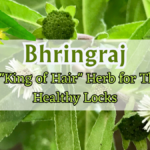



A comprehensive, evidence-informed guide to Bhringraj what this Ayurvedic “King of Hair” actually does for hair growth, scalp health, and premature greying, with the pharmacological mechanisms, clinical research, and practical protocols behind its remarkable traditional reputation
She had watched her mother’s hair thin gradually through her thirties and forties, and when she began noticing similar changes in herself at thirty-one the hairline slowly receding at the temples, the part line widening, more hair collected in the shower drain than seemed reasonable she had the uncomfortable recognition that she was watching a familiar pattern unfold in herself. Her dermatologist confirmed androgenetic alopecia with a hormonal component. She was offered minoxidil. It helped somewhat. She used it consistently and noticed stabilisation but not the density restoration she was hoping for.
An Ayurvedic practitioner she consulted added something alongside not replacing the minoxidil, which she continued, but supplementing it with a specific herbal oil that her grandmother had actually used throughout her life, never understanding why, simply continuing a practice passed down through the family. Bhringraj oil, prepared in a sesame base with a handful of complementary herbs. She began applying it twice weekly with the traditional scalp massage technique, leaving it on overnight before washing.
The changes were gradual hair health never responds dramatically or quickly regardless of what you do. But at six months, reviewing photographs side by side, the difference was unmistakable enough that her dermatologist noticed without being told what she had changed.
This is Bhringraj. And its reputation as the King of Hair in Ayurvedic tradition turns out to rest on a pharmacological foundation considerably more substantive than most people including most Western-trained dermatologists are aware of.
What Is Bhringraj? Botanical Identity and Classical Significance
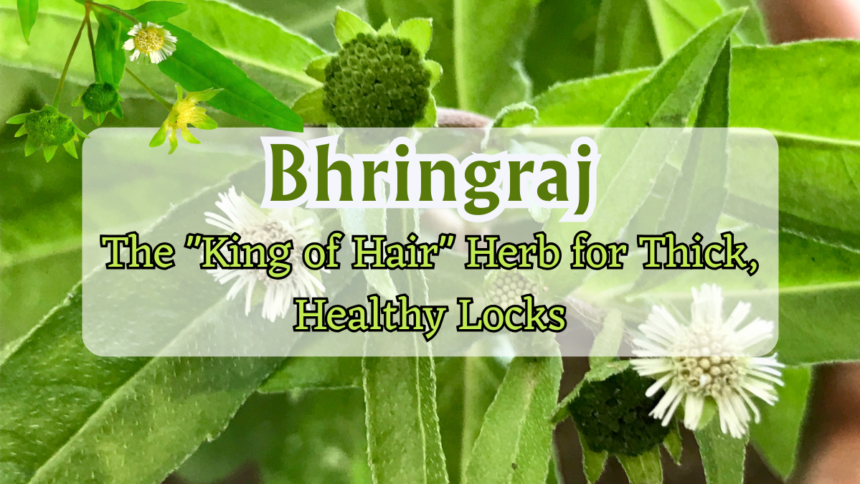
Bhringraj Eclipta alba (also classified as Eclipta prostrata in some taxonomic references), family Asteraceae is an annual, moisture-loving herb found growing in damp, disturbed soils across the tropical and subtropical regions of India, Southeast Asia, Africa, and the Americas. Its modest appearance a low, spreading plant with lanceolate leaves covered in fine hairs, small white flower heads, and no particular visual drama gives absolutely no indication of the pharmacological complexity it contains or the therapeutic reputation it has accumulated over three thousand years of Ayurvedic use.
The Sanskrit name Bhringraj translates as “King of Bees” or, in some interpretive traditions, “King Among Those That Cause Blackening” a name that references both the plant’s traditional application for hair darkening and premature greying prevention, and its historical association with the dark-colouring compounds that characterise its phytochemistry.
In Ayurvedic classification, Bhringraj is described as having Tikta (bitter) and Kashaya (astringent) Rasa, Laghu (light) and Ruksha (dry) Guna, Ushna Virya (heating potency), and Katu Vipaka (pungent post-digestive effect). Its classical indications extend considerably beyond hair health to include liver support, Kapha-Vata respiratory conditions, and even certain neurological applications reflecting a pharmacological breadth that the phytochemical research described below substantiates. But it is the hair and scalp applications that have made Bhringraj the most specifically recognised and most culturally embedded hair herb in the Indian tradition.
The Phytochemistry of Bhringraj: What Creates the Hair Magic
Bhringraj’s hair and scalp applications rest on a phytochemical profile whose pharmacological characterisation has advanced significantly in the past two decades, providing molecular-level explanations for mechanisms that traditional practitioners observed empirically.
Wedelolactone a coumestan phytochemical uniquely concentrated in Bhringraj (and found in few other commonly used plants) has emerged as the most pharmacologically interesting single compound in the herb’s composition, demonstrating in research: 5-alpha-reductase inhibitory activity (directly relevant to androgenetic alopecia management), anti-inflammatory activity through NF-κB inhibitory pathways, hepatoprotective effects through anti-inflammatory and antioxidant mechanisms, and estrogenic activity that has attracted research interest for menopausal and reproductive health applications. The 5-alpha-reductase inhibitory activity is particularly clinically significant for hair loss management: 5-alpha-reductase is the enzyme that converts testosterone to dihydrotestosterone (DHT) in the scalp, and DHT-mediated follicular miniaturisation is the primary mechanism driving androgenetic alopecia (male and female pattern hair loss) in genetically susceptible individuals. Pharmaceutical 5-alpha-reductase inhibitors (finasteride, dutasteride) are among the most effective available treatments for this type of hair loss, and Bhringraj’s wedelolactone providing similar enzyme inhibitory activity through a natural compound represents one of the most pharmacologically coherent explanations for this herb’s traditional hair loss prevention reputation.
Ecliptine and other alkaloids contribute to Bhringraj’s anti-inflammatory and potentially neuroprotective properties, with ecliptine specifically documented as contributing to the melanocyte-stimulating activity relevant to the herb’s anti-greying applications.
Eclalbasaponins triterpene saponins specific to Eclipta species have demonstrated significant hair growth-promoting activity in cell culture and animal studies through mechanisms including stimulation of hair follicle cell proliferation and inhibition of the apoptosis (programmed cell death) that causes follicles to enter the regression phase of the hair growth cycle prematurely.
Polypeptides and sterols in Bhringraj have demonstrated scalp-penetrating and follicle-nourishing properties when formulated in oil preparations, consistent with the traditional preparation method of infusing Bhringraj in sesame oil to create a topical vehicle that delivers the herb’s active compounds directly to the scalp and follicle environment.
Beta-sitosterol present in significant concentrations in Bhringraj provides additional 5-alpha-reductase inhibitory activity (beta-sitosterol has its own documented effects on DHT production) complementary to wedelolactone’s mechanism, creating a dual-mechanism DHT-reducing profile from within a single herb’s phytochemical profile.
Coumestans including wedelolactone and demethylwedelolactone contribute antioxidant protection relevant to the oxidative stress dimension of hair follicle ageing and hair loss, as discussed in the subsequent mechanisms section.
The Hair Growth Cycle: What Bhringraj Is Working With
Understanding Bhringraj’s pharmacological contributions to hair health requires a brief orientation to the hair growth cycle, since the herb’s mechanisms operate at specific points in this cycle rather than through a single undifferentiated “hair growth” effect.
Hair follicles cycle through three phases: Anagen (the active growth phase, lasting 2–7 years for scalp hair), Catagen (a brief transitional phase lasting 2–3 weeks during which hair growth stops and the follicle regresses), and Telogen (the resting phase lasting approximately 3 months, after which the hair is shed and a new Anagen phase begins). Healthy scalp hair has approximately 85–90% of follicles in Anagen at any given time, with the remainder in Catagen or Telogen.
Androgenetic alopecia and many other forms of hair thinning operate by shortening the Anagen phase and prematurely triggering Catagen/Telogen transition, resulting in progressively shorter, finer hairs (follicular miniaturisation) and eventually follicular dormancy. Telogen effluvium the diffuse hair loss triggered by major stressors including illness, nutritional deficiency, surgery, and hormonal shifts involves an abnormal shift of follicles from Anagen into Telogen simultaneously, producing the characteristic diffuse shedding that typically begins 2–3 months after the triggering stress event.
Bhringraj’s documented mechanisms address these hair cycle dynamics specifically: promoting Anagen phase maintenance and extension, inhibiting premature Catagen induction through anti-apoptotic effects on follicle cells, and stimulating follicle re-entry into Anagen following Telogen phase completion. A landmark study by Roy et al., published in the Archives of Dermatological Research, specifically examined Bhringraj extract’s effects on hair growth in animal models and found significant increases in Anagen phase follicles, increased hair shaft length, and accelerated hair cycle progression from Telogen back into Anagen compared to controls and found these effects to be statistically comparable to minoxidil 2%, the most widely used pharmaceutical hair growth treatment, in several of the measured parameters. This comparison is extraordinary for a botanical preparation and represents one of the most directly compelling pieces of evidence for Bhringraj’s hair growth pharmacology.
Bhringraj for DHT and Androgenetic Alopecia
The 5-alpha-reductase inhibitory mechanism of Bhringraj’s wedelolactone and beta-sitosterol fractions discussed in the phytochemistry section above provides the most pharmacologically direct rationale for Bhringraj’s traditional application in hair loss prevention, and deserves detailed examination given the prevalence of androgenetic alopecia and the clinical significance of DHT modulation as a therapeutic target.
DHT binds with significantly higher affinity to androgen receptors in scalp follicles than testosterone, triggering a signalling cascade that progressively shortens Anagen duration, reduces follicle size, and ultimately produces the miniaturised, fine, short-lived hairs characteristic of androgenetic alopecia. Reducing DHT availability at the follicle through either 5-alpha-reductase inhibition (preventing testosterone conversion to DHT) or androgen receptor blockade interrupts this miniaturisation cascade and allows follicles to maintain their size and Anagen duration.
Research examining wedelolactone’s 5-alpha-reductase inhibitory activity has found dose-dependent inhibition in enzyme assay systems, with IC50 values suggesting meaningful inhibitory activity at concentrations potentially achievable through both topical (oil-based) and internal (oral supplement) administration routes. The dual contribution of beta-sitosterol’s independently documented 5-alpha-reductase inhibitory activity creates a synergistic DHT reduction mechanism within Bhringraj’s natural phytochemical combination.
Bhringraj for Premature Greying: The Melanocyte Connection
The traditional application of Bhringraj for preventing and potentially reversing premature greying one of the most culturally prominent aspects of its reputation has a pharmacological basis in the herb’s documented effects on melanocyte function and the pigmentation mechanisms of the hair shaft.
Hair colour is produced by melanocytes in the hair follicle bulb that synthesise melanin (eumelanin for dark/black pigmentation, phaeomelanin for red/blonde pigmentation) and transfer it to the developing hair shaft cells. Greying occurs when melanocyte stem cells in the hair follicle are depleted or when existing melanocytes lose their pigmentation capacity processes driven by oxidative stress, inflammatory damage, and the progressive reduction of melanocyte stem cell populations with age.
Bhringraj’s documented activities directly relevant to greying prevention include: antioxidant protection of follicular melanocytes against the reactive oxygen species that damage melanocyte function and deplete melanocyte stem cell populations (provided by the coumestan and polyphenolic antioxidant fractions), anti-inflammatory reduction of the follicular inflammation that accelerates melanocyte dysfunction, and direct melanocyte-stimulating activity attributed to the ecliptine alkaloid fraction, which has been documented to stimulate melanin synthesis in melanocyte cell culture studies.
Bhringraj Oil: The Traditional Preparation and Its Pharmacological Rationale
The most culturally embedded and most clinically relevant delivery method for Bhringraj is the traditional Bhringraj oil typically Bhringraj herb material infused in sesame oil (and often augmented with additional herbs including Amla, Brahmi, Hibiscus, and various others depending on regional and practitioner tradition) through a carefully managed heating process that extracts the oil-soluble active compounds into the sesame base.
The choice of sesame oil as the primary carrier in classical Bhringraj oil preparations is pharmacologically coherent rather than arbitrary: sesame oil contains sesamin, sesamolin, and vitamin E (tocopherols) that provide independent scalp antioxidant protection and anti-inflammatory activity, alongside the lipid-soluble vehicle properties that facilitate penetration of the oil-dissolved Bhringraj compounds through the scalp skin and into the perifollicular environment where they exert their biological activity.
The traditional scalp massage technique employed with Bhringraj oil typically involving gentle circular finger pad massage for 5–10 minutes before leaving the oil on for a minimum of one hour or overnight before washing provides additional benefit through the mechanical stimulation of scalp circulation that massage produces independently of any pharmacological effect. Scalp blood flow improvement, documented in multiple studies as a positive contributor to hair growth, adds a mechanical complement to Bhringraj oil’s pharmacological mechanisms.
Research on Bhringraj oil specifically as opposed to isolated Bhringraj extracts has produced some of the most compelling clinical observations, with several controlled studies documenting superior hair growth promotion from Bhringraj oil preparations compared to isolated active compounds, suggesting that the full phytochemical matrix of the infused oil preparation has advantages over fractioned extracts that may relate to synergistic compound interactions within the oil base.
Bhringraj Taken Internally: The Systemic Dimension
While Bhringraj’s most celebrated application is topical, classical Ayurvedic use consistently included internal (oral) administration alongside external oil application a both-routes approach that reflects the Ayurvedic understanding that hair health, like skin health, is ultimately a systemic condition expressing through a peripheral organ, rather than a purely local phenomenon addressable through surface-only intervention.
Internal Bhringraj use operates through systemic mechanisms complementary to the topical pharmacology: supporting liver function (Bhringraj’s hepatoprotective properties, documented in multiple studies showing liver enzyme normalisation and hepatocyte protection, address the liver’s role in hormone and metabolic byproduct processing relevant to DHT metabolism and hair follicle health); providing systemic antioxidant protection against the oxidative stress that contributes to follicular ageing and greying; and delivering the 5-alpha-reductase inhibitory compounds through the systemic circulation to complement topical scalp delivery.
Practical Use: Protocols for Hair Health
Bhringraj oil application: 2–3 tablespoons of Bhringraj oil warmed slightly, applied to the scalp with gentle massage for 5–10 minutes, distributed through the hair length, left on for a minimum of one hour (overnight preferred), then washed with a gentle shampoo. Frequency: twice weekly for active hair loss concern, once weekly for maintenance.
Internal Bhringraj churna: 1–2g of Bhringraj powder twice daily with warm milk or water, providing the systemic complement to topical application for comprehensive hair health support.
Standardised Bhringraj extract capsules: 500mg twice daily of standardised extract for therapeutic applications.
Bhringraj hair pack: Bhringraj powder combined with amla powder, hibiscus powder, and yoghurt into a paste applied to scalp and hair for 30–45 minutes before washing a comprehensive traditional hair treatment combining Bhringraj’s follicle-stimulating properties with amla’s vitamin C-mediated collagen support, hibiscus’s scalp-soothing properties, and yoghurt’s protein and lactic acid contributions.
Safety Profile
Bhringraj’s safety profile at standard topical and oral doses is generally excellent based on traditional use history and clinical trial monitoring. The primary considerations include: potential photosensitisation with coumestan compounds at high topical concentrations avoiding direct sun exposure immediately after oil application is a reasonable precaution; and pregnancy caution given the estrogenic activity of wedelolactone at high supplemental doses, though culinary and standard topical use is generally well-tolerated.
The Honest Bottom Line
Bhringraj has earned its title as King of Hair not through cultural mythology alone but through a pharmacological profile that, when examined with modern research tools, provides genuinely compelling mechanisms for the hair growth promotion, DHT reduction, premature greying prevention, and scalp health support that its traditional reputation claims. The animal research showing comparable hair growth effects to minoxidil, the documented wedelolactone 5-alpha-reductase inhibitory mechanism, the follicular Anagen phase-promoting effects, and the melanocyte-protective antioxidant activity together constitute one of the most mechanistically coherent evidence bases for any hair health herb in traditional medicine globally.
The grandmother who kept the Bhringraj oil tradition alive in the family of the woman in this article’s opening story was not preserving superstition. She was preserving pharmacology that her granddaughter’s dermatologist is only now beginning to appreciate.
Did this comprehensive guide to Bhringraj give you a new understanding of what this herb can do for your hair health from the inside out? Share it with someone experiencing hair thinning or premature greying who deserves to know about every evidence-based option available. Leave a comment with your own Bhringraj experience or family traditions, or subscribe to our newsletter for more rigorously researched content honoring the pharmacological depth behind Ayurveda’s most celebrated hair and beauty herbs.

