






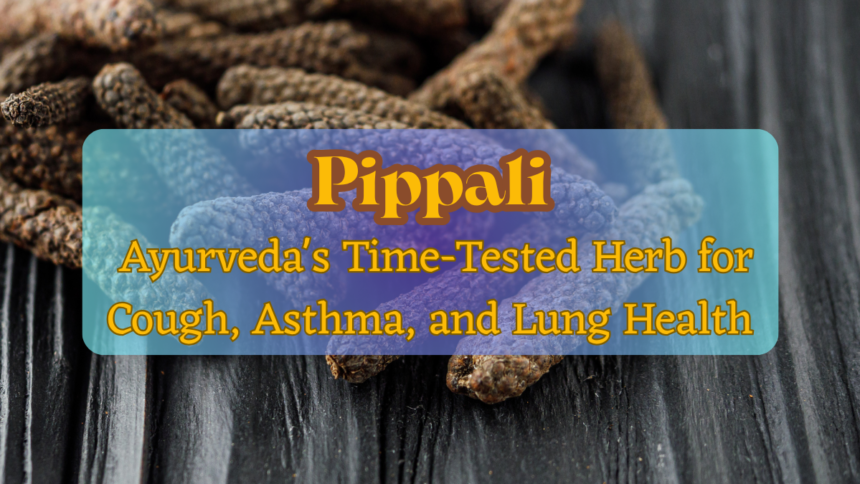
Pippali
A comprehensive, evidence-informed guide to Pippali the long pepper that Ayurveda’s most important compound formulas are built around, what its piperine and piperlongumine compounds actually do for respiratory and digestive health, and why this ancient spice deserves a prominent place in modern integrative medicine
If you have spent any time exploring Ayurvedic classical texts or consulting with a serious Ayurvedic practitioner, you will have noticed one spice appearing in compound formulations with a frequency that eventually demands explanation. It appears in Sitopaladi Churna for cough and asthma. It appears in Trikatu the three-pepper combination that underpins nearly every digestive and metabolic formulation in classical Ayurveda. It appears in Chyawanprash, in Dashamoola formulations, in preparations for liver health, metabolic disorders, and neurological conditions. It appears, in fact, so consistently and in so many diverse therapeutic contexts that a student of Ayurveda eventually asks the question that produces the most revealing answer in the entire classical pharmacopoeia: why is Pippali everywhere?
The answer begins with a compound called piperine and it goes considerably further than that.
Pippali Piper longum, or long pepper is the fruit of a climbing vine closely related to black pepper (Piper nigrum) but pharmacologically distinct from it in ways that matter enormously for therapeutic applications. Both contain piperine. But Pippali contains it in higher concentration alongside a complex of additional bioactive compounds piperlongumine, piperlonguminine, piplartine, and methyl piperine, among others whose combined pharmacological profile produces effects that black pepper, despite sharing the piperine framework, does not fully replicate.
And piperine, it turns out, does something extraordinarily useful in the context of a therapeutic formulation: it dramatically increases the bioavailability of nearly every other compound taken alongside it. When Ayurvedic formulators placed Pippali in almost every classical compound, they were unknowingly or rather empirically, without the molecular vocabulary exploiting one of the most pharmacologically useful properties in the botanical kingdom. Modern pharmacology has spent decades characterising this piperine bioavailability enhancement, producing the research that now explains exactly why turmeric is always combined with black pepper, why so many Ayurvedic formulas include Pippali specifically, and why this ancient spice deserves the precise pharmacological attention this article provides.
What Is Pippali? Botanical Identity and Classical Classification
Pippali Piper longum, family Piperaceae is a climbing, perennial shrub native to the tropical forests of South Asia and Southeast Asia, found growing across India (particularly in the northeastern states, Western Ghats, and parts of Assam and Meghalaya), Sri Lanka, Nepal, and extending into Indonesia and the Philippines. The plant produces elongated, cylindrical fruit spikes the “long pepper” whose distinctive appearance gives the plant both its common English name and its pharmacological importance, as the fruits concentrate the highest levels of bioactive piperine alkaloids in the plant.
The botanical relationship between Pippali and its Piper relatives black pepper (Piper nigrum), the commercially dominant global spice, and cubeb pepper (Piper cubeba) contextualises both its historical importance and its pharmacological distinctiveness. Long pepper was actually the dominant traded pepper variety in ancient Mediterranean commerce, commanding premium prices on ancient trade routes, before black pepper’s commercial dominance emerged with Portuguese trading expansion. Classical Greek and Roman physicians, including Hippocrates and Galen, prescribed long pepper for respiratory and digestive conditions a cross-cultural traditional application that the pharmacological research now meaningfully validates.
In Ayurvedic classification, Pippali is described as having Katu (pungent) Rasa, Laghu (light) and Snigdha (oily) Guna, and a uniquely important dual Virya (potency) characteristic: Ushna (heating) Virya when fresh (reducing Kapha and Vata through heating stimulation), and Madhura Vipaka (sweet post-digestive effect) that makes it simultaneously nourishing and building a combination that classical texts specifically describe as making Pippali simultaneously Agni-stimulating and Ojas-building, a dual action unusual among pungent spices whose stimulating quality typically reduces Ojas rather than building it.
The classical concept of Anupana the vehicle or carrier substance through which herbs are administered elevates Pippali specifically because of its bioavailability-enhancing properties, though classical practitioners understood this through the concept of Yogavahi (the quality of enhancing the properties of substances it is combined with) rather than through the CYP enzyme inhibition language of modern pharmacokinetics.
The Phytochemistry of Pippali: More Than Piperine
Understanding Pippali pharmacologically requires looking beyond the piperine that it shares with black pepper to the additional compounds that distinguish it therapeutically.
Piperine the primary alkaloid, present at 4–7% in Pippali fruits compared to approximately 5–9% in black pepper provides the familiar pungency and the foundational bioavailability-enhancing mechanism discussed in detail in the next section, alongside documented anti-inflammatory, antidepressant, antipyretic, and metabolic effects that have been extensively characterised across hundreds of published studies.
Piperlongumine (also called piplartine) an amide alkaloid present in Pippali but absent or present in much lower concentrations in black pepper has attracted significant independent research interest for its anti-cancer properties (demonstrating selective cytotoxicity against cancer cells through reactive oxygen species-mediated mechanisms), anti-inflammatory activity, and documented cardiovascular protective effects that extend Pippali’s pharmacological relevance considerably beyond the digestive and respiratory domains for which it is most traditionally recognised.
Piperlonguminine another Pippali-specific amide alkaloid has demonstrated smooth muscle relaxing activity directly relevant to Pippali’s bronchodilatory and anti-spasmodic properties, alongside documented hepatoprotective effects relevant to its traditional liver health applications.
Methyl piperine and related piperine analogues contribute to the overall alkaloid activity profile, with slightly different pharmacokinetic properties from parent piperine that may contribute to the sustained-release character of whole Pippali preparations compared to isolated piperine supplements.
Essential oils including sylvestre, caryophyllene, and pentadecane provide additional anti-inflammatory and antimicrobial contributions to the overall Pippali pharmacological profile, particularly relevant in the context of respiratory infection applications.
Pippali for Respiratory Health: The Lung-Clearing Mechanism
Pippali’s respiratory applications reflected in its prominent presence in every major classical Ayurvedic respiratory formulation from Sitopaladi Churna to Vasavaleha are supported by a pharmacological mechanism whose characterisation in modern research provides compelling support for the traditional clinical observations that positioned Pippali as the cornerstone of Ayurvedic respiratory medicine.
The primary respiratory mechanism of Pippali is bronchodilation relaxation of bronchial smooth muscle that opens constricted airways, reducing resistance to airflow and reversing the bronchoconstriction that causes wheeze and breathlessness in asthma and reactive airways disease. Research has documented significant bronchodilatory activity for Pippali alkaloid preparations in smooth muscle preparations and in animal models of bronchoconstriction, with piperlonguminine identified as a primary mediator through calcium channel antagonist activity in bronchial smooth muscle a mechanism conceptually parallel to the calcium channel blocker pharmaceutical drugs used in cardiovascular and some respiratory applications.
Mucolytic and expectorant activity facilitating the clearance of respiratory secretions that accumulate in airways during respiratory infections and inflammatory conditions represents a second mechanism directly relevant to Pippali’s traditional “lung-clearing” application. The stimulation of bronchial secretory activity by Pippali’s pungent alkaloids promotes the production of less viscous mucus that ciliary action can more effectively propel toward expectoration, complementing Vasaka’s more direct mucolytic activity (discussed in the previous article) and explaining why the combination of Pippali and Vasaka in formulations like Vasavaleha produces broader mucociliary support than either herb provides independently.
Anti-allergic activity through mast cell stabilisation analogous to the mechanism identified for Vasaka’s vasicinol fraction and for pharmaceutical cromolyn sodium has been documented for Pippali alkaloid preparations in research examining IgE-mediated allergic responses, relevant to the allergic asthma and hay fever presentations where bronchospasm is triggered by allergen-IgE interactions.
Anti-inflammatory effects in airway tissue, mediated through NF-κB inhibitory pathways and reduction of pro-inflammatory cytokines, address the chronic airway inflammation underlying persistent asthma and reducing the bronchial hyperreactivity that characterises the condition between acute exacerbations.
Pippali for Digestive Health: Firing Up Agni
The digestive applications of Pippali are simultaneously its most classically prominent use appearing in Trikatu, perhaps the most widely prescribed digestive compound in the entire Ayurvedic tradition and the applications with the most directly observable mechanistic basis in gastroenterological research.
Agni restoration is the primary concept from which Pippali’s digestive applications emerge in classical Ayurvedic understanding the restoration of impaired digestive fire that underlies a remarkably broad range of digestive, metabolic, and systemic conditions in the Ayurvedic framework. The modern mechanistic interpretation of Agni restoration through Pippali involves several converging mechanisms: stimulation of digestive enzyme secretion (lipase, amylase, and proteases in pancreatic and intestinal secretions, documented in multiple enzyme assay studies), stimulation of bile flow from the gallbladder (directly relevant to fat digestion and the fat-soluble vitamin absorption that bile enables), and enhancement of gut motility through direct effects on intestinal smooth muscle that reduce the stagnation and bloating characterising Kapha-type digestive sluggishness.
Trikatu the formulation combining Pippali with black pepper (Maricha) and dry ginger (Shunthi), representing three distinct pungent-spice stimulants with complementary but partially distinct mechanisms is the classical Ayurvedic formulation most directly targeted at Agni restoration and the metabolic stimulation relevant to weight management, diabetes prevention, and the correction of the Kapha-predominant metabolic sluggishness that underlies a significant proportion of modern metabolic disease. Research on Trikatu preparations has documented significant improvements in digestive enzyme activity, bile acid metabolism, and metabolic markers in multiple pharmacological studies, providing the formulation-level evidence that complements the single-herb research on its individual components.
Pippali as a Bioavailability Enhancer: The Yogavahi Mechanism
The bioavailability-enhancing mechanism of Pippali the pharmacological property that explains its presence in virtually every classical Ayurvedic compound formulation deserves dedicated attention as the most practically significant and most broadly applicable of all its documented properties.
Piperine inhibits several cytochrome P450 enzymes (particularly CYP3A4, CYP1A1, and CYP1A2) in the intestinal wall and liver that are responsible for the first-pass metabolism of a wide range of pharmacologically active compounds, including curcumin (turmeric’s primary active compound), quercetin, resveratrol, beta-carotene, vitamins B6 and C, selenium, and numerous pharmaceutical drugs. By inhibiting these metabolising enzymes, piperine reduces the extent to which these compounds are broken down before reaching systemic circulation, effectively increasing the bioavailable fraction of the co-administered substance.
The clinical significance of this bioavailability enhancement is most famously documented for curcumin, where co-administration with piperine (20mg alongside 2g curcumin) increased curcumin bioavailability by 2,000% in the landmark human study by Shoba et al., published in Planta Medica a finding that is now essentially universally applied in both research (where curcumin trials routinely include a piperine component) and in commercial formulations. This 2,000% enhancement figure represents arguably the most dramatic natural bioavailability enhancement documented in pharmacological research, and it is produced by a mechanism that Ayurvedic formulators were exploiting empirically through Pippali’s inclusion in compound preparations for over two thousand years before the CYP enzyme inhibition mechanism was characterised.
The drug interaction implications of this CYP enzyme inhibitory activity must also be acknowledged: piperine’s enhancement of bioavailability is not selective for beneficial compounds it applies equally to pharmaceutical drugs metabolised through the same CYP pathways, potentially increasing drug levels beyond intended therapeutic ranges in people taking specific medications. This is a meaningful drug interaction consideration that must be discussed with a physician before using Pippali or piperine supplements in combination with prescription medications, particularly those with narrow therapeutic windows.
Pippali for Metabolic Health and Anti-Inflammatory Applications
Beyond the respiratory and digestive domains, Pippali’s anti-inflammatory and metabolic properties mediated primarily through piperine’s NF-κB inhibitory activity and piperlongumine’s additional anti-inflammatory mechanisms contribute to a broader therapeutic profile with applications across metabolic syndrome, liver health, and neurological protection.
Research on piperine’s effects on adipogenesis (fat cell formation) and lipid metabolism has documented inhibition of adipocyte differentiation and reduction of lipid accumulation in experimental models relevant to Pippali’s traditional application in Kapha-dominant metabolic conditions and its inclusion in Trikatu formulations used for weight management and metabolic stimulation.
Hepatoprotective effects of Pippali alkaloids including documented reduction of liver enzyme elevation in drug-induced liver injury models, and enhancement of hepatic antioxidant enzyme activity complement the liver health applications discussed in the liver detox article in this series.
Neurological applications of piperlongumine including documented neuroprotective effects, reduction of beta-amyloid aggregation in Alzheimer’s research models, and antidepressant-like activity in animal studies mediated through monoamine system modulation represent an emerging research direction that may expand Pippali’s clinical evidence base into the neurological domain where classical Ayurvedic texts have long included it in specific formulations for cognitive and neurological conditions.
Pippali in Classical Formulations: The Compound Context
The full clinical significance of Pippali is best understood not in isolation but within the compound formulation context where it has historically operated.
Trikatu the foundational three-pepper digestive compound combines Pippali’s longer-acting, more complex alkaloid profile with the immediate digestive stimulation of black pepper and the warming anti-nausea properties of dry ginger, producing a more complete digestive stimulation package than any single pungent spice alone. The standard Trikatu dose (250–500mg twice daily before meals) is one of the most widely applicable Ayurvedic digestive interventions available, relevant to essentially all Kapha-type digestive sluggishness presentations.
Sitopaladi Churna the classical respiratory compound combining Pippali with cardamom, cinnamon, bamboo manna, and sugar pairs Pippali’s bronchodilatory and mucolytic properties with the antimicrobial, soothing, and Kapha-clearing properties of its companion herbs, producing the most commonly prescribed classical Ayurvedic formulation for productive cough and respiratory congestion.
Chyawanprash the classical immune-building Rasayana compound discussed throughout this series includes Pippali specifically because of its Yogavahi bioavailability-enhancing property, ensuring that the amla, ashwagandha, shatavari, and other Rasayana herbs in the formulation are absorbed with maximum efficiency.
Practical Use: Forms, Dosing, and Integration
Pippali churna (powder): 0.5–1g, typically taken with honey, ghee, or warm milk, one to two times daily. The classical combination with honey specifically enhances the respiratory applications honey’s demulcent properties soothe irritated airways while Pippali’s alkaloids address the bronchospasm and mucus accumulation.
Trikatu compound: 250–500mg before meals, the most practically accessible and most frequently indicated Pippali-containing preparation for digestive applications. Available from most reputable Ayurvedic manufacturers.
Pippali as part of compound formulations (Sitopaladi, Chyawanprash, Vasavaleha): as directed by an Ayurvedic physician for specific respiratory or digestive indications, typically representing the most clinically sophisticated and most comprehensively effective application context.
Important safety note regarding cyclical use: classical Ayurvedic texts specifically recommend cyclical administration of Pippali beginning with a low dose, gradually increasing, then gradually decreasing back rather than indefinite fixed-dose daily use. This traditional caution reflects the herb’s Ushna (heating) potency and the concern that sustained high-dose use could accumulate excess heat in sensitive individuals. A typical Rasayana cycle (Pippali Vardhaman Rasayana) involves progressively increasing doses over a defined period followed by tapering a protocol that qualified Ayurvedic physicians design individually based on constitutional assessment.
Safety Profile
Pippali’s safety profile at culinary and standard Ayurvedic doses is well-established through extensive traditional use. Specific considerations include: pregnancy Pippali’s uterotonic potential (shared with its Piperaceae relatives) warrants avoidance of therapeutic doses beyond culinary use during pregnancy; drug interactions the CYP inhibitory activity discussed above creates meaningful drug interaction potential that requires medical coordination in anyone taking multiple pharmaceutical medications; liver conditions at high doses, piperine’s CYP inhibition may affect hepatic drug metabolism in clinically significant ways for those with hepatic impairment.
The Honest Bottom Line
Pippali’s position in the classical Ayurvedic formulary its appearance in more compound preparations than virtually any other single herb reflects a pharmacological reality that modern research has increasingly characterised with precision: a spice whose piperine content enhances the bioavailability of everything around it, whose bronchodilatory alkaloids clear congested airways, whose digestive enzyme stimulation fires sluggish Agni, and whose anti-inflammatory and anti-cancer piperlongumine content extends its clinical relevance into domains the ancient formulators probably did not fully anticipate.
This is not a spice that performs one function well. It is a spice that performs multiple functions across multiple organ systems with a pharmacological coherence that makes its universal inclusion in classical compound formulas not coincidental tradition but genuinely justified clinical decision-making.
The ancient formulators put Pippali everywhere because they observed that formulas containing it worked better than formulas without it. Modern pharmacology now explains exactly why. Both observations are worth acting on.
Did this comprehensive guide to Pippali change how you think about this unassuming spice and its role in Ayurvedic medicine? Share it with someone managing respiratory conditions, digestive sluggishness, or interested in maximising the effectiveness of the other herbs and supplements they take. Leave a comment with your own experience with Pippali or Trikatu, or subscribe to our newsletter for more rigorously researched content giving Ayurveda’s most pharmacologically interesting herbs the precise, evidence-grounded attention they deserve.