





Gokshura
A comprehensive, evidence-informed guide to Gokshura what this versatile Ayurvedic herb actually does for urinary health, kidney function, testosterone support, and athletic performance, with the clinical evidence and practical protocols behind its extensive traditional use
In the classical Ayurvedic pharmacopoeia, certain herbs earn their prominence through the specificity and reliability of their effects on particular organ systems not through broad, diffuse activity across every biological domain, but through a depth of targeted action that makes them the instinctive first prescription for practitioners when a specific system needs support. For the urinary tract and kidneys, that herb is Gokshura.
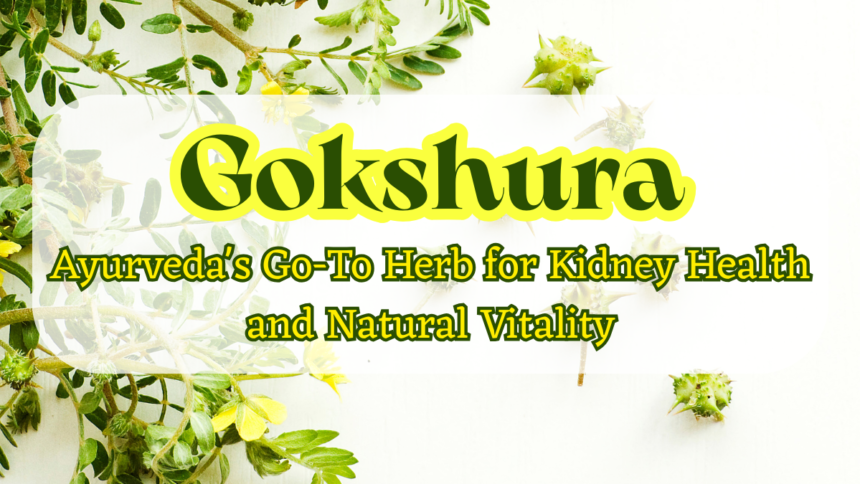
The name itself offers a clue about the plant’s character. Gokshura from the Sanskrit Go (cow) and Kshura (hoof) refers to the distinctive spiny, hoof-shaped fruits of the plant, whose sharp spines apparently reminded classical botanists of a cow’s split hoof. Anyone who has walked barefoot on ground where Tribulus terrestris grows the botanical identity of Gokshura will have encountered those spines directly and memorably. But it is the pharmacological content of those same fruits, roots, and aerial parts that has made this unassuming, low-growing herb with its small yellow flowers one of the most clinically relevant plants in Ayurvedic medicine, used with remarkable consistency across classical texts for urinary disorders, kidney health, and the broader category of vitality and reproductive support that classical practitioners addressed under the Vajikarana (vitalising) section of the Ayurvedic pharmacopoeia.
This is the comprehensive account that Gokshura’s clinical significance has always deserved.
What Is Gokshura? Botanical Identity and Classical Significance
Gokshura Tribulus terrestris is an annual plant of the Zygophyllaceae family, growing as a low, spreading herb in dry, disturbed soils across tropical and temperate regions of the world, from the Indian subcontinent through the Mediterranean, South Africa, and Australia to the Americas. Its global distribution reflects both its botanical adaptability and its history of human use across multiple traditional medicine systems, with parallel applications for urinary health and vitality documented in Ayurveda, Traditional Chinese Medicine, and traditional European herbal medicine.
The medicinally active portions of Gokshura include the fruits, roots, and aerial parts (leaves and stems), each with somewhat different phytochemical concentrations that classical Ayurvedic formulations utilise selectively. The fruits those distinctive spiny structures are most commonly used in classical Ayurvedic preparations, while modern standardised extracts typically use aerial parts or a whole-plant approach depending on the manufacturer and intended application.
In Ayurvedic classification, Gokshura is described as having Madhura (sweet) and Tikta (bitter) Rasa, Guru (heavy) and Snigdha (oily) Guna, Sheeta Virya (cooling potency), and Madhura Vipaka (sweet post-digestive effect) a combination that makes it primarily Vata and Pitta pacifying, with specific affinity for the Mutravaha Srotas (urinary channels) and the Shukra dhatu (reproductive tissue). This doshic profile directly explains both its urinary health applications (where Vata and Pitta imbalance most commonly drives dysuria, inflammatory urinary conditions, and kidney stone formation) and its reproductive vitality applications (where Shukra dhatu nourishment supports both male and female reproductive tissue health).
The Phytochemistry of Gokshura: The Bioactive Foundation
Gokshura’s diverse pharmacological applications are reflected in a phytochemical profile that encompasses several distinct classes of bioactive compounds, each contributing differently to its documented therapeutic effects.
Steroidal saponins particularly furostanol and spirostanol glycosides, with protodioscin, protogracillin, and dioscin among the most studied represent the primary pharmacologically active class and the compounds most responsible for Gokshura’s testosterone-modulating, muscle-supporting, and general vitality-enhancing properties. These saponins, when standardised and quantified as “furostanol saponins” or “protodioscin content,” serve as the primary quality marker in evidence-based Gokshura supplementation, with significant variation in saponin concentration between geographic sources (Bulgarian Tribulus, Indian Tribulus, and Chinese Tribulus having substantially different steroidal saponin profiles) that has important implications for interpreting clinical research, as discussed in subsequent sections.
Flavonoids including kaempferol, quercetin, and their glycosides provide antioxidant, anti-inflammatory, and diuretic activity relevant to Gokshura’s urinary and kidney applications. Quercetin’s documented effects on renal tubular function, uric acid excretion, and inflammatory signalling in kidney tissue are specifically relevant to several of the clinical applications discussed below.
Alkaloids including harman and norharman have been identified in various Gokshura plant parts, contributing to the herb’s neurological and mood-relevant properties that have attracted growing research interest in the context of stress adaptation and wellbeing.
Phytosterols including beta-sitosterol, stigmasterol, and campesterol contribute anti-inflammatory and endocrine-modulating activity, with beta-sitosterol’s documented effects on 5-alpha reductase (the enzyme that converts testosterone to dihydrotestosterone, relevant to prostate health and androgenic activity) providing an additional mechanism relevant to Gokshura’s male health applications.
Gokshura for Kidney Health: The Primary Application
Gokshura’s most definitively supported and most clinically important application within Ayurvedic medicine is the support and protection of kidney and urinary tract health an application area whose mechanistic basis, traditional consistency, and growing modern evidence make it the foundation of any serious discussion of this herb.
Diuretic Activity and Kidney Stone Prevention
Gokshura’s documented diuretic activity increasing urine output while reducing the urinary concentration of the stone-forming substances (calcium oxalate, uric acid, calcium phosphate) that crystallise in the collecting system to form kidney stones represents one of the most mechanistically coherent and clinically relevant aspects of its kidney health applications.
A clinical study published in the Indian Journal of Urology examining Gokshura supplementation in patients with a history of calcium oxalate urolithiasis (the most common type of kidney stones) found significant reductions in urinary calcium and oxalate excretion concentrations, reduced urinary supersaturation indices for stone-forming mineral combinations, and reduced recurrence rates compared to control subjects directly addressing the pathological processes that create the conditions for stone formation.
The proposed mechanisms for this anti-urolithiatic activity include the increased urine flow rate from Gokshura’s diuretic activity (which dilutes stone-forming solutes below their crystallisation threshold), direct inhibition of calcium oxalate crystal nucleation and aggregation by Gokshura’s phytochemical components, and the antioxidant protection of renal tubular epithelial cells against the oxidative damage that urinary crystals cause as they traverse the collecting system.
The clinical relevance of this application is significant given the substantial burden of urinary stone disease in India with prevalence rates estimated at 7–8% of the population and significant regional variation, with high-burden areas in Rajasthan, Gujarat, and other northwestern states where climate, dietary patterns, and water quality create particularly favourable conditions for stone formation.
Urinary Tract Infection Support
Gokshura’s antimicrobial and anti-inflammatory properties contribute to its traditional role in urinary tract infection management not as a replacement for appropriate antibiotic treatment in established UTI, but as a supportive herb that addresses the inflammatory symptoms, promotes urinary flushing, and may reduce the adhesion of uropathogenic bacteria to urinary tract epithelium.
Research has documented significant antimicrobial activity of Gokshura extracts against Escherichia coli (the most common UTI-causing organism), Staphylococcus aureus, and Klebsiella pneumoniae in laboratory settings, with proposed mechanisms including disruption of bacterial cell membrane integrity by saponin compounds. Its diuretic activity additionally supports the mechanical flushing of the urinary tract that is itself beneficial during urinary infection, independent of any direct antimicrobial mechanism.
Benign Prostatic Hyperplasia (BPH) Support
For male urinary health specifically, Gokshura’s combination of diuretic, anti-inflammatory, and 5-alpha reductase-modulating properties provides a pharmacologically coherent rationale for its traditional use in managing the urinary symptoms of benign prostatic hyperplasia the non-malignant prostate enlargement that affects the majority of men over 50 and that produces urinary flow restriction, increased frequency, and nocturia through mechanical compression of the urethra.
A clinical study examining Gokshura in BPH patients found improvements in International Prostate Symptom Score (IPSS) measures of urinary symptom severity, improvements in urinary flow rate, and reductions in post-void residual urine volume the three primary clinical outcome measures in BPH management with the beta-sitosterol fraction’s 5-alpha reductase inhibitory activity providing a mechanism conceptually analogous to pharmaceutical 5-alpha reductase inhibitors used in BPH treatment.
Gokshura for Testosterone and Male Vitality
The second major application domain for Gokshura and the one that has driven much of its international supplement market expansion, particularly in the bodybuilding and sports performance communities is testosterone support and male vitality enhancement.
The evidence in this domain is more complex and more contentious than the urinary health evidence, requiring careful parsing between the studies showing genuine effect and the geographic and formulation variability that has produced inconsistent results across the research literature.
The mechanism proposed for Gokshura’s testosterone-supporting effects involves the steroidal saponins particularly protodioscin acting as precursors to DHEA through conversion in the body, with DHEA subsequently supporting testosterone biosynthesis. A parallel proposed mechanism involves saponin-mediated stimulation of luteinising hormone (LH) secretion from the pituitary, which in turn stimulates testicular Leydig cell testosterone production the same downstream pathway targeted by some pharmaceutical testosterone secretagogues.
Clinical evidence for this mechanism has been mixed in ways that trace primarily to plant source geography: studies using Bulgarian Tribulus (Gokshura grown in Bulgaria, characterised by higher furostanol saponin and particularly higher protodioscin content often 60–90% steroidal saponins) have more consistently shown testosterone-supporting effects, while studies using Chinese or Indian Tribulus grown in different soil and climate conditions (characterised by lower and more variable saponin content) have produced less consistent hormonal results.
A randomised controlled trial using high-protodioscin Bulgarian Tribulus extract in men with mild testosterone deficiency found significant increases in total and free testosterone, LH, and DHEA compared to placebo, with associated improvements in sexual function, libido, and energy consistent with the proposed mechanism and suggesting that the inconsistency in the broader Tribulus research literature reflects formulation and source variability rather than the absence of genuine pharmacological activity.
A research synthesis specifically examining Gokshura’s effects on male sexual dysfunction, published in the Journal of Ethnopharmacology, found significant improvements in erectile function, sexual desire, and satisfaction scores across multiple studies when protodioscin-standardised preparations were used providing support for this application while reinforcing the importance of standardisation in selecting Gokshura products for this specific purpose.
Gokshura for Female Health and Vitality
Gokshura’s applications are by no means limited to male health, despite the testosterone-focused nature of much of its contemporary marketing. The same LH-stimulating mechanism relevant to male testosterone support is equally relevant for female reproductive health LH being the critical trigger for ovulation in the female hormonal cycle, making Gokshura’s LH-enhancing activity directly relevant to anovulatory fertility challenges discussed in the PCOS and fertility articles in this series.
Research examining Gokshura in women with ovulatory dysfunction found improvements in LH levels and follicular development consistent with the proposed LH-stimulating mechanism, providing a female reproductive health rationale for Gokshura that has been recognised in classical Ayurvedic texts which describe it as a Vajikarana herb for both sexes even if it has received less attention in modern international supplement marketing focused predominantly on the male testosterone angle.
Gokshura’s diuretic and anti-inflammatory properties are additionally relevant to the fluid retention and urinary discomfort that many women experience in various phases of the menstrual cycle and during perimenopause, providing a symptomatic support role beyond the reproductive endocrine application.
Gokshura for Athletic Performance
Gokshura’s reputation as an athletic performance herb deserves honest examination separate from the testosterone discussion, because the performance evidence is again source- and standardisation-dependent in ways that matter for anyone evaluating it.
A systematic review examining Tribulus terrestris for athletic performance found significant variability in results across studies, with consistent performance benefits emerging primarily in studies using high-saponin preparations and showing greater effects in populations with lower baseline testosterone (including older men and pre-menopausal women) than in young men with normal hormonal profiles consistent with the herb working through optimisation of hormonal parameters toward normal rather than through supraphysiological enhancement.
Gokshura’s direct effects on creatine biosynthesis and muscle protein synthesis (proposed through saponin-mediated enzyme activation in relevant metabolic pathways) have attracted research interest as a secondary, non-hormonal performance mechanism, though the direct evidence for this pathway in human subjects remains less developed than the hormonal mechanism research.
Gokshura in Classical Ayurvedic Formulations
Gokshura’s most clinically important classical compound formulations include Gokshuradi Guggulu (combining Gokshura with Guggulu and other herbs for urinary and metabolic applications), Chandraprabha Vati (a classical compound for urinary tract health and diabetes-related urinary complications), and the direct combination of Gokshura with Shatavari and Ashwagandha that appears across multiple classical formulations for reproductive vitality in both sexes a tripartite combination whose complementary mechanisms (Gokshura’s LH stimulation, Shatavari’s reproductive tissue nourishment, Ashwagandha’s stress-axis normalisation) represent a sophisticated multi-mechanism approach to reproductive vitality that anticipates the integrative hormonal support that functional medicine practitioners now design through individually selected components.
Practical Use: Forms, Dosing, and Integration
Standardised Gokshura extract standardised to furostanol saponins or total steroidal saponins, with protodioscin content specified for testosterone-related applications is the most evidence-aligned form for therapeutic use. Clinical trials have used doses ranging from 250mg to 750mg of standardised extract daily, with typical supplemental doses of 500mg once or twice daily with meals.
Gokshura churna (traditional powder): 3–5g daily in warm water, typically divided into two doses, representing the traditional preparation form most appropriate for urinary health applications in the classical Ayurvedic context.
For kidney stone prevention: daily use with generous hydration is specifically emphasised, as the diuretic and anti-urolithiatic mechanisms require adequate water intake to function Gokshura reduces the concentration of stone-forming minerals but cannot achieve this if insufficient fluid volume is consumed simultaneously.
Safety Profile
Gokshura’s safety profile across traditional use and clinical monitoring is generally favourable. Considerations include: the diuretic activity may require adjustment in those on pharmaceutical diuretics or with conditions requiring careful fluid balance management; testosterone-influencing activity warrants caution in individuals with hormone-sensitive conditions; potential prostate-specific effects warrant monitoring in men with known prostate conditions; pregnancy use is not established as safe at supplemental doses; and the few case reports of liver and kidney toxicity associated with Tribulus products have involved unpurified preparations or possible adulterants rather than standardised preparations used within clinical trial dose ranges.
The Honest Bottom Line
Gokshura’s clinical significance rests on a foundation that is simultaneously traditional it is among the most consistently recommended Ayurvedic herbs for urinary and kidney health across every major classical text and increasingly modern, with specific clinical evidence for kidney stone prevention, urinary symptom management, and, in appropriately standardised preparations, testosterone and LH support that extends across both male and female reproductive health applications.
The urinary and kidney applications are the most definitively supported and the most broadly relevant given the burden of urinary tract disease, kidney stone recurrence, and BPH-related urinary symptoms across the Indian and global population. The testosterone and vitality applications are real but formulation-dependent in ways that require informed product selection rather than accepting any Tribulus label at face value.
Used with appropriate source awareness, appropriate standardisation, and the sustained daily consistency that Rasayana herbs require, Gokshura delivers on what two thousand years of Ayurvedic clinical observation suggested it would.
Did this comprehensive guide to Gokshura expand your understanding of what this herb offers beyond its gym supplement reputation? Share it with someone managing urinary health challenges or seeking evidence-based natural vitality support. Leave a comment with your own experience with Gokshura, or subscribe to our newsletter for more rigorously researched content honouring the full depth of Ayurveda’s clinical pharmacopoeia.