




Shatavari
A comprehensive, evidence-informed guide to Shatavari what this foundational Ayurvedic herb actually does across the female reproductive lifecycle, what the clinical research shows, and how to use it intelligently for hormonal balance, fertility, and lasting vitality
She was forty-four when perimenopause arrived not with the gradual, manageable transition she had somehow expected, but with a chaotic disruption that touched almost everything simultaneously. Sleep that had been reliable for four decades became unpredictable. Periods that had arrived with clockwork regularity began appearing early, late, heavier, or sometimes not at all. Hot flushes interrupted business meetings. The emotional steadiness she had always taken for granted gave way to a volatility that confused her as much as it affected the people around her. And underneath it all, a fatigue that felt different from ordinary tiredness deeper, more systemic, as though something fundamental in her body’s regulatory machinery was undergoing rapid, ungraceful change.
Her gynaecologist discussed hormone replacement therapy, which she considered seriously and has not ruled out. But she also consulted an Ayurvedic physician who spent an hour understanding her full picture her digestion, her sleep, her stress, her relationship to her changing body before prescribing something that the physician described as “the herb most specifically designed by this tradition for exactly what you are going through.”
Shatavari. Literally “she who possesses a hundred husbands” in Sanskrit a name reflecting, in the somewhat colourful idiom of classical Ayurvedic naming, an herb considered so essential to women’s reproductive vitality that a woman consuming it would have the vigour and fertility to sustain a hundred relationships. The naming convention is ancient and the metaphor cultural, but the pharmacological activity beneath it is both real and increasingly well-characterised by modern research.
Three months into a daily Shatavari protocol continuing alongside her gynaecologist’s monitoring and her own evolving HRT discussion her sleep had improved meaningfully. The hot flushes had reduced in frequency and intensity. The emotional volatility had settled into something closer to her baseline. She describes it simply: “I feel more like myself again.”
This is the evidence-grounded story of what Shatavari actually does and why it has been at the centre of Ayurvedic women’s health practice for over two thousand years.
What Is Shatavari? Botanical Identity and Classical Classification
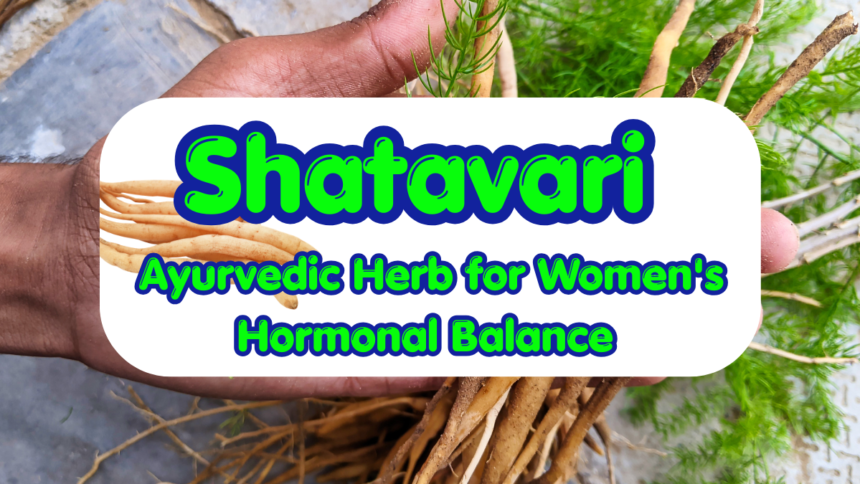
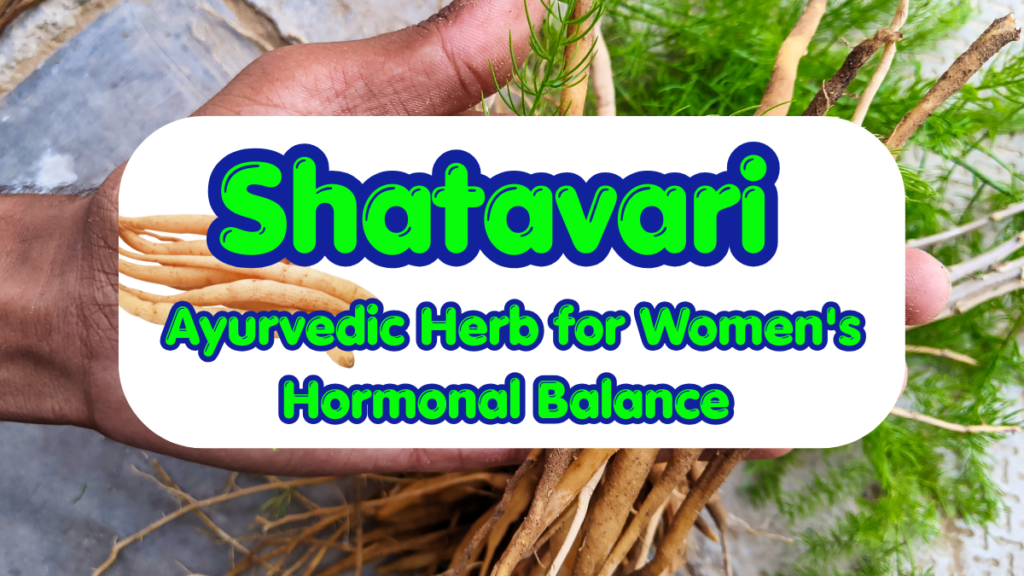
Shatavari Asparagus racemosus is a climbing, woody plant of the Asparagaceae family (related to culinary asparagus, Asparagus officinalis, though pharmacologically and aromatically distinct from it), native to the Indian subcontinent, Sri Lanka, and the Himalayas, and found growing in rocky, low-forest habitats across tropical and subtropical Asia. Its medicinal portions are the tuberous, fleshy roots sometimes described as resembling clusters of white fingers harvested, dried, and prepared into various medicinal forms whose phytochemical composition has been extensively studied over the past four decades.
In Ayurvedic classification, Shatavari is considered a Tridoshic Rasayana with particular Pitta-pacifying properties cooling, nourishing, and specifically rejuvenative to the reproductive tissues and mucous membranes. Its classical Rasa (taste) is Madhura (sweet) and Tikta (bitter), its Virya (potency) is Sheeta (cooling), and its primary traditional indication is the health of all stages of the female reproductive lifecycle from the regulation of menstruation in younger women through fertility support, gestational health, lactation, and, as illustrated in the opening story, perimenopausal and menopausal transition.
This comprehensive lifecycle framing of Shatavari’s applications rather than targeting a single condition or life stage reflects the Ayurvedic understanding of this herb as working through fundamental regulatory mechanisms relevant to female hormonal biology at multiple levels, rather than through a single, targeted, pharmaceutical-style mechanism. As the pharmacological research has increasingly revealed, this traditional holistic framing corresponds with a genuinely multi-mechanism pharmacological profile that modern research is validating with impressive consistency.
The Phytochemistry of Shatavari: What Creates the Medicine
The bioactive compounds of Shatavari responsible for its diverse hormonal and reproductive health effects have been identified across multiple compound classes, with steroidal saponins representing the primary pharmacologically active group.
Steroidal saponins specifically the shatvarins (Shatavarins I through V and beyond), with Shatavarin I being the most extensively studied are the compounds most directly implicated in Shatavari’s phytoestrogenic activity. These saponins contain a steroidal nucleus that bears structural resemblance to mammalian steroid hormones, particularly oestrogen, allowing them to interact with oestrogen receptors in oestrogen-sensitive tissues a mechanism that underlies both Shatavari’s capacity to support oestrogen-dependent physiological processes and the important contraindication considerations in oestrogen-sensitive pathological conditions discussed in the safety section below.
Isoflavonoids including 8-methoxy-5,6,4′-trihydroxyisoflavone-7-O-beta-D-glucopyranoside provide additional phytoestrogenic activity through a distinct chemical class, with isoflavone phytoestrogenism representing one of the most extensively studied mechanisms in women’s health research, given its established relevance in soy isoflavone research for menopausal symptoms.
Fructooligosaccharides (FOS) and inulin-type prebiotics present in Shatavari roots provide both direct prebiotic benefit to the gut microbiome directly relevant to the gut-hormone axis that has been increasingly appreciated in modern reproductive endocrinology and contribute to Shatavari’s characteristic demulcent and soothing effects on mucous membranes throughout the body.
Polysaccharides including Shatavaroside A and B have demonstrated immunomodulatory activity, providing a secondary mechanism relevant to conditions including autoimmune-mediated reproductive health challenges and the immune regulatory dimension of conditions like PCOS.
Saponin glycosides including asparagamine and racemosol contribute antioxidant protection directly relevant to the oxidative stress that impairs oocyte quality in fertility applications and accelerates tissue ageing relevant to menopausal management.
This phytochemical complexity multiple bioactive compound classes with complementary, additive mechanisms provides the pharmacological foundation for Shatavari’s demonstrated clinical relevance across the multiple reproductive health applications examined in subsequent sections.
Shatavari for Hormonal Balance: Menstrual Regulation
The most directly relevant application of Shatavari for the largest population of women using it is menstrual cycle regulation addressing the hormonal irregularities, dysmenorrhoea (painful periods), and cycle length variability that affect a substantial proportion of reproductive-age women, often in the context of underlying conditions including PCOS (addressed in detail in an earlier article in this series that specifically examined PCOS and Ayurveda with Shatavari as a central herb) and other forms of ovulatory dysfunction.
Shatavari’s phytoestrogenic activity provides a pharmacologically coherent basis for menstrual cycle regulation: by modulating oestrogen receptor activity and oestrogen-responsive signalling in the hypothalamic-pituitary-ovarian axis, Shatavari may support the follicular development, oestrogen production, and LH surge mechanisms that drive regular ovulation the physiological prerequisite for regular menstruation. Research published in the African Journal of Biotechnology documented Shatavari extract’s effects on follicular development and LH levels in experimental models, supporting this ovulation-supporting mechanism.
A clinical observational study examining Shatavari in women with oligomenorrhoea (infrequent periods, a common presentation in PCOS and hypothalamic amenorrhoea) found improvements in cycle regularity and cycle length over a three-month treatment period, providing clinical correlate to the mechanistic evidence. While large-scale randomised controlled trial evidence specifically for menstrual regulation remains less developed than for Shatavari’s other applications, the mechanistic coherence and clinical observations across multiple settings provide reasonable support for its role as a first-line Ayurvedic approach to hormonal cycle support.
Shatavari for Fertility: Supporting Conception
The fertility applications of Shatavari examined in detail in the fertility and Ayurvedic herbs article in this series, but warranting integration here within the comprehensive Shatavari profile represent perhaps the most historically prominent and most culturally embedded use of this herb, reflected in its very name’s reference to reproductive vitality.
Beyond the ovulation-supporting mechanisms discussed above, Shatavari’s fertility-relevant pharmacology includes documented uterine tonic effects research has demonstrated Shatavari’s capacity to promote uterine wall thickness and endometrial preparation for implantation, directly relevant to the implantation success dimension of fertility beyond ovulation alone. In Ayurvedic terms, this corresponds to the herb’s role in nourishing Artava dhatu (the reproductive tissue) and specifically preparing the uterine environment (Garbhashaya) for conception and subsequent gestation.
Its adaptogenic properties reducing cortisol and HPA axis reactivity address the stress-fertility dimension discussed in the fertility article, where chronic psychological stress suppresses GnRH pulsatility and disrupts the downstream hormonal cascade governing ovulation, making Shatavari’s stress-modulation mechanism directly fertility-relevant beyond its direct reproductive endocrine effects.
Shatavari for Lactation: The Galactagogue Evidence
Shatavari’s application as a galactagogue a substance that promotes and enhances breast milk production represents one of its most clinically important applications and one with the strongest and most specifically designed clinical evidence, given the profound importance of adequate breast milk for infant health and the significant distress that insufficient milk production causes for lactating mothers.
A randomised, double-blind, placebo-controlled trial published in the Journal of Herbal Pharmacotherapy specifically examined Shatavari’s effect on breast milk production in mothers with insufficient milk supply, finding that Shatavari supplementation significantly increased prolactin levels the pituitary hormone responsible for milk production and produced significantly greater improvements in breast milk volume and infant weight gain compared to placebo, providing direct evidence for the galactagogue mechanism through the prolactin pathway.
The proposed mechanism involves phytoestrogenic stimulation of prolactin-secreting lactotroph cells in the anterior pituitary, alongside the direct mammary gland stimulation that oestrogen receptor activity in breast tissue would predict a mechanistic chain that aligns both with the clinical trial evidence and with the molecular pharmacology of Shatavari’s steroidal saponins.
For lactating mothers, Shatavari represents one of the most evidence-supported and safety-established natural galactagogues available, particularly relevant in the Indian cultural context where both Shatavari’s traditional role in postpartum care and its cultural familiarity make it a practically accessible, trusted option for the millions of women who experience lactation insufficiency in the critical first weeks postpartum.
Shatavari for Menopause: Managing the Transition
The perimenopausal and menopausal applications of Shatavari illustrated by the woman in this article’s opening story have attracted growing clinical research attention as awareness of the limitations and side effects of conventional hormone replacement therapy has increased the demand for evidence-based alternatives and complements.
A randomised, double-blind, placebo-controlled trial by Joshi et al. specifically examining Shatavari in perimenopausal women found significant reductions in vasomotor symptoms (hot flushes and night sweats), improved mood parameters, and reductions in self-reported symptom burden on validated menopause symptom questionnaires compared to placebo. The phytoestrogenic mechanism provides a direct biological rationale by partially compensating for declining endogenous oestrogen through oestrogen receptor modulation in relevant tissues including the hypothalamic temperature regulatory centres (where hot flushes originate), the vaginal epithelium, the bone (relevant to menopause-associated osteoporosis risk), and the cardiovascular endothelium.
The analogy to soy isoflavone research where decades of clinical evidence have established that dietary isoflavones reduce menopause symptoms through phytoestrogenic mechanisms is pharmacologically relevant, as Shatavari’s isoflavonoid content provides a mechanistic parallel alongside the additional contribution of its steroidal saponins. For women seeking non-synthetic hormonal support during perimenopause and menopause, Shatavari provides a traditional, evidence-informed option that occupies a mechanistically coherent position between dietary phytoestrogenic support and full hormone replacement therapy.
Shatavari as an Adaptogen: The Stress Dimension Across All Life Stages
A dimension of Shatavari’s pharmacology that connects its applications across the entire female reproductive lifecycle is its adaptogenic activity its capacity to modulate the HPA axis stress response, reduce chronic cortisol elevation, and build physiological resilience to stress in ways that are directly relevant to hormonal health at every life stage.
Chronic stress suppresses reproductive hormone function at the hypothalamic level disrupting GnRH pulsatility, reducing LH and FSH secretion, and therefore impairing both ovulation (relevant to fertility and menstrual regulation) and the hormonal cascade governing all phases of female reproductive health. Shatavari’s documented cortisol-modulating and HPA-normalising activity therefore functions as a foundational support for its more specifically reproductive applications addressing the upstream neurohormonal disruption that modern life so consistently imposes on female hormonal systems.
A clinical study examining Shatavari’s effects on physical endurance and stress parameters found significant improvements in both physical performance and psychological stress markers compared to placebo, with reductions in stress-related cortisol consistent with adaptive mechanism supporting the classification of Shatavari as a genuine adaptogen alongside its more reproductive-specific applications.
Shatavari and the Gut: The Prebiotic Dimension
The FOS and inulin content of Shatavari roots provides a prebiotic dimension to its hormonal health effects that is rarely discussed in Shatavari literature but has become increasingly important as understanding of the oestrobolome the collection of gut bacteria responsible for oestrogen metabolism and recirculation has developed.
The oestrobolome produces beta-glucuronidase enzyme, which deconjugates oestrogen metabolites in the gut, allowing their reabsorption and recirculation rather than excretion. Gut dysbiosis can impair this oestrogen metabolism, contributing to either oestrogen deficiency (if reabsorption is insufficient) or oestrogen excess (if it is excessive), with both extremes having implications for menstrual health, fertility, and menopausal symptom severity. Shatavari’s prebiotic activity, by supporting a healthy, diverse gut microbiome, may contribute to appropriate oestrobolome function and therefore to optimal oestrogen metabolism a dimension of its hormonal regulatory activity that awaits direct clinical investigation but is mechanistically coherent and biologically plausible.
Practical Use: Forms, Dosing, and Timing
Shatavari is available in multiple forms with different applications and absorption profiles.
Traditional Shatavari churna (powder) in warm milk one teaspoon (approximately 3–5g) of Shatavari root powder simmered in warm milk with a small amount of honey, taken once or twice daily represents the most classical Ayurvedic preparation, combining the herb’s phytochemical profile with the fat and warmth that optimise absorption of its fat-soluble steroidal saponins. This preparation is particularly traditional for lactation support and menopausal symptom management.
Standardised Shatavari extract capsules providing consistent delivery of steroidal saponin content, typically standardised to Shatavarins are used in most clinical trials and provide more consistent dosing for therapeutic applications. Clinical trial doses have ranged from 500mg to 2,000mg of standardised extract daily, with most positive studies using doses in the 500–1,000mg range twice daily.
Shatavari ghrita (Shatavari processed in ghee) and Shatavari lehyam (a herbal jam preparation) are classical Ayurvedic compound preparations that combine Shatavari with complementary herbs and fat-based delivery systems, particularly relevant in classical postpartum and fertility applications.
Duration: the nourishing, Rasayana nature of Shatavari’s mechanism means that its benefits accumulate gradually a minimum three-month commitment is standard for reproductive health applications, with many conditions responding best over six to twelve months of consistent use.
Safety Profile and Important Considerations
Shatavari’s safety profile across decades of traditional use and clinical trial monitoring is generally favourable, with excellent tolerability reported across multiple studies and populations.
Oestrogen-sensitive conditions represent the most important contraindication consideration: given Shatavari’s documented phytoestrogenic activity, caution is specifically warranted in women with oestrogen receptor-positive breast cancer, oestrogen-sensitive uterine fibroids, or endometriosis where oestrogen stimulation could theoretically promote disease activity. Medical guidance is essential before using Shatavari in these contexts.
Asparagus allergy, while uncommon, represents a relevant contraindication given Shatavari’s botanical relationship to the asparagus family.
Pregnancy use: classical Ayurvedic texts include Shatavari in certain gestational applications, but the phytoestrogenic activity warrants specific medical guidance before use during pregnancy, particularly in the first trimester.
Drug interactions: Shatavari’s diuretic properties (documented in some research) may require monitoring alongside pharmaceutical diuretics; potential additive effects with hormonal medications (oral contraceptives, HRT) are theoretically relevant given shared hormonal activity pathways and should be discussed with prescribing physicians.
The Honest Bottom Line
Shatavari has occupied the centre of Ayurvedic women’s reproductive health practice for over two thousand years not through cultural inertia but through consistent, empirically validated clinical utility across an extraordinary range of female hormonal and reproductive health applications from menstrual regulation and fertility support through lactation enhancement and menopausal symptom management, with adaptogenic stress-buffering and prebiotic gut-hormone axis support connecting all of these applications through a shared physiological foundation.
The modern research is catching up to what Ayurvedic physicians have applied clinically across millennia: a herb with genuine phytoestrogenic mechanisms, documented prolactin-stimulating activity, adaptogenic properties, and a breadth of reproductive health application that no single pharmaceutical agent matches precisely because Shatavari does not target a single mechanism but works through the multiple, interconnected hormonal and physiological systems that female health involves.
The woman in this article’s opening story is navigating perimenopause with both her gynaecologist’s guidance and Shatavari’s support. She does not think of these as alternatives. She thinks of them as the complete picture.
Did this comprehensive guide to Shatavari give you a new understanding of what this herb can offer across different stages of women’s health? Share it with a woman navigating hormonal challenges who deserves to know about evidence-based Ayurvedic options. Leave a comment with your own experience with Shatavari, or subscribe to our newsletter for more deeply researched content honouring the science behind Ayurveda’s most important herbs.