






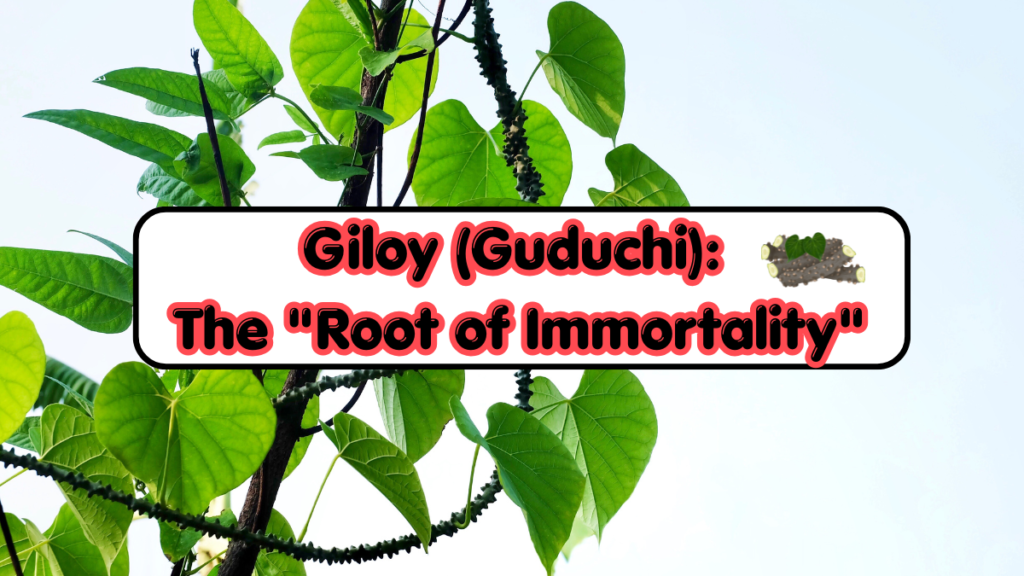
Giloy (Guduchi): The “Root of Immortality”
A comprehensive, evidence-informed guide to Giloy (Guduchi) what this remarkable Ayurvedic herb actually does in the immune system and liver, what the clinical research shows, and how to use it intelligently for immunity, fever management, and whole-body detoxification
When the COVID-19 pandemic swept through India in 2020 and 2021, something interesting happened in the collective consciousness of Indian households alongside the fear and grief: a quiet, urgent surge of interest in one specific plant that had been growing, often untended and unnoticed, along garden fences and compound walls across the subcontinent for centuries. Giloy (Guduchi) a climbing vine with distinctive heart-shaped leaves and bright orange berries sold out in pharmacies. Vendors in sabzi mandis began selling fresh stems alongside vegetables. The Ministry of AYUSH included it in its recommended immunity-boosting protocol. Family WhatsApp groups circulated photographs and videos explaining how to identify it, harvest it, and prepare the traditional decoction from its stems.
Was this a moment of mass collective wisdom or collective panic? The pharmacologists who had been studying Giloy (Guduchi) for decades knew the answer was considerably more nuanced than either extreme. They knew this plant had something real behind its reputation a body of research in immunology, hepatology, and infectious disease management that had been accumulating for years before the pandemic made it suddenly culturally prominent again. They also knew that the research had caveats, limitations, and safety considerations that the pandemic-driven enthusiasm had largely overlooked.
This article is the comprehensive, evidence-grounded account that Giloy (Guduchi) has always deserved neither dismissing the research nor uncritically accepting every traditional claim, but examining what this extraordinary herb actually does, how confidently it can be recommended for specific applications, and how it fits within the broader Ayurvedic and modern integrative health framework this series has developed.
What Is Giloy (Guduchi)? Botanical Identity and Classical Status
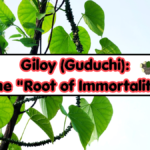
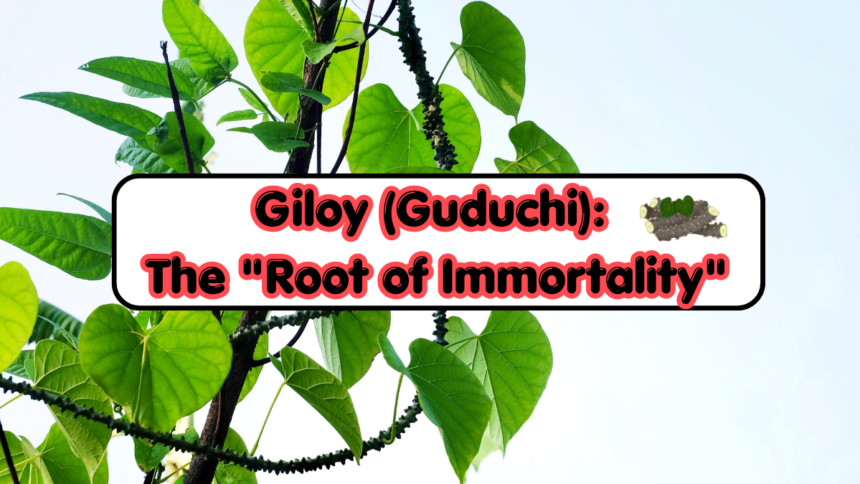
Giloy (Guduchi) Tinospora cordifolia is a large, deciduous, climbing shrub of the Menispermaceae family, native to tropical regions of the Indian subcontinent and found growing across India, Sri Lanka, Bangladesh, Myanmar, and parts of tropical East Africa. Its distinctive morphology heart-shaped leaves (whose shape, combined with the vine’s twining growth habit, accounts for one of its common English names, “heart-leaved moonseed”), fleshy stems that develop aerial roots when grown near larger trees, and bright orange-red berries in clusters makes it relatively identifiable once familiarity is established, though botanical precision matters greatly when harvesting wild plants, as misidentification of related vines could produce materially different and potentially harmful chemical exposures.
The name Guduchi in Sanskrit derives from a root meaning “the one who protects the whole body” a pharmacological aspiration that, if you examine what modern research has documented about its biological activity across immune, hepatic, anti-inflammatory, and anti-infective domains, turns out to be more literally accurate than most traditional herb naming conventions. Amrita meaning “root of immortality” is Giloy (Guduchi)’s most evocative classical name, appearing in Sanskrit texts in the context of the celestial nectar of immortality, with the comparison reflecting the classical regard for this herb’s life-preserving and health-sustaining properties.
In Ayurvedic classification, Giloy (Guduchi) is considered a Tridoshic Rasayana one of the few herbs classified as pacifying all three doshas simultaneously, making it one of the most universally applicable herbs in the classical pharmacopoeia, appropriate for virtually all constitutional types when used appropriately. Specifically, it is classified as Tikta (bitter), Kashaya (astringent), and Madhura (sweet) in Rasa (taste), with Ushna Virya (heating potency) that makes it particularly relevant for Kapha-related conditions including immunological and respiratory challenges.
The Phytochemistry of Giloy (Guduchi): An Unusually Complex Profile
Giloy (Guduchi)’s remarkable breadth of pharmacological activity reflects one of the most chemically complex phytochemical profiles among commonly used medicinal plants, comprising multiple classes of bioactive compounds each contributing distinct and partially independent therapeutic activities.
The alkaloids of Giloy (Guduchi) particularly berberine, palmatine, tembetarine, magnoflorine, and isocolumbin provide significant anti-inflammatory, antimicrobial, and immunomodulatory activity, with berberine’s well-documented pharmacology (discussed in the earlier blood sugar article in this series for its AMPK-activating, metformin-analogous activity) representing one of the best-characterised compounds in this class. The presence of berberine in Giloy (Guduchi) provides mechanistic overlap with its blood-sugar-supporting properties alongside its immunological applications.
Diterpenoid lactones including tinosporide, columbin, and tinosfuran represent a phytochemically distinctive class of compounds found in Giloy (Guduchi) whose immunomodulatory and hepatoprotective activities have attracted significant research attention, providing mechanisms complementary to and distinct from the alkaloid profile.
Polysaccharides of Giloy (Guduchi), particularly arabinogalactan polysaccharides isolated from the stems, have demonstrated direct immunostimulatory activity in research, activating macrophages and natural killer cells through pattern recognition receptor pathways providing a carbohydrate-class immunological mechanism distinct from the small-molecule activity of the alkaloid and terpenoid fractions.
Glycosides including tinocordiside and syringin contribute additional anti-inflammatory and antioxidant activity, while the phenolic compounds including apigenin, luteolin, and quercetin add to the herb’s antioxidant profile with well-characterised flavonoid pharmacology.
This phytochemical complexity multiple classes of compounds with complementary and additive mechanisms is what allows Giloy (Guduchi) to exert meaningful activity across the diverse biological domains examined in subsequent sections, and why whole-plant preparations often demonstrate broader activity than isolated single compounds in research settings.
Giloy (Guduchi) and Immunity: The Core Evidence
Innate Immune Activation
The immunological evidence for Giloy (Guduchi) is the most extensively developed dimension of its modern research base, with a substantial body of in vitro, animal, and increasingly human clinical data examining its effects on multiple branches of the immune system.
Research on the innate immune effects of Giloy (Guduchi) has documented significant macrophage activation macrophages being the frontline phagocytic cells responsible for engulfing and destroying pathogens as the first line of immune defence. The arabinogalactan polysaccharides discussed above appear to be the primary mediators of this macrophage activation, working through toll-like receptor pathways that trigger macrophage respiratory burst activity and cytokine secretion. Alongside macrophage activation, research has documented natural killer (NK) cell activity enhancement NK cells being the immune system’s primary surveillance cells for virally infected and malignant cells, whose function is directly relevant to the herb’s traditional application in fever and infection contexts.
A randomised, double-blind, placebo-controlled trial published in the Journal of Vector Borne Diseases specifically examining Giloy (Guduchi) extract in dengue fever patients, one of the most clinically important applications of the herb in the Indian context found significant improvements in platelet count recovery in treated patients compared to controls, directly addressing one of dengue’s most dangerous complications and providing some of the strongest human clinical evidence for Giloy (Guduchi)’s immunological clinical relevance.
Adaptive Immune Modulation
Beyond innate immune activation, Giloy (Guduchi)’s effects on adaptive immunity the targeted, antigen-specific immune response mediated by T and B lymphocytes have been examined in multiple research settings, with findings suggesting an immunomodulatory rather than purely immunostimulatory effect, consistent with its Tridoshic classification in Ayurveda and its traditional application across both immune-deficiency and autoimmune contexts.
A clinical study published in the Indian Journal of Pharmacology examining Giloy (Guduchi) in patients with rheumatoid arthritis an autoimmune condition requiring immune downregulation rather than stimulation found significant reductions in disease activity scores alongside improvements in quality of life, suggesting that Giloy (Guduchi)’s immune effects are more accurately described as regulatory (normalising dysregulated immune responses in either direction) than as simply stimulatory, consistent with the adaptogen classification some researchers have applied to this herb.
Giloy (Guduchi) for Fever and Infectious Disease
Fever management is among the oldest and most consistently documented traditional applications of Giloy (Guduchi), with the herb’s classical name in some regional languages literally referencing its fever-reducing properties, and its pharmacological basis now reasonably well understood.
The antipyretic (fever-reducing) mechanism of Giloy (Guduchi) involves multiple converging pathways: inhibition of prostaglandin synthesis through COX pathway effects (the same mechanism underlying pharmaceutical antipyretics like paracetamol and ibuprofen, though through different specific molecular interactions), direct reduction of pro-inflammatory cytokines including TNF-α, IL-1β, and IL-6 that mediate the hypothalamic temperature elevation of fever, and the immunomodulatory activity that addresses the underlying infection driving the febrile response rather than merely suppressing the fever’s surface expression.
Research specifically examining Giloy (Guduchi) in the context of malaria historically one of the most clinically significant febrile infectious diseases in the regions where the herb grows has documented antimalarial activity against Plasmodium falciparum in preclinical studies, providing biological plausibility for its traditional use in this context, though the clinical application requires integration with rather than replacement of appropriate antimalarial treatment given the severity of this condition.
The post-COVID application of Giloy (Guduchi) for recovery from viral illness and persistent fatigue has attracted particular clinical attention in India since 2020, with several clinical investigations examining its potential in this context, though most published results as of this article’s publication date remain preliminary and require the rigor of larger, well-controlled trials before definitive recommendations can be made.
Giloy (Guduchi) for Detoxification and Liver Health
The hepatoprotective (liver-protecting) properties of Giloy (Guduchi) represent a well-evidenced and mechanistically well-characterised secondary application domain, directly relevant to the liver detox naturally discussion in an earlier article in this series.
Research has documented Giloy (Guduchi)’s protective effects against multiple forms of chemically induced liver injury in preclinical models, including paracetamol-induced hepatotoxicity (the most clinically relevant model, given paracetamol’s status as the most common cause of acute liver failure), alcohol-induced liver damage, and aflatoxin-induced liver injury. The proposed mechanisms include hepatocyte membrane stabilisation, enhancement of hepatic antioxidant enzyme systems including superoxide dismutase and catalase, reduction of hepatic inflammation through NF-κB inhibitory pathways, and support for the cytochrome P450 enzyme systems central to the liver’s Phase I detoxification processes.
A clinical study examining Giloy (Guduchi) in patients with jaundice (elevated bilirubin from various causes) found significant improvements in liver function parameters including SGPT, SGOT, and bilirubin levels, alongside symptom improvement directly relevant human evidence for hepatoprotective clinical benefit beyond the mechanistic and animal-based research.
The combination of immunomodulatory and hepatoprotective properties makes Giloy (Guduchi) particularly well-suited as a comprehensive support herb for conditions involving both immune dysregulation and liver stress a combination characteristic of many chronic inflammatory conditions and the aftermath of acute febrile illness where both immune system and hepatic recovery are required simultaneously.
Anti-Inflammatory and Antioxidant Properties
Giloy (Guduchi)’s anti-inflammatory and antioxidant properties, while partially discussed in the sections above as mechanisms underlying its immune and hepatic effects, deserve separate consideration as dimensions with independent clinical relevance.
Research has documented Giloy (Guduchi)’s inhibitory effects on multiple pro-inflammatory mediators not only the cytokines relevant to immune regulation discussed above, but also specific inflammatory enzymes including hyaluronidase (relevant to joint health and tissue inflammation) and lipoxygenase (LOX), relevant to the leukotriene-mediated inflammatory pathway that Shallaki/Boswellia also targets, as discussed in the joint health article in this series.
The antioxidant capacity of Giloy (Guduchi), assessed across multiple assay systems including DPPH radical scavenging and ferric reducing power assays, is substantial relative to many commonly used medicinal plants, with the combined alkaloid, terpenoid, and phenolic antioxidant network providing comprehensive free radical neutralisation capacity relevant to the oxidative stress underlying virtually every chronic inflammatory condition discussed across this series.
Practical Use of Giloy (Guduchi): Forms and Dosing
Giloy (Guduchi) is available in several forms with meaningfully different dosing requirements and phytochemical profiles.
Fresh stem decoction represents the most traditionally authentic and phytochemically complete preparation simmering a 6–8 inch piece of fresh Giloy (Guduchi) stem, washed and optionally crushed, in two cups of water until reduced to one cup, cooling, straining, and drinking on an empty stomach in the morning. This is the preparation most directly supported by classical Ayurvedic texts and the form most commonly used during acute febrile illness.
Giloy (Guduchi) Satva the starch extracted from the fresh stems through water maceration and settling is a refined preparation that concentrates specific polysaccharide and small-molecule fractions, considered in classical Ayurveda as particularly potent and particularly well-tolerated even for individuals with Pitta dominance given its relatively cooling quality compared to the fresh stem decoction’s heating properties.
Standardised extract capsules typically standardised to tinosporide or total alkaloid content provide consistent dosing suitable for the preventive, daily-use applications documented in immunity and liver health research. Clinical trials have used doses ranging from 300mg to 1,000mg of standardised extract daily, with the lower end appropriate for preventive maintenance and the higher end studied in acute therapeutic contexts.
Giloy (Guduchi) churna (powder) and tablets are available from most reputable Ayurvedic manufacturers, with dose typically 1–3g daily in divided doses, taken with warm water or honey.
Safety Considerations: The Balanced Assessment
Giloy (Guduchi)’s generally favourable safety profile must be contextualised against several specific concerns that honest, balanced reporting requires addressing clearly.
Autoimmune caution: given Giloy (Guduchi)’s immunostimulatory activity, caution is specifically warranted in individuals with established autoimmune conditions (rheumatoid arthritis, lupus, multiple sclerosis, inflammatory bowel disease) or those on immunosuppressant medications. While the earlier discussion of Giloy (Guduchi)’s rheumatoid arthritis research suggested immunomodulatory rather than purely stimulatory effects, the immunological complexity is sufficient that medical supervision is essential for this population.
Liver injury case reports: a small number of case reports of liver injury associated with Giloy (Guduchi) products emerged in the medical literature during and after the pandemic period, generating significant attention. These cases are important to acknowledge honestly though equally important to contextualise: the products involved in several reported cases were non-standardised, potentially adulterated, or used at doses substantially exceeding those studied in clinical trials, and the causal relationship between Giloy (Guduchi) itself (rather than product contamination or co-medication) was not definitively established in all cases. Sourcing from GMP-certified, third-party-tested manufacturers significantly mitigates this risk as does using Giloy (Guduchi) at clinically studied rather than self-determined high doses, and avoiding prolonged use without medical monitoring for those with pre-existing hepatic vulnerability.
Blood sugar interactions: given Giloy (Guduchi)’s documented hypoglycaemic properties (relevant to but not a primary focus of this article), increased blood glucose monitoring is advisable when adding it to any regimen that includes diabetes medication.
Pregnancy: insufficient data for safety in pregnancy at supplemental doses traditional food preparation may be distinct from standardised therapeutic use in this context.
The Honest Bottom Line
Giloy (Guduchi) has earned its classical designation as “Root of Immortality” through something more substantial than mythology a phytochemical complexity and multi-mechanism pharmacological activity that genuinely spans immune activation, hepatoprotection, fever management, anti-inflammatory, and antioxidant domains with a breadth that very few single herbs can match. The clinical evidence, while still developing toward the scale and design quality that would satisfy the most rigorous evidence-based medicine standards, is substantially more convincing than generic dismissals of traditional herbs typically acknowledge.
At the same time, the pandemic’s elevation of Giloy (Guduchi) to near-panacea status, combined with the subsequent safety questions raised by case reports of liver injury associated with non-standardised products, highlights the importance of using this herb the way effective, safe medicine has always worked: quality-sourced, appropriately dosed, under informed guidance, with awareness of the populations for whom caution is warranted.
The herb growing unnoticed along your garden fence may be more remarkable than you knew. And remarkable things deserve to be understood precisely, not just reverently.
Did this deep-dive into Giloy (Guduchi) give you the evidence-grounded understanding you were looking for? Share it with someone who has been curious about this herb since the pandemic brought it to prominence, or with a family member navigating fever recovery or immune challenges. Leave a comment with your own experience with Giloy (Guduchi), or subscribe to our newsletter for more rigorously researched herb deep-dives that take both traditional wisdom and modern science seriously.

