


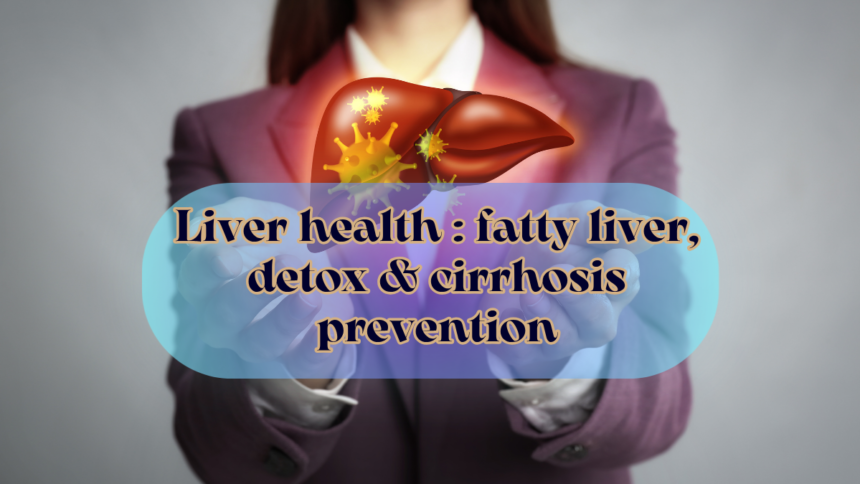
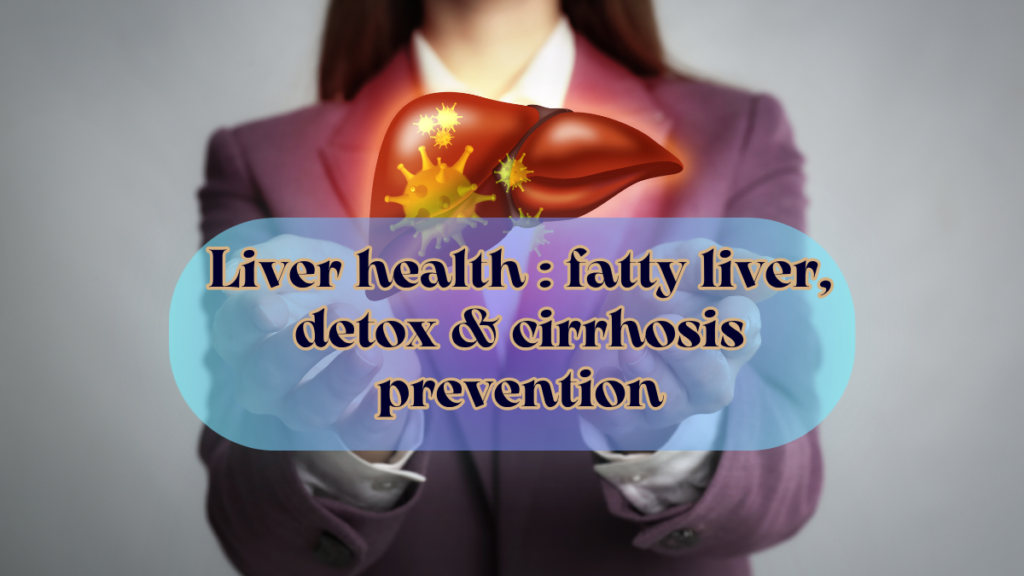
Liver health : fatty liver, detox & cirrhosis prevention
A plain-language guide to liver health, fatty liver disease, the truth about detoxing, and how to genuinely protect yourself from cirrhosis
Consider everything your liver did in the last hour while you were not thinking about it at all.
It filtered your blood — all of it, roughly five litres, cycling through the liver every few minutes — removing toxins, bacteria, old blood cells, and metabolic waste. It processed the meal you ate, packaging nutrients for storage or distribution and breaking down the components your body cannot use. It produced bile to help digest dietary fats. It synthesised proteins essential for blood clotting. It regulated blood sugar by storing excess glucose as glycogen and releasing it when levels dropped. It metabolised whatever medications you took this morning. It manufactured cholesterol, converted it into useful forms, and helped package it for transport. And it quietly managed hundreds of other metabolic processes without a single notification, symptom, or request for acknowledgement.
The liver is the body’s most metabolically active organ — an extraordinary biochemical factory operating around the clock. And like most things that work quietly and reliably in the background, we tend to ignore it until it breaks down. By which point, in many cases, it has been struggling for years.
Fatty liver disease is now the most common liver condition in the world, affecting an estimated 25–30% of the global adult population. Liver cirrhosis causes over one million deaths annually. And India carries a particularly heavy burden — with one of the highest rates of non-alcoholic fatty liver disease (NAFLD) in the world, driven by a convergence of genetic predisposition, dietary shifts, rising obesity and diabetes rates, and a cultural tendency to seek medical care only when symptoms become impossible to ignore.
This guide is about understanding your liver before it demands your attention in the worst possible way.
What Your Liver Actually Does: A Brief but Important Tour
The liver is the largest internal organ in the body — roughly the size of a football, sitting in the upper right abdomen beneath the ribcage. Unlike most organs, it receives blood from two sources: the hepatic artery (oxygen-rich blood from the heart) and the portal vein (nutrient-rich blood directly from the digestive tract). Everything you eat and drink passes through the liver before it reaches the rest of your body. This positioning makes the liver the primary gatekeeper of what enters your systemic circulation.
Its functions are staggering in breadth. Metabolically, it converts excess glucose to glycogen for storage, releases glucose when blood sugar drops, synthesises triglycerides and cholesterol, and produces bile acids essential for fat digestion and fat-soluble vitamin absorption. In terms of detoxification, it converts ammonia (a toxic byproduct of protein metabolism) to urea for excretion, neutralises alcohol and drugs through enzymatic processes, and breaks down hormones including oestrogen and cortisol once they have served their purpose. It produces the majority of plasma proteins, including albumin, clotting factors, and complement proteins of the immune system. And it serves as a storage depot for vitamins A, D, E, K, and B12, as well as iron and copper.
What makes the liver uniquely remarkable among organs is its regenerative capacity. It can regrow from as little as 25% of its original tissue, which is why partial liver donation between living donors is medically possible. But this regenerative capacity is not unlimited, and it degrades with age, persistent damage, and advanced disease. Treating the liver as invincible because it is resilient is one of the most common and costly mistakes people make.
Fatty Liver Disease: The Silent Epidemic in Your Abdomen
Fatty liver disease, or hepatic steatosis, occurs when fat accumulates in liver cells beyond the normal threshold of approximately 5% of liver weight. It exists on a spectrum from simple steatosis (fat accumulation without inflammation) to steatohepatitis (fat plus inflammation and cellular injury) to fibrosis (scar tissue formation) to cirrhosis (advanced scarring with architectural distortion) to liver failure and liver cancer.
There are two primary forms distinguished by their primary cause.
Alcoholic fatty liver disease (AFLD) results from chronic or excessive alcohol consumption. Alcohol is metabolised primarily in the liver, and its breakdown produces toxic intermediates — particularly acetaldehyde — that directly damage hepatocytes, promote fat accumulation, trigger inflammation, and drive fibrosis. Even moderate regular alcohol consumption, over years, can produce clinically significant liver disease in susceptible individuals.
Non-alcoholic fatty liver disease (NAFLD) — now increasingly called Metabolic-Associated Fatty Liver Disease (MAFLD) to better reflect its underlying drivers — occurs in people who drink little or no alcohol. It is driven primarily by metabolic factors: insulin resistance, obesity (particularly central adiposity with excess visceral fat), Type 2 diabetes, dyslipidaemia (elevated triglycerides, low HDL), and hypertension. It is the hepatic manifestation of metabolic syndrome, and its prevalence has risen in lockstep with global obesity and diabetes rates.
India presents a particularly striking picture. Studies estimate NAFLD prevalence in India at 9–32% of the general population — with rates as high as 40–50% in people with Type 2 diabetes or obesity. Alarmingly, NAFLD is increasingly being diagnosed in lean Indians — people with normal or near-normal BMI who carry disproportionate visceral fat due to the metabolically unfavourable fat distribution patterns common in South Asian bodies. This means that a normal weight on the scale is no guarantee of a healthy liver.
The majority of people with simple fatty liver have no symptoms whatsoever. Some experience vague right upper abdominal discomfort, fatigue, or a sense of fullness. Elevated liver enzymes (ALT, AST) on a routine blood test, or an incidental finding on abdominal ultrasound, are often the first indications. This silence is precisely what makes the condition so dangerous — by the time symptoms appear, disease has often progressed significantly.

From Fatty Liver to Cirrhosis: Understanding the Progression
The progression from fatty liver to cirrhosis is not inevitable — but it is a genuine risk, and it is worth understanding clearly.
In approximately 20–25% of people with NAFLD, the condition progresses beyond simple steatosis to non-alcoholic steatohepatitis (NASH) — where fat accumulation is accompanied by hepatocyte damage, lobular inflammation, and the beginnings of fibrosis. NASH is the more dangerous form of NAFLD and carries a substantially higher risk of disease progression.
Fibrosis — the deposition of scar tissue as the liver attempts to repair itself — advances through stages (F0 to F4). Advanced fibrosis (F3-F4) significantly impairs liver function and dramatically increases the risk of liver failure and hepatocellular carcinoma (HCC — primary liver cancer), even before fully developed cirrhosis is reached.
Cirrhosis represents end-stage liver scarring — where normal liver tissue has been so extensively replaced by scar tissue that the organ’s architecture is permanently distorted and its function is critically compromised. The consequences include portal hypertension (elevated pressure in the portal vein, causing varices that can rupture and bleed catastrophically), ascites (fluid accumulation in the abdomen), hepatic encephalopathy (neurological dysfunction from ammonia accumulation), progressive liver failure, and markedly increased risk of liver cancer.
The encouraging truth is that fibrosis — even in relatively advanced stages — is reversible with sufficient removal of the causative factors and appropriate intervention. Cirrhosis, once established, is largely irreversible. This is why intervention at the fatty liver and early fibrosis stages is so clinically important.
The Truth About Liver “Detox” — Setting the Record Straight
Before discussing what genuinely supports liver health, it is worth addressing one of the most commercially successful myths in wellness culture: the liver detox or cleanse.
Juice cleanses, herbal detox kits, activated charcoal supplements, liver flush protocols — none of these have meaningful clinical evidence supporting their use for improving liver health, removing toxins, or reversing liver disease. The liver does not accumulate “sludge” that needs periodically flushing out. It is itself the detoxification organ, running continuously and efficiently when it is healthy. The kidneys, lungs, lymphatic system, and skin support this process around the clock.
This does not mean there is nothing you can do nutritionally to support liver function. It means the support comes from evidence-based nutritional choices and lifestyle habits — not from a five-day juice protocol that costs three thousand rupees and produces primarily the short-term sense of virtuous suffering.
The most powerful liver “detox” in existence is: stopping or significantly reducing alcohol, losing excess weight if present, reducing ultra-processed food intake, improving insulin sensitivity through diet and exercise, and getting adequate sleep. These interventions have robust clinical evidence. The juice cleanse does not.
How to Genuinely Protect and Heal Your Liver
Lose Excess Weight — Especially Visceral Fat
Weight loss is the most effective non-pharmacological intervention for NAFLD. Studies consistently show that losing 7–10% of body weight significantly reduces liver fat content, improves liver enzyme levels, and in many cases reverses NASH and even early fibrosis. The composition of weight loss matters — fat loss, particularly from visceral and hepatic stores, through the combination of caloric deficit and exercise, produces superior liver outcomes to weight loss through caloric restriction alone.
Even modest, consistent weight loss — 0.5–1 kg per week through sustainable dietary changes and increased physical activity — produces measurable liver benefits. Rapid weight loss through extreme caloric restriction is counterproductive and can paradoxically worsen liver disease by mobilising fatty acids from adipose tissue faster than the liver can process them.
Overhaul Your Diet: What to Eat and What to Eliminate
The Mediterranean dietary pattern has the strongest evidence base of any dietary approach for NAFLD improvement. Its emphasis on vegetables, whole grains, legumes, olive oil, fish, nuts, and fruit — combined with the restriction of red meat, refined carbohydrates, and ultra-processed foods — reduces liver fat, improves insulin sensitivity, and lowers inflammatory markers.
Several specific dietary factors deserve attention. Fructose and added sugars are particularly hepatotoxic in excess — fructose is metabolised almost exclusively in the liver, and high intakes from sugary drinks, fruit juices, sweets, and ultra-processed foods directly drive hepatic fat accumulation and insulin resistance. Reducing added sugar is arguably the single most impactful dietary change for liver health after alcohol reduction.
Refined carbohydrates — white rice, white bread, maida-based products — drive rapid blood glucose and insulin spikes, promoting insulin resistance and hepatic fat storage. Replacing them with whole grain alternatives, lentils, and legumes produces measurable improvements in liver health markers.
Coffee is one of the most evidence-supported dietary protectives for the liver. Multiple large prospective studies have found that regular coffee consumption — two to three cups per day — is associated with significantly lower risk of NASH progression, liver fibrosis, cirrhosis, and hepatocellular carcinoma. The mechanism involves antioxidant and anti-inflammatory compounds including chlorogenic acids and diterpenes. This benefit appears to apply to both caffeinated and decaffeinated coffee, though the evidence is stronger for caffeinated.
Cruciferous vegetables — broccoli, cauliflower, kale, Brussels sprouts — contain compounds including sulforaphane and indole-3-carbinol that enhance the liver’s detoxification enzyme systems and have shown protective effects against liver fat accumulation in animal and early human studies.
Turmeric and its active compound curcumin have meaningful anti-inflammatory and hepatoprotective effects in research studies, with a 2019 meta-analysis finding that curcumin supplementation significantly reduced liver enzymes (ALT and AST) in NAFLD patients. While not a standalone treatment, including turmeric generously in cooking is a sensible, low-risk, evidence-consistent strategy.
Exercise: The Liver Responds to Movement Independently of Weight Loss
Regular aerobic exercise reduces liver fat content independently of weight loss — meaning the exercise itself, not just the caloric deficit it creates, directly improves hepatic steatosis. Research shows that 150–250 minutes per week of moderate aerobic exercise (brisk walking, cycling, swimming) reduces liver fat and improves liver enzyme levels. Resistance training similarly reduces hepatic fat and improves insulin sensitivity, complementing aerobic exercise. The combination of both forms of exercise appears superior to either alone for liver health outcomes.
Reduce or Eliminate Alcohol
There is no safe level of alcohol consumption for someone with existing liver disease. For people without diagnosed liver disease, current guidelines recommend no more than two standard drinks per day for men and one for women — though accumulating evidence suggests even these levels carry cumulative hepatic risk with decades of consistent use. For anyone with NAFLD, fatty liver on ultrasound, or elevated liver enzymes, the advice is simple and unambiguous: the less alcohol, the better. Ideally none.
Manage Medications and Supplements Carefully
Drug-induced liver injury (DILI) is more common than many people appreciate. Paracetamol (acetaminophen) is the most common cause of acute liver failure in many countries, most often from intentional or inadvertent overdose — particularly dangerous when combined with alcohol even at modest doses. NSAIDs, statins, antituberculosis drugs (particularly rifampicin and isoniazid), and many herbal and traditional remedies can cause significant liver damage in susceptible individuals or at excessive doses.
The irony is that many “liver health” supplements available online and in health stores — herbal formulations marketed as liver tonics or detox products — can themselves cause drug-induced liver injury. Ayurvedic and herbal preparations, in particular, have been implicated in documented cases of severe liver damage in India and globally. Any supplement intended for liver support should be discussed with a gastroenterologist or hepatologist before use.
Milk thistle (silymarin) is the exception with a reasonable evidence base — multiple clinical trials show it reduces liver enzymes and has hepatoprotective effects in fatty liver disease and alcoholic liver disease, though it is not a substitute for addressing the underlying causes.
Get Vaccinated Against Hepatitis A and B
Viral hepatitis — particularly Hepatitis B and Hepatitis C — are major independent causes of cirrhosis and hepatocellular carcinoma globally, and India has a substantial Hepatitis B burden. The Hepatitis B vaccine is highly effective and provides lifelong protection in most people. If you have not been vaccinated, or are uncertain of your vaccination status, speak to your doctor. Hepatitis C has no vaccine but is now curable with direct-acting antivirals in over 95% of cases — making testing and early treatment critically important.
Prioritise Sleep and Manage Metabolic Risk
Obstructive sleep apnoea is independently associated with NAFLD severity — the nocturnal oxygen desaturation and metabolic dysregulation it causes accelerates hepatic fat accumulation and inflammation. Treating sleep apnoea can improve liver health. More broadly, the comprehensive management of metabolic syndrome — blood pressure, blood sugar, triglycerides, and waist circumference — is also liver management, because these conditions share mechanistic pathways.
Warning Signs That Your Liver Needs Medical Attention Now
Most liver disease is silent until late stages. But some symptoms demand urgent evaluation. See a doctor promptly if you experience persistent unexplained fatigue, right upper abdominal pain or heaviness, yellowing of the skin or whites of the eyes (jaundice), dark urine or pale stools, unexplained weight loss, abdominal swelling (ascites), easy bruising or prolonged bleeding, or confusion and disorientation. These can indicate significant liver disease requiring immediate investigation and specialist care.
Routine liver function tests (LFTs including ALT, AST, GGT, ALP, bilirubin, albumin) and abdominal ultrasound are appropriate screening investigations for anyone with metabolic risk factors — obesity, Type 2 diabetes, dyslipidaemia, heavy alcohol use, or a family history of liver disease.
The Honest Bottom Line
Your liver works tirelessly on your behalf, every hour of every day, without complaint and without fanfare. It asks for very little in return: a diet that does not overwhelm it with excess fat, sugar, and alcohol; a body weight that does not deposit fat into its cells; regular movement; adequate sleep; careful medication use; and protection from viral hepatitis.
Fatty liver disease is not inevitable, and it is not irreversible. For most people in its early and intermediate stages, the prescription is the same cluster of evidence-based lifestyle changes that benefit virtually every system in the body — weight management, whole food nutrition, regular exercise, alcohol reduction, and restorative sleep. The difference with the liver is the urgency: because it does its damage quietly, the window between “reversible” and “permanent” can close without warning.
Do not wait for your liver to speak up. By then, it has usually been trying to get your attention for a very long time.
Did this article change how you think about your liver? Share it with someone who relies on crash diets, detox teas, or assumes their liver is fine because they feel fine. Leave a comment with your questions or experience below, or subscribe to our newsletter for more evidence-based health writing — practical, honest, and always grounded in science.