









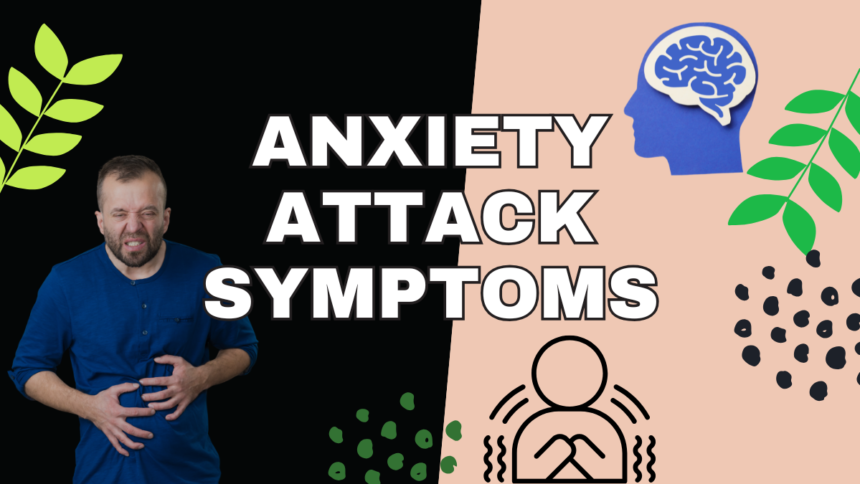
Anxiety Attack Symptoms
Imagine you’re standing in line at a local coffee shop. The sun is shining, the aroma of roasted beans is in the air, and you’re just thinking about your morning to-do list. Suddenly, the air feels a little too thick. Your heart starts a rhythmic drumming against your ribs, and a prickle of sweat breaks out on your neck. You aren’t in danger, yet every fiber of your being is screaming at you to run.
If this sounds familiar, you’ve likely experienced the overwhelming wave of an anxiety attack. While it can feel like you’re losing your grip, these sensations are actually your body’s way of trying to protect you—it’s just a bit over-enthusiastic.
Understanding the specific Anxiety Attack Symptoms is the first step toward dismantling the fear they create. In this guide, we’ll explore what is happening beneath the surface and provide actionable Tips to “Anxiety Attack Symptoms” management so you can navigate these storms with confidence.
1. Decoding the Signal: Common Anxiety Attack Symptoms
Anxiety attacks don’t always look like the dramatic gasping for air we see in movies. Often, they are quieter, internal, and deeply confusing. They typically build up over time—a result of a “pressure cooker” effect of stress—and manifest through both physical and psychological signs.
The Physical Toll
When anxiety strikes, your autonomic nervous system goes into overdrive. You might experience:
- Heart Palpitations: A racing heart or the sensation that it’s “skipping” a beat.
- Chest Tightness: A heavy feeling, often leading people to worry about their heart health.
- Trembling or Shaking: Visible shaking in the hands or an internal “vibration.”
- Shortness of Breath: Feeling like you can’t get a satisfying, deep breath.
- Gastrointestinal Distress: The classic “knot” in the stomach or sudden nausea.
The Psychological Echo
The mental symptoms can be just as taxing as the physical ones. Many people report:
- A Sense of Impending Doom: The feeling that something catastrophic is about to happen.
- Irritability: A “short fuse” caused by a nervous system that is completely overwhelmed.
- Brain Fog: Difficulty concentrating or feeling “spaced out” (often called dissociation).
- Restlessness: An inability to sit still or find a comfortable position.
2. Why Is This Happening? The Biological “False Alarm”
To manage Anxiety Attack Symptoms, it helps to know the “why.” Your brain has a tiny, almond-shaped security guard called the amygdala. Its job is to spot threats. When you are under chronic stress—whether from work, health concerns, or life changes—the amygdala becomes hyper-sensitive.
It triggers the release of adrenaline and cortisol, preparing you to fight a predator or flee the scene. In 2026, we don’t encounter many saber-toothed tigers, but our brains haven’t quite caught up to that fact. Your body is essentially throwing a “false alarm.” Recognizing this allows you to say, “My body is currently overreacting to stress,” which immediately lowers the psychological stakes of the attack.
3. Anxiety vs. Panic: Knowing the Difference
One of the most frequent questions is: Is this an anxiety attack or a panic attack? While the terms are used interchangeably, clinical experts generally distinguish them by their onset.
- Anxiety Attacks: Usually have a clear trigger (stress, a specific worry) and can build up slowly over hours or days. They are a state of high-intensity worry.
- Panic Attacks: Are often sudden, explosive, and can happen “out of the blue,” even when you are relaxed or asleep. They peak within 10 minutes and are incredibly intense.
By identifying which one you are experiencing, you can better tailor your treatment and coping strategies.
4. Modernizing Support: Digital Tools and Holistic Care
We are living in an era where managing mental health is no longer a “guessing game.” In the modern landscape of patient care, we are seeing a shift toward integrated, holistic practices that bridge the gap between clinical visits and daily life.
Innovative tools—such as custom mobile applications designed for mental health tracking—are revolutionizing how we handle Anxiety Attack Symptoms. These platforms allow you to log your triggers, track the duration of your symptoms, and improve follow-ups with your healthcare provider. Instead of trying to remember how you felt three weeks ago, you have a digital record that provides a 360-degree view of your well-being. This data-driven approach ensures that your treatment is personalized, proactive, and effective.
5. Practical Tips to “Anxiety Attack Symptoms” Management
If you feel a surge beginning, use these evidence-based techniques to ground your nervous system:
The 5-4-3-2-1 Grounding Technique
This is the gold standard for pulling your brain out of a “what-if” spiral and back into the present moment.
- 5 things you can see (a pen, a crack in the wall, a tree).
- 4 things you can touch (the fabric of your shirt, a cold desk).
- 3 things you can hear (a distant car, your own breath).
- 2 things you can Smell (the scent of coffee, fresh rain).
- 1 thing you can taste (a mint or just the inside of your mouth).
Box Breathing
This technique is used by elite performers and first responders to lower their heart rate instantly. Inhale for 4 seconds, hold for 4, exhale for 4, and hold for 4. Repeat this four times. It acts as a physical “brake pedal” for your racing heart.
Somatic Release
Anxiety lives in the body. If you feel “jittery,” try a brief bout of movement. Shaking your arms and legs or doing ten jumping jacks can help metabolize the excess adrenaline that is flooding your system.
Conclusion: You Are the Anchor
Navigating Anxiety Attack Symptoms is not about “fixing” yourself—because you aren’t broken. It’s about learning to communicate with your nervous system. By recognizing the signs early, utilizing modern tracking tools, and practicing grounding techniques, you can transform these overwhelming surges into manageable waves.
Remember, every attack has a beginning, a middle, and—most importantly—an end. You have navigated every difficult moment in your life so far, and you have the tools to navigate this one, too.
What is your favorite way to stay grounded when the world feels like “too much”? Let us know in the comments below; your tip might be the exact thing someone else needs to read today. To stay updated on the latest insights for a balanced, holistic life, subscribe to our newsletter today.