

Vasaka
A comprehensive, evidence-informed guide to Vasaka the Ayurvedic herb whose active compound became a pharmaceutical drug, what the clinical research shows for respiratory conditions, and how to use it effectively for cough, asthma, and lung health
There is a particular category of validation that traditional medicine occasionally receives from modern pharmacology one that is more definitive than any clinical trial and more persuasive than any meta-analysis. It happens when a synthetic pharmaceutical drug is discovered to be chemically derived from a compound that traditional medicine has been using in its natural form for centuries. When the mechanism that makes the drug work turns out to be the same mechanism that traditional practitioners were exploiting empirically, without the molecular vocabulary to name it, thousands of years before.
Vasaka occupies this category. And the validation it received is unusually direct.
Bromhexine a mucolytic drug prescribed by millions of physicians worldwide for productive cough, bronchitis, and respiratory congestion was developed by synthesising and modifying vasicine, the primary alkaloid compound isolated from the leaves and roots of Adhatoda vasica, the plant Ayurveda has called Vasaka. When Indian pharmacologists first isolated vasicine from Vasaka in the early twentieth century and characterised its bronchodilatory and mucolytic properties, they were pharmacologically explaining what Ayurvedic practitioners had known empirically for over two thousand years: that this particular shrub, with its distinctive pungent smell and bitter taste, was the most reliable and most specifically targeted herb in the classical pharmacopoeia for conditions involving respiratory congestion, productive cough, and bronchospasm.
Bromhexine, derived from vasicine, is now on the WHO’s List of Essential Medicines. Vasaka, the plant that provided its chemical template, remains in daily Ayurvedic clinical use in India alongside the pharmaceutical it inspired a parallel that illustrates both the pharmacological coherence of traditional medicine at its most rigorous and the genuinely complementary relationship between traditional and modern approaches to respiratory health.
What Is Vasaka? Botanical Identity and Classical Significance
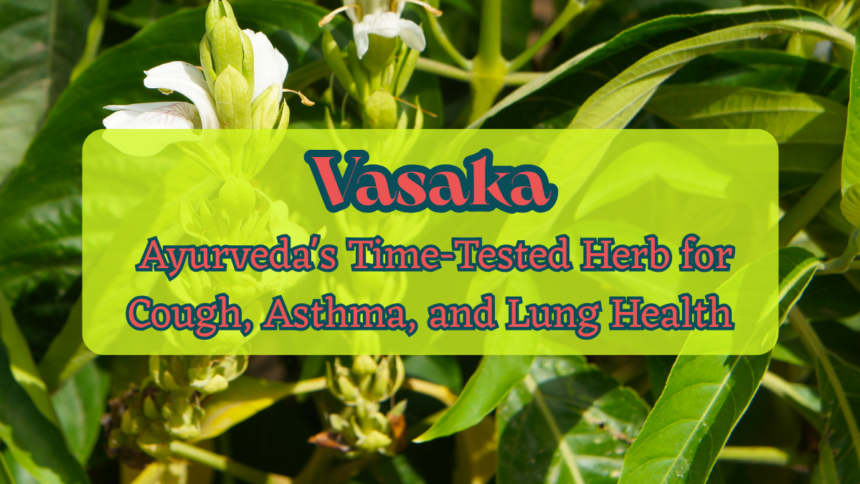
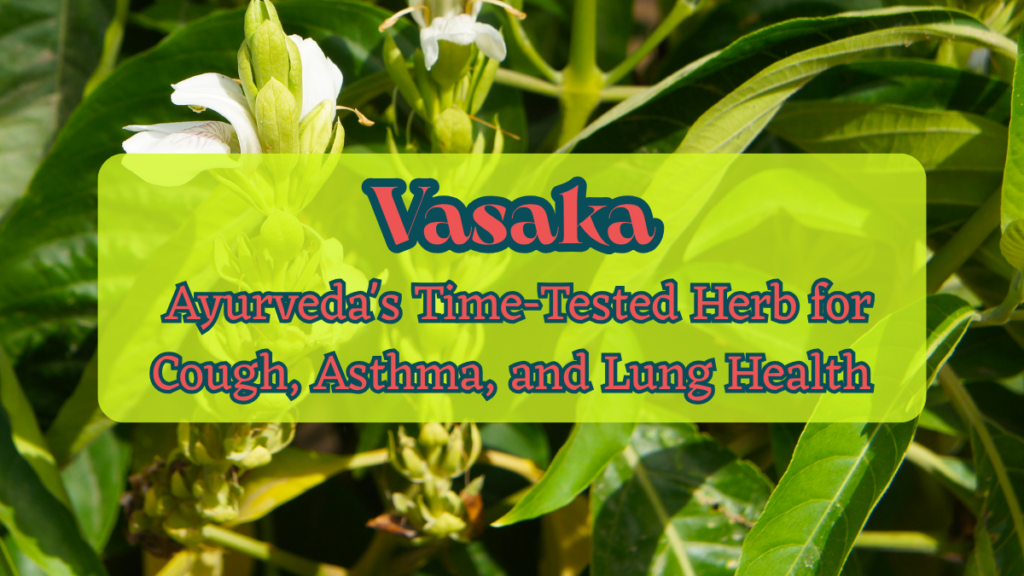
Vasaka Adhatoda vasica, also known by its more recent taxonomic name Justicia adhatoda (family Acanthaceae) is a large, perennial, aromatic shrub growing to two to three metres in height, found throughout the Indian subcontinent from the Himalayan foothills to the southern tip of the peninsula, and across Sri Lanka, Southeast Asia, and parts of East Africa. Its distinctive morphology large, lanceolate leaves with a characteristic strong, unpleasant smell; white flowers with purple markings; and woody, branching stems makes it readily identifiable once familiar, and its tolerance for disturbed, dry soils means it grows readily in roadside areas, field margins, and waste ground across rural and semi-urban India.
The traditional name Vasaka has both Sanskrit and pharmacological significance. The Sanskrit etymology connects to the term for “perfume” or “fragrance” (despite the plant’s smell being anything but conventionally pleasant the “fragrance” reference appears to relate to its therapeutic rather than olfactory qualities), while the regional name Malabar nut, common in English-language references, reflects its historical prominence in the traditional medicine of Kerala and coastal South India specifically.
The name Adhatoda itself derived from the Tamil/Sinhalese Adu-thodaa, meaning “not touched by goats” reflects an immediately observable ecological reality: livestock will not eat this plant, a fact that traditional observers correctly interpreted as a sign of the herb’s pharmacological potency. Plants that browsing animals avoid tend to accumulate secondary metabolites at concentrations that produce strong biological effects a traditional indicator of medicinal significance that modern phytochemistry has repeatedly validated.
In Ayurvedic classification, Vasaka is described as having Tikta (bitter) and Kashaya (astringent) Rasa, Laghu (light) and Ruksha (dry) Guna, Sheeta Virya (cooling potency) an unusual designation for a respiratory herb, as most respiratory conditions involve Kapha’s cold, heavy quality that one might expect to require a warming herb, but Vasaka’s specific indication for the Pitta-Kapha presentations involving heat, inflammation, and mucus excess makes its cooling potency pharmacologically appropriate and with specific classical indication for Shvasa (respiratory difficulty, corresponding to asthma and COPD), Kasa (cough), Raktapitta (bleeding conditions, including haemoptysis coughing up blood), and Jwara (fever) with respiratory involvement.

The Phytochemistry of Vasaka: The Vasicine Foundation
The pharmacological activity of Vasaka is anchored by one of the most extensively characterised alkaloid compounds in the entire Ayurvedic pharmacopoeia vasicine (also called peganine) whose detailed pharmacological characterisation has provided the mechanistic foundation for understanding essentially every traditional application of this herb.
Vasicine a quinazoline alkaloid constituting the primary bioactive component of Vasaka leaves and roots has demonstrated the following specific pharmacological properties in research: bronchodilatory activity (relaxation of bronchial smooth muscle, increasing airway diameter and reducing resistance to airflow); mucolytic activity (dissolution and thinning of viscous airway mucus, facilitating its expectoration); expectorant activity (stimulation of the ciliary clearance mechanism that propels mucus from the lower airways toward the trachea and throat for expectoration); uterotonic activity (stimulation of uterine smooth muscle contraction a property directly relevant to Vasaka’s most important contraindication, discussed in the safety section); and bronchial secretory stimulation (increasing the production of less viscous, more easily cleared mucus by bronchial goblet cells).
Vasicine’s oxidation product vasicinone contributes additional bronchodilatory activity with a slightly different mechanism from vasicine, and the combination of both compounds in natural Vasaka preparations appears to produce synergistic bronchodilatory effects that exceed the activity of either compound alone.
Vasicinol, another vasicine metabolite present in Vasaka, has demonstrated significant mast cell stabilising activity directly relevant to allergic asthma management, where mast cell degranulation releases histamine and leukotrienes that trigger bronchospasm. This mast cell stabilising mechanism is pharmacologically analogous to cromolyn sodium (a pharmaceutical mast cell stabiliser used in asthma prevention), providing Vasaka with a distinctly anti-allergic mechanism alongside its bronchodilatory and mucolytic properties.
Quinazoline alkaloids beyond vasicine including vasicolinone and several related compounds contribute to the anti-inflammatory and antimicrobial activity that makes Vasaka relevant not merely as a bronchodilator and expectorant but as a comprehensive respiratory anti-infective herb.
Flavonoids including vitexin, isovitexin, and apigenin provide antioxidant and additional anti-inflammatory activity, while essential oils contribute to the aromatic quality of Vasaka preparations and may provide additional bronchodilatory effects through the same mechanisms that menthol and eucalyptol from other respiratory herbs produce.
Vasaka for Cough: The Primary Evidence Domain
Cough management is the application where Vasaka’s evidence is most immediately compelling, most mechanistically coherent, and most directly relevant to the daily clinical decisions that both Ayurvedic and conventionally trained physicians make for a condition affecting hundreds of millions of people globally each year.
The spectrum of cough conditions for which Vasaka is specifically indicated in classical texts and for which its pharmacological mechanisms provide direct rationale includes productive cough with viscous mucus (where the mucolytic and expectorant mechanisms are most directly relevant), dry, irritated cough with bronchospasm (where the bronchodilatory and anti-inflammatory mechanisms address the bronchial hypersensitivity driving the cough reflex), infective bronchitis (where the antimicrobial properties of Vasaka’s alkaloid fraction provide additional therapeutic value alongside the mechanical clearance facilitation), and post-infectious cough (where persistent airway inflammation and bronchial hyperreactivity maintain cough after the initial infection has resolved, and Vasaka’s anti-inflammatory and bronchial-calming properties address this residual pathology).
A randomised clinical trial examining Vasaka leaf extract in patients with acute bronchitis and productive cough found significant reductions in cough frequency, significant improvements in mucus consistency and ease of expectoration, and significant improvements in respiratory symptom scores compared to control treatment, with onset of symptomatic improvement within the first week of treatment consistent with the relatively rapid onset of mucolytic and expectorant effects that the mechanistic research predicts.
The comparison between Vasaka-derived vasicine and pharmaceutical bromhexine developed directly from it is itself the most implicit validation of Vasaka’s cough efficacy, since bromhexine’s extensive clinical trial evidence base (accumulated over decades of pharmaceutical use) essentially constitutes indirect evidence for the parent compound’s activity, with the pharmacological relationship between vasicine and bromhexine being sufficiently direct that the pharmaceutical’s efficacy profile meaningfully informs interpretation of the traditional herb’s mechanism.
Vasaka for Asthma: Anti-Allergic and Bronchodilatory Evidence
Asthma management with Vasaka involves a pharmacological profile that addresses multiple pathological mechanisms of this heterogeneous condition simultaneously, in ways that distinguish it from single-mechanism pharmaceutical bronchodilators and make it pharmacologically appropriate as a complementary intervention in comprehensive asthma care.
The bronchodilatory mechanism of vasicine and vasicinone relaxation of bronchial smooth muscle to reverse the bronchospasm that causes the characteristic wheeze and breathlessness of asthma provides direct acute bronchodilatory benefit relevant to symptom management during and between asthma exacerbations.
The mast cell stabilising activity of vasicinol reducing the allergic trigger of bronchospasm at its source provides a preventive mechanism relevant to allergic asthma, where allergen-triggered mast cell degranulation initiates the bronchospastic cascade.
Anti-inflammatory activity through NF-κB inhibitory pathways and reduction of pro-inflammatory cytokines including TNF-α and IL-1β addresses the chronic airway inflammation that is the defining pathological feature of persistent asthma and that pharmaceutical management targets with inhaled corticosteroids.
A controlled clinical study examining Vasaka preparation in bronchial asthma patients alongside standard treatment found significant improvements in peak expiratory flow rate (PEFR) the most direct clinical measure of airway opening and significant reductions in symptom scores for wheeze, breathlessness, and cough, with the Vasaka group showing superior outcomes to control group patients receiving standard treatment alone, providing clinical evidence for additive benefit when Vasaka is integrated with rather than substituted for conventional asthma management.
The Ayurvedic herb Sitopaladi Churna a classical compound formulation whose component herbs include pippali (long pepper), cardamom, cinnamon, bamboo manna, and sugar alongside preparation in the context of many Kapha-respiratory protocols is frequently co-prescribed with Vasaka in classical Ayurvedic asthma management, combining Vasaka’s specific bronchodilatory and anti-allergic properties with Sitopaladi’s broader Kapha-clearing and airway-soothing effects in a compound approach to multi-mechanism asthma support.
Vasaka for Bronchitis and Respiratory Infections
The antimicrobial dimension of Vasaka’s pharmacological profile extends its clinical relevance beyond bronchodilation and mucus management into direct anti-infective activity relevant to the bacterial respiratory infections that trigger and complicate many acute bronchitis presentations.
Research documenting Vasaka extract’s antimicrobial activity has found significant bacteriostatic and bactericidal effects against Staphylococcus aureus, Streptococcus pneumoniae, Klebsiella pneumoniae, and Haemophilus influenzae precisely the bacterial pathogens most frequently implicated in community-acquired bacterial bronchitis and the secondary bacterial complications of viral respiratory infections. This antimicrobial activity, combined with the mucolytic property that physically removes bacteria-laden mucus from airways, provides a dual mechanism direct bacterial growth inhibition and mechanical bacterial clearance that makes Vasaka particularly well-suited to the management of infective respiratory conditions compared to pure bronchodilators that address airway physiology without any direct antimicrobial activity.
The antiviral properties of Vasaka have also been explored, with research identifying activity against influenza and other respiratory viruses through mechanisms including direct virucidal effects of the alkaloid fraction and immune-modulating anti-viral responses relevant in the context of the viral respiratory infections that constitute the most common trigger for acute bronchitis presentations.
Vasaka in the Air Pollution Context
For the Indian urban population specifically navigating the PM2.5 exposures, reactive airway conditions, and increased respiratory infection susceptibility described in the air pollution and lung health article in this series Vasaka’s combination of bronchodilatory, mucolytic, anti-inflammatory, and antimicrobial properties creates a pharmacological profile of unusual relevance.
Pollution-induced airway inflammation shares pathological mechanisms with allergen-induced and infection-induced airway inflammation: reactive oxygen species generation, pro-inflammatory cytokine release, bronchial epithelial cell damage, and mucus hypersecretion. Vasaka’s anti-inflammatory, antioxidant, and mucolytic mechanisms address these pollution-specific mechanisms directly, providing a pharmacological rationale for its traditional inclusion in the air pollution protection protocols described in that earlier article.
The specific combination of Vasaka with Tulsi (Holy Basil), Pippali, and Mulethi as described in the air pollution article creates a synergistic respiratory protection formula where Vasaka’s specific mucolytic and antimicrobial properties complement Tulsi’s antiviral and immune-supporting activity, Pippali’s bronchodilatory and bioavailability-enhancing properties, and Mulethi’s demulcent and anti-inflammatory effects on respiratory mucosal tissue.
Vasaka for Haemoptysis: The Haemostatic Application
Classical Ayurvedic texts specifically indicate Vasaka for Raktapitta with respiratory involvement a classical category encompassing conditions involving bleeding from respiratory tissue, corresponding in modern terminology to haemoptysis (coughing up blood). This haemostatic application, while less commonly discussed in contemporary Vasaka literature, is supported by the platelet-aggregation-stimulating and blood-clotting-supporting properties documented in pharmacological research of Vasaka alkaloids properties that complement the herb’s respiratory anti-inflammatory activity to create a combined anti-inflammatory and haemostatic effect relevant to conditions involving both airway inflammation and mucosal bleeding.
Classical Preparations and Compound Formulations
Vasaka’s most important classical preparations include Vasavaleha a classical compound Ayurvedic formulation combining Vasaka juice or extract with Pippali, honey, sugar, and ghee, formulated as a paste-like preparation (leha) specifically for cough, asthma, and respiratory conditions, representing one of the most commonly prescribed classical compound respiratory preparations in Ayurvedic clinical practice. Vasaka Ghrita Vasaka processed in ghee provides a fat-based delivery vehicle that enhances the absorption of fat-soluble alkaloid components and adds ghee’s own anti-inflammatory and mucosal-nourishing properties to the preparation.
Fresh Vasaka leaf juice the most traditional and most direct preparation expressed from fresh leaves and typically combined with honey (the classical combination Madhu-Vasaka Swarasa) represents both the most pharmacologically complete and the most immediately available preparation for households with access to the growing plant.
Practical Use: Forms, Dosing, and Integration
Fresh Vasaka leaf juice (Swarasa): 10–20ml expressed from fresh leaves, combined with equal amounts of honey, taken two to three times daily for acute cough and bronchitis. This represents the preparation with the most direct connection to the traditional clinical evidence base.
Vasaka churna (leaf or root powder): 1–3g twice daily in warm water, honey, or as part of compound formulations. The powder form is more convenient than fresh juice but involves the same phytochemical profile in dried form.
Standardised extract capsules: 250–500mg of standardised extract (specifying vasicine content where possible), two to three times daily, representing the most precisely dosed form and most appropriate for therapeutic respiratory applications where consistent dosing is clinically important.
Vasavaleha compound preparation: as directed by a qualified Ayurvedic physician, typically one teaspoon twice daily with warm milk or water for chronic respiratory conditions including asthma and recurrent bronchitis.
Safety Profile and Critical Contraindications
Vasaka’s safety profile for appropriate non-pregnant adults at standard doses is generally favourable based on extensive traditional use and available clinical research. However, two safety considerations deserve specific emphasis.
Pregnancy contraindication: this is Vasaka’s most critical safety consideration. The uterotonic properties of vasicine and vasicinone which stimulate uterine smooth muscle contraction historically made concentrated Vasaka preparations used in traditional medicine as abortifacients, and the same uterotonic activity makes Vasaka absolutely contraindicated in pregnancy at therapeutic doses. This is not a theoretical or minor concern it is an absolute contraindication that must be clearly communicated to any woman of reproductive age using or considering Vasaka.
Lactation: insufficient specific safety data warrants caution during breastfeeding, with the alkaloid content of Vasaka potentially entering breast milk and the uterotonic properties being relevant even in the postpartum period.
Beyond these critical contraindications, mild and infrequent gastrointestinal side effects (nausea at higher doses), and potential additive effects with pharmaceutical bronchodilators and mucolytics warrant awareness and medical coordination.
The Honest Bottom Line
Vasaka occupies one of the most defensible positions of any herb in the traditional medicine pharmacopoeia: its clinical significance is not merely implied by traditional use but explicitly confirmed by the pharmaceutical industry’s development of one of its primary compounds into a globally prescribed essential medicine. When bromhexine was derived from vasicine, traditional medicine received a validation that most herbs have never received and likely never will a direct molecular lineage from traditional herb to modern drug that makes any attempt to dismiss Vasaka as “just traditional medicine” a particularly difficult position to sustain.
For cough, bronchitis, and asthma conditions collectively affecting hundreds of millions globally and imposing particular burden in India’s increasingly polluted urban environments Vasaka provides a pharmacologically coherent, clinically evidence-supported, traditionally deep-rooted respiratory support option that complements rather than competes with appropriate conventional respiratory care.
The Malabar nut tree growing at the roadside is not merely scenery. Two thousand years of Ayurvedic practice, and the pharmaceutical industry that derived a WHO essential medicine from its compounds, agree on that.
Did this comprehensive guide to Vasaka give you a new appreciation for the pharmacological depth behind Ayurvedic respiratory medicine? Share it with someone managing chronic cough, asthma, or bronchitis who deserves to know about every evidence-based option available. Leave a comment with your own experience with Vasaka, or subscribe to our newsletter for more rigorously researched content where traditional pharmacological depth and modern clinical evidence genuinely meet.