






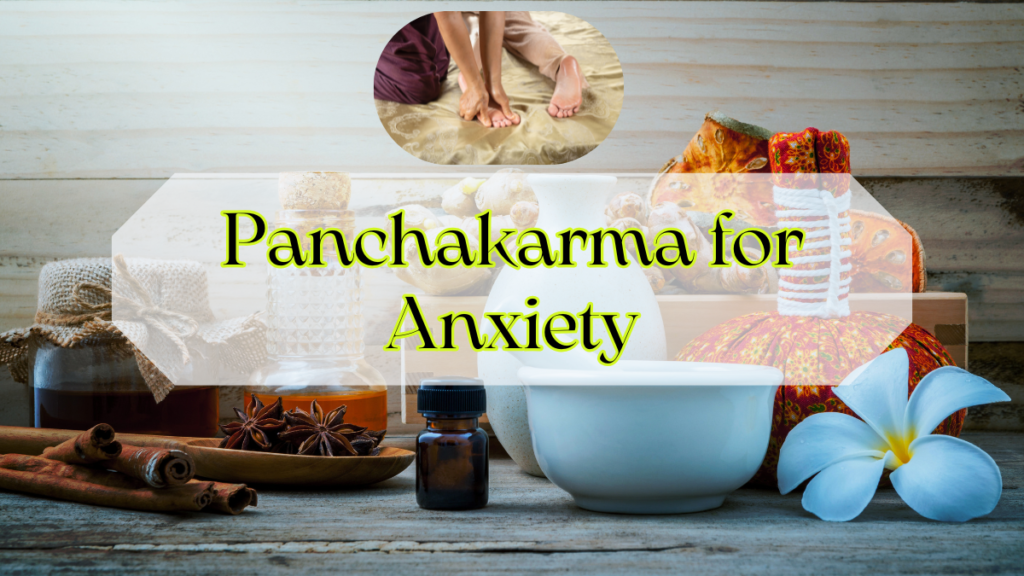
Panchakarma for Anxiety
We’ve all had those days where the world feels a little too “loud.” Maybe your mind is racing like a high-speed processor that refuses to shut down, or perhaps you feel a persistent, buzzing restlessness in your limbs that makes it impossible to sit still. In our modern, hyper-connected lives, our nervous systems are often in a state of chronic “overclocking.”
While we often turn to digital detoxes or weekend getaways to find peace, Ayurveda suggests that the root of the problem isn’t just external—it’s internal. When the “winds” of the mind (known as Vata) become too turbulent, they kick up a storm of toxins and mental “static.” This is where the ancient practice of Panchakarma for Anxiety comes in. It isn’t just a spa day; it’s a systematic, five-fold biological “hard reset” designed to pull the stress out by its roots.
The Ayurvedic “Why”: Vata, Ama, and the Mental Short-Circuit
In the world of Ayurveda, anxiety is almost always seen as a Vata imbalance. Vata is the energy of movement, air, and ether. When it’s balanced, you feel creative and energetic. When it’s aggravated—by stress, poor diet, or a lack of routine—it becomes like a gale-force wind. It dries out your tissues and sends your thoughts into a frantic loop.
Furthermore, this turbulence creates Ama—metabolic and emotional debris that clogs the subtle channels (Srotas) of your brain. Panchakarma for Anxiety works by physically lubricating these channels and flushing out the “sludge,” allowing your nervous system to communicate clearly again.
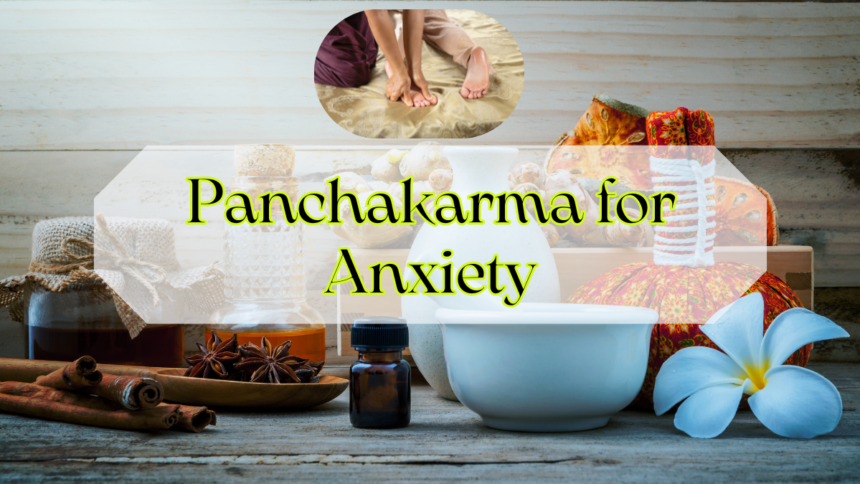
[Image Alt Text: A serene Ayurvedic treatment room with warm oils and traditional copper vessels, representing the calming environment of Panchakarma.]
Core Procedures: How Panchakarma Calms the Storm
Panchakarma isn’t one single treatment; it’s a curated journey. While a full detox involves five actions, certain procedures are specifically targeted as Tips to Panchakarma for Anxiety management.
1. Shirodhara: The Liquid Meditation
If you’ve seen an image of Ayurveda, it’s likely this one: a steady, rhythmic stream of warm herbal oil poured over the forehead (the “third eye”).
- The Impact: This treatment induces a state of deep relaxation that is chemically similar to deep meditation. It calms the Prana Vayu (the sub-dosha of the head), effectively turning down the volume of the “What-If” machine in your brain.
2. Abhyanga: The Loving Touch
This is a synchronized, four-handed massage using massive amounts of warm, medicated sesame oil.
- The Impact: The word Sneha in Sanskrit means both “oil” and “love.” By saturating the skin—the primary seat of Vata—you are literally “anchoring” your nervous system. It’s the physiological equivalent of a weighted blanket.
3. Basti: The “King” of Treatments
It might surprise you, but the most powerful part of Panchakarma for Anxiety often happens in the colon.
- The Impact: The colon is the main “home” of Vata dosha. Herbal decoction enemas (Basti) help ground the body’s energy. When the seat of Vata is stabilized, the mind follows suit.
4. Nasya: The Doorway to the Consciousness
This involves the administration of herbal oils through the nasal passages.
- The Impact: According to Ayurvedic texts like the Charaka Samhita, the nose is the direct route to the brain. Nasya helps clear the “mental fog” and supports the endocrine system in regulating stress hormones like cortisol.
The Three Stages of Your Detox Journey
A successful experience with Panchakarma for Anxiety requires more than just showing up. It follows a specific three-stage protocol:
| Stage | Name | Purpose |
| Stage 1 | Purvakarma | Preparing the body by loosening toxins with oil and steam. |
| Stage 2 | Pradhanakarma | The main cleansing actions (the 5 therapies). |
| Stage 3 | Paschatkarma | Rebuilding your strength through a specific diet and routine. |
Practical Tips to “Panchakarma for Anxiety” Success
If you are considering this journey, here are some essential Tips to Panchakarma for Anxiety to ensure you get the most out of your “reset”:
- Commit to the “Monk Mode”: Panchakarma is as much a mental detox as a physical one. Try to stay off your devices. The goal is to move from Rajas (agitation) to Sattva (clarity).
- Follow the Diet: During the process, you will likely eat Kitchari—a simple, warm, spiced mung bean and rice dish. It’s designed to give your digestion a rest so your body can focus on healing the nervous system.
- Respect the Post-Detox Period: Your “Agni” (digestive fire) and nervous system will be sensitive after treatment. Slowly reintegrate back into your normal life rather than jumping straight back into a 60-hour work week.
Addressing Common Concerns
“Is it safe?”
Yes, when performed by trained Ayurvedic doctors (Vaidyas). Research suggests that Ayurvedic detoxification can significantly reduce stress markers. A study published in the Global Advances in Health and Medicine found that a week of Panchakarma significantly lowered levels of 12 different cell-signaling molecules related to metabolic and psychological stress.
“Will I feel worse before I feel better?”
Sometimes. As toxins leave the tissues, you might feel a brief “healing crisis”—perhaps a bit of fatigue or emotional release. This is a sign that the Panchakarma for Anxiety is working. It’s the “cleaning out the closet” phase where things look messy before they look perfect.
Conclusion: A New Baseline for Peace
In a world that prizes “hustle” and constant activity, choosing to undergo Panchakarma for Anxiety is a radical act of self-care. It is an acknowledgment that your mental health isn’t just about “positive thinking,” but about the biological environment of your body.
By flushing out the accumulated stress and grounding the erratic winds of Vata, you aren’t just managing your anxiety—you are changing your baseline. You come out the other side not just “relaxed,” but fundamentally re-centered, with a nervous system that is resilient, quiet, and ready to engage with the world from a place of strength.
Take the Next Step
- Subscribe to our newsletter for more in-depth guides on Ayurvedic detoxification, herbal recovery, and holistic mental performance.
- Leave a comment: Have you ever tried an Ayurvedic treatment? What was your experience with the “Shirodhara” flow?
- Share this article: If you know someone who is perpetually “wired and tired,” send this their way. It might be the reset they’ve been searching for.