


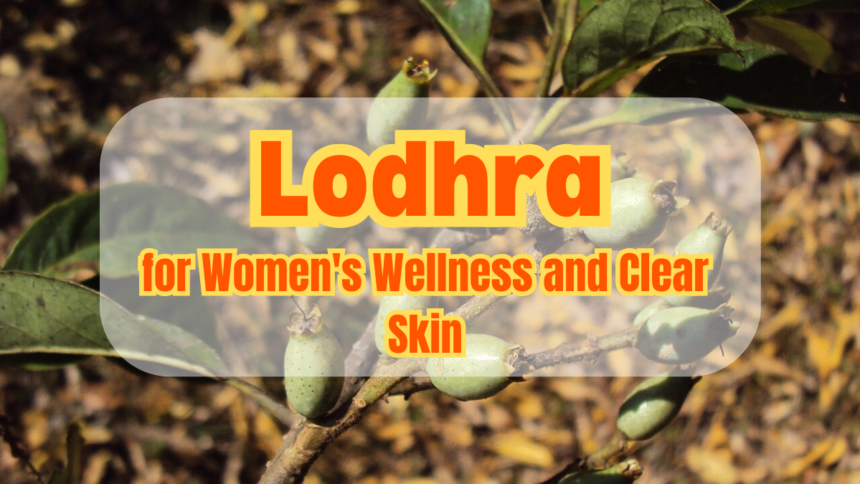
Lodhra (Symplocos racemosa)
A comprehensive, evidence-informed guide to Lodhra the underappreciated Ayurvedic herb with documented clinical evidence for PCOS management, hormonal balance, skin health, and anti-inflammatory applications that mainstream wellness culture has largely overlooked
Ask most people who have spent time exploring Ayurvedic herbs about their favourites and you will hear a predictable list: Ashwagandha for stress, Shatavari for women’s health, Triphala for digestion, Turmeric for inflammation. These are the herbs that have broken through into international wellness consciousness, acquired Western research interest, and earned shelf space in health stores from Mumbai to Manchester.
Ask a trained Ayurvedic physician specialising in women’s reproductive health the same question, and there is a reasonable chance you will hear a different answer one that does not appear in international bestseller wellness books, has not yet generated a thousand Instagram posts, and has never been featured in a Western pharmaceutical development programme despite having genuine, peer-reviewed clinical evidence behind it.
Lodhra. Symplocos racemosa. The bark of a tree that grows in the sub-Himalayan forests and tropical hills of India and Southeast Asia, used in classical Ayurvedic texts as one of the most important specific medicines for female reproductive disorders and inflammatory skin conditions, and validated in modern clinical research to a degree that makes its relative international obscurity genuinely puzzling to anyone who examines the evidence carefully.
This is the comprehensive guide that Lodhra has long deserved.
What Is Lodhra? Botanical Identity and Classical Significance
Lodhra Symplocos racemosa, from the Symplocaceae family is a medium-sized tree with simple, oblong leaves, white to cream-coloured fragrant flowers, and small, fleshy fruits. The medicinally relevant portion is the bark specifically the dried bark of the stem and branches, which concentrates the bioactive alkaloids and tannins responsible for Lodhra’s pharmacological activity.
The name Lodhra itself has Sanskrit etymological roots connected to the idea of “causing or supporting firmness” reflecting the classical understanding of the herb’s astringent, tissue-firming properties, both literally in the context of its skin applications (where it tightens and clarifies) and physiologically in the context of its reproductive applications (where it supports tissue tone and hormonal normalisation in conditions characterised by excess, laxity, or disruption).
In Ayurvedic classification, Lodhra is described as having Kashaya (astringent) and Tikta (bitter) Rasa (taste), Laghu (light) and Ruksha (dry) Guna (qualities), Sheeta Virya (cooling potency), and Katu Vipaka (pungent post-digestive effect) a combination that makes it primarily Pitta and Kapha reducing, directly relevant to the Pitta-Kapha imbalance that classical Ayurveda (as discussed in the PCOS article in this series) associates with the hormonal and inflammatory conditions for which Lodhra is most specifically indicated.
Classical texts including Charaka Samhita, Sushruta Samhita, and Ashtanga Hridayam consistently include Lodhra among the primary herbs indicated for Asrigdara (excessive or irregular menstrual bleeding), Pradara (various menstrual disorders), and skin conditions involving inflammation, discharge, or tissue disruption applications whose modern pharmacological basis the research discussed in this article substantially validates.
The Phytochemistry of Lodhra: What Makes It Work
Lodhra’s pharmacological activity derives primarily from several classes of bioactive compounds whose characterisation has significantly advanced in the past two decades.
Alkaloids particularly loturine and colloturine represent one of the primary pharmacologically active classes in Lodhra bark, with these steroidal alkaloids demonstrating hormonal modulating activity, anti-inflammatory effects, and documented effects on gonadotropin hormone signalling directly relevant to Lodhra’s reproductive health applications.
Tannins including ellagitannins and gallotannins provide the potent astringent activity that explains Lodhra’s traditional application in conditions involving excess discharge, tissue laxity, and inflammatory dermatological conditions. The tannin fraction additionally contributes significant antioxidant activity relevant to both skin health and the oxidative stress dimension of inflammatory reproductive conditions.
Flavonoids including quercetin, rutin, and kaempferol glycosides provide additional anti-inflammatory and antioxidant activity through well-characterised mechanisms, with quercetin’s documented anti-androgenic activity particularly relevant to Lodhra’s clinical applications in conditions involving androgen excess, as discussed in subsequent sections.
Triterpenoids including oleanolic acid and related compounds contribute anti-inflammatory, hepatoprotective, and immunomodulatory activity that rounds out the herb’s comprehensive pharmacological profile.
This multi-compound, multi-class phytochemical composition provides the mechanistic basis for Lodhra’s documented clinical activity across the distinct applications hormonal, reproductive, dermatological, and anti-inflammatory that subsequent sections examine.
Lodhra for PCOS: The Clinical Evidence That Deserves Attention
The most extensively researched and most directly evidence-supported modern application of Lodhra is its role in polycystic ovary syndrome management and the research here is both more specific and more clinically convincing than the evidence base for many more internationally famous herbs marketed for similar purposes.
A landmark clinical study specifically examining Lodhra bark extract in women diagnosed with PCOS, published in the Journal of Ethnopharmacology, produced findings that directly address the core hormonal abnormalities defining this condition. The study found that Lodhra supplementation over three months produced significant reductions in LH (luteinising hormone) levels, significant reductions in the LH:FSH ratio (which is characteristically elevated in PCOS, disrupting normal follicular development and ovulation), significant reductions in serum testosterone (addressing the hyperandrogenism that drives the acne, hirsutism, and other androgen-excess symptoms characteristic of PCOS), and improvements in menstrual regularity addressing what is often the most personally distressing symptom dimension for women with PCOS.
These findings are pharmacologically coherent given the phytochemical profile described above: the alkaloids’ documented effects on gonadotropin signalling provide a mechanism for the LH and LH:FSH ratio normalisation; the flavonoid quercetin’s anti-androgenic activity provides a mechanism for the testosterone reduction; and the combined hormonal normalisation provides a mechanistic basis for the improvements in menstrual regularity observed clinically.
A separate clinical study examining Lodhra alongside Ashoka bark (Saraca asoca) and Shatavari in an Ayurvedic compound preparation specifically for menstrual disorders found significant improvements in cycle regularity, menstrual flow normalisation, and reduction of associated symptoms including dysmenorrhoea, providing clinical support for the combined formula approach commonly used in Ayurvedic clinical practice where Lodhra is rarely prescribed as a single herb but rather as part of compound formulations designed to address the multiple dimensions of hormonal imbalance simultaneously.
Lodhra for Menstrual Disorders: Beyond PCOS
While the PCOS research is particularly compelling, Lodhra’s classical application to a broader range of menstrual disorders including menorrhagia (excessive menstrual bleeding), metrorrhagia (irregular bleeding), and dysmenorrhoea is supported by both traditional clinical evidence and the pharmacological mechanisms discussed above.
The astringent and haemostatic properties of Lodhra’s tannin fraction provide a direct mechanism for its traditional application in menorrhagia and conditions involving abnormal uterine bleeding tannins form reversible protein complexes with vascular and tissue proteins, reducing vascular permeability and supporting haemostatic processes in a manner consistent with the clinical observations that have made Lodhra a first-line Ayurvedic recommendation for excessive menstrual bleeding over centuries of clinical use.
The anti-inflammatory properties of Lodhra’s alkaloid and flavonoid fractions address the prostaglandin-mediated inflammation and uterine cramping underlying dysmenorrhoea providing a pharmacological basis for its traditional application in painful periods that aligns with modern understanding of dysmenorrhoea’s inflammatory pathophysiology.
Lodhra for Skin Health: The Dermatological Applications
The second major application domain for Lodhra and the one that most frequently introduces women in India to this herb through contemporary Ayurvedic skincare formulations is dermatological: specifically, its effects on acne, skin inflammation, and skin tone clarity.
The connection between Lodhra’s reproductive health applications and its skin applications is not coincidental it reflects the hormonal-skin connection discussed in the skin health from within article in this series, where androgen excess drives sebum overproduction and the acne pathophysiology particularly characteristic of PCOS-related and hormonally driven acne. Lodhra’s documented testosterone-reducing activity therefore addresses acne with a hormonal driver through a mechanism upstream of the skin itself working from within to reduce the androgen excess that drives the sebaceous gland overactivity and the inflammatory skin manifestations downstream.
The anti-inflammatory and antimicrobial properties of Lodhra’s tannin and alkaloid fractions provide additional mechanisms directly relevant to acne when applied both topically and through internal use. Research has documented significant antibacterial activity of Lodhra extracts against Cutibacterium acnes (formerly Propionibacterium acnes, the primary acne-associated bacterium discussed in the skin health article), with minimum inhibitory concentrations comparable to established topical antimicrobials, providing direct pharmacological support for both internal and topical Lodhra use in acne management.
Lodhra face packs and topical preparations combining finely powdered Lodhra bark with complementary ingredients including rose water, multani mitti (fuller’s earth), or sandalwood powder have been a staple of traditional Indian beauty practice for centuries, with the astringent, anti-inflammatory, and antimicrobial properties of the bark contributing to pore minimisation, reduced oiliness, reduction of inflammatory lesions, and the brightening of post-inflammatory hyperpigmentation that often outlasts the acne lesion itself.
For hyperpigmentation specifically, Lodhra’s tannin-mediated inhibition of tyrosinase the enzyme central to melanin synthesis provides a mechanism directly comparable to the modern skin-brightening compounds (kojic acid, alpha-arbutin) used in dermatological formulations, explaining the traditional Indian use of Lodhra-containing preparations for achieving the “nirmal twak” (clear, luminous skin) that Ayurvedic texts associate with this herb.
Additional Applications: Lodhra’s Broader Pharmacological Reach
Anti-Inflammatory Applications
Beyond its specifically reproductive and dermatological applications, Lodhra’s anti-inflammatory activity documented across multiple mechanistic and experimental studies positions it as a broadly relevant anti-inflammatory herb that has simply been underexplored relative to the more internationally prominent anti-inflammatory herbs like turmeric and Boswellia.
Research has documented Lodhra’s inhibition of prostaglandin synthesis, histamine release, and inflammatory cytokine production, providing a multi-pathway anti-inflammatory profile relevant to conditions beyond those specifically discussed in this article including inflammatory conditions involving mucous membranes, where the combination of astringent tissue-firming and anti-inflammatory activity produces particularly relevant synergistic effects.
Eye Health: An Unexpected Application
Classical Ayurvedic texts include Lodhra prominently among herbs for eye health and eye disorder management an application that initially appears surprising but becomes pharmacologically coherent when the anti-inflammatory and antimicrobial properties of Lodhra are considered in the context of conjunctivitis and other external ocular inflammatory conditions. The traditional preparation involves a carefully prepared dilute aqueous extract used as an eye wash, requiring precise preparation and ideally Ayurvedic practitioner guidance given the obvious cautions involved in any periocular application.
Wound Healing and Tissue Repair
The astringent, antimicrobial, and anti-inflammatory combination of Lodhra’s properties makes it a classical Ayurvedic recommendation for wound healing and tissue repair, with modern research documenting significant wound-healing acceleration in experimental models attributed to enhanced collagen synthesis, antimicrobial protection against wound infection, and the tissue-firming effects of tannin-protein interaction at the wound surface.
Classical Formulations Featuring Lodhra
Lodhra rarely appears as a standalone single-herb prescription in classical Ayurvedic practice consistent with the holistic, multi-herb formulation approach that characterises traditional Ayurvedic medicine. Its most common classical compound formulations include Lodhradi Kwatha (a decoction combining Lodhra with multiple complementary herbs for menstrual disorders), Pushyanuga Churna (a classical compound specifically for Asrigdara/excessive menstrual bleeding, containing Lodhra alongside Ashoka, Musta, and other herbs), and various topical formulations combining Lodhra with skin-brightening and anti-inflammatory herbs including Manjistha, Chandana (sandalwood), and Kushtha.
These compound formulations reflect the Ayurvedic principle of synergistic herbalism each ingredient addressing complementary aspects of the target condition while potentially enhancing the bioavailability or moderating the potential side effects of co-administered herbs. Pushyanuga Churna, in particular, has its own clinical research data supporting its efficacy in menorrhagia and menstrual irregularities, providing compound-level clinical evidence to complement the Lodhra single-herb mechanistic and clinical research discussed throughout this article.
Practical Use: Forms, Dosing, and Integration
Lodhra is available in several forms appropriate for different applications.
Internal use Lodhra bark powder (churna): 1–3g of finely powdered Lodhra bark, typically taken with warm water, honey, or as part of a compound formulation under Ayurvedic practitioner guidance, once or twice daily. For reproductive health applications including PCOS and menstrual irregularities, consistent daily use over a minimum three-month period is the timeframe within which the clinical research has documented significant hormonal parameter improvements.
Topical use Lodhra face pack: Lodhra bark powder (1–2 teaspoons) combined with rose water to form a paste, applied to clean facial skin for 15–20 minutes and rinsed. For oily, acne-prone skin, combination with multani mitti provides enhanced oil-absorption benefit alongside Lodhra’s anti-inflammatory and antimicrobial activity. For normal to dry skin, combination with a small amount of milk or aloe vera gel moderates the astringency to prevent over-drying. Frequency of two to three times weekly is appropriate for most skin types.
Compound formulations when using Lodhra within the context of classical compound preparations like Pushyanuga Churna or Lodhradi Kwatha, following the prescribed formulation dosing under qualified Ayurvedic physician guidance is recommended, given the multi-herb complexity and the importance of appropriate dosing calibration to individual constitutional assessment.
Safety Profile and Considerations
Lodhra’s safety profile across its traditional use history and clinical trial monitoring is generally favourable, with no significant adverse effects reported in clinical studies conducted at standard doses.
Pregnancy caution: Lodhra’s uterine-tonic and haemostatic properties, while therapeutically relevant for menstrual disorders, warrant caution during pregnancy given the theoretical potential for uterotonic effects. Traditional Ayurvedic use during pregnancy should not be extrapolated from non-pregnant applications, and medical guidance is specifically required before any Lodhra use in pregnancy.
Hormonal interaction consideration: given Lodhra’s documented effects on gonadotropin hormones and androgens, individuals on hormonal medications (oral contraceptives, hormone replacement therapy, androgen-modulating medications) should discuss Lodhra use with their prescribing physician before incorporating it, given the potential for additive or opposing hormonal effects depending on specific medication type and indication.
Excessive use caution: the astringent properties that make Lodhra therapeutically valuable can, with excessive sustained use or at inappropriately high doses, produce constipation, excessive tissue dryness, and the systemic Vata-aggravating effects that Ayurvedic practitioners specifically monitor and address through appropriate formulation and dosing adjustment — an additional reason why Lodhra is most appropriately used under qualified Ayurvedic guidance rather than self-directed at arbitrarily chosen doses.
The Honest Bottom Line
Lodhra sits in an unusual position within the Ayurvedic pharmacopoeia: a herb with genuinely specific, well-characterised clinical evidence for conditions that affect millions of women globally PCOS, menstrual irregularity, androgen excess, hormonally driven acne that has somehow remained largely beneath the radar of the international wellness and integrative medicine conversations that have elevated ashwagandha, shatavari, and turmeric to household-name status.
The clinical evidence for Lodhra in PCOS hormone normalisation specifically addressing the LH:FSH ratio disruption and testosterone excess that define the condition’s hormonal profile is more directly and specifically targeted than the evidence for many more famous herbs in this application. Its dermatological evidence for acne management combines an internal hormonal mechanism with direct antimicrobial and anti-inflammatory activity. Its classical formulation context in compound preparations like Pushyanuga Churna provides centuries of clinical refinement behind its dosing and combination protocols.
Lodhra’s relative obscurity in international wellness culture is not a reflection of its clinical significance. It is simply the consequence of a market that rewards novelty and celebrity endorsement over substance. The substance, as this article has attempted to document clearly, is genuinely there.
Did this comprehensive guide to Lodhra introduce you to an herb you had not previously encountered despite its genuine clinical significance? Share it with a woman managing PCOS, hormonal acne, or menstrual irregularities who deserves to know about every evidence-based option available. Leave a comment with your own experience with Lodhra or your questions about incorporating it into your wellness practice, or subscribe to our newsletter for more deeply researched content that gives the evidence its due regardless of whether the herb in question has achieved Instagram fame.