





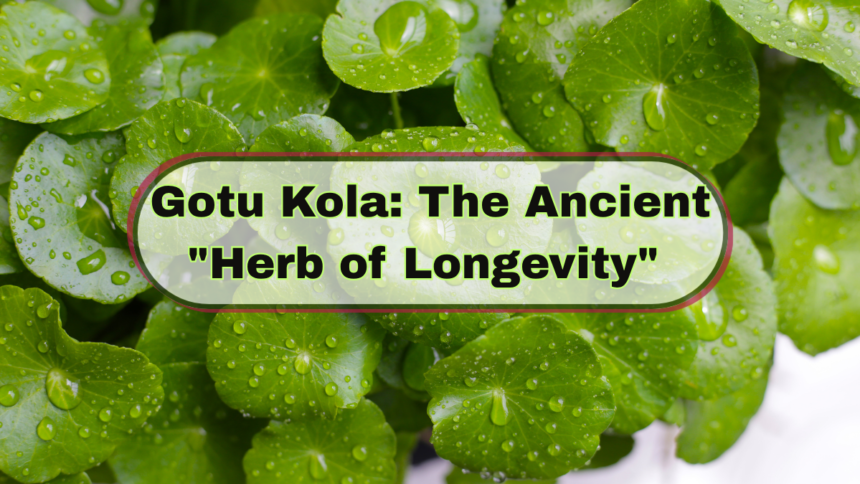
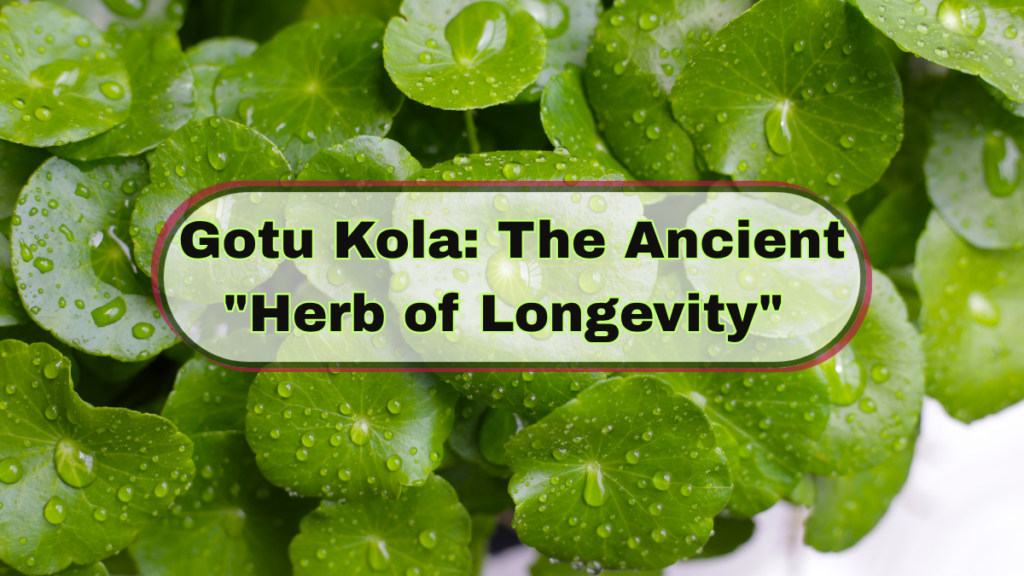
Gotu Kola: The Ancient “Herb of Longevity”
A comprehensive, evidence-informed guide to Gotu Kola what this remarkable herb actually does in the brain and nervous system, what the clinical research shows, and how to use it intelligently for cognitive enhancement, mood support, and neurological healing
There is a legend in Sri Lanka that elephants long recognised as among the most long-lived and intelligent of land animals actively seek out and regularly consume a small, humble, water-loving plant that grows along riverbanks and in marshy areas across tropical Asia. Whether or not elephants are specifically pursuing this plant for its benefits, the correlation between the herb’s traditional name and one of nature’s most cognitively impressive animals captures something of what traditional healers across India, Sri Lanka, China, and Indonesia have believed about Gotu Kola for over three thousand years: that it supports the brain, sharpens the mind, and prolongs vital, healthy life in ways that distinguish it from the vast majority of the plant kingdom’s medicinal offerings.
Gotu Kola known as Mandukaparni or Brahmi (a name it shares with Bacopa monnieri in some regional traditions, a point of nomenclatural confusion addressed later) in classical Ayurveda, as Centella asiatica in botanical taxonomy, and as Pegaga in Malaysia and Indonesia is not a herb that makes extravagant promises. Its benefits do not arrive dramatically and it does not produce the kind of immediately perceptible effects that caffeine or ginseng might. What it does, the research increasingly confirms, is work at a deeper level than most herbs marketed for cognitive support: directly influencing the biology of nerve growth and repair, modulating the anxiety circuits of the brain through GABA pathways, improving the integrity of small blood vessels supplying the brain, and building, over weeks and months of consistent use, the neurological foundation that makes genuine cognitive resilience and emotional stability possible.
Understanding what Gotu Kola actually does not the legend, not the marketing, but the specific molecular and clinical evidence is the purpose of this article.
What Is Gotu Kola? Botanical Identity and Traditional Context
Before examining the evidence, a necessary clarification: Gotu Kola (Centella asiatica) is a small, fan-shaped creeping herb of the Apiaceae (carrot) family, found growing in damp, shaded areas throughout tropical and subtropical Asia, Africa, and parts of Australia. It has been consumed as a leafy vegetable across Sri Lanka and Southeast Asia for centuries, included in Malaysian ulam (raw herb salads) and Sri Lankan mallung (a cooked green preparation), and incorporated into medicinal formulations across Ayurveda, Traditional Chinese Medicine (TCM), and Indonesian Jamu traditions with remarkable consistency.
This traditional nomenclature confusion between Gotu Kola (Centella asiatica) and Brahmi (Bacopa monnieri) both herbs classified as Medhya Rasayana (brain tonic) in Ayurveda, often used interchangeably by different regional traditions, and both referred to colloquially as “Brahmi” in various parts of India deserves explicit acknowledgement for practical supplementation purposes, because the two herbs, while sharing some overlapping applications in Ayurvedic practice, have meaningfully different pharmacological profiles, different primary mechanisms, and different strengths supported by different bodies of clinical research. Throughout this article, “Gotu Kola” refers specifically to Centella asiatica, while acknowledging Bacopa monnieri as a related but distinct herb whose separate evidence base is not conflated with Gotu Kola’s.
In Ayurveda, Gotu Kola is classified as a Tridoshic herb balancing all three doshas with particular affinity for the nervous system and the skin, and is described as having Medhya (mind-enhancing), Rasayana (rejuvenative), and wound-healing properties that classical texts articulate with impressive clinical specificity when read alongside the modern pharmacological understanding of the herb’s active compounds.
The Active Compounds: What Makes Gotu Kola Unique
Understanding Gotu Kola’s pharmacological profile begins with its primary bioactive compounds a group of pentacyclic triterpenoid saponins and their aglycones, which collectively represent the most distinctive and most extensively researched phytochemistry in this herb: asiaticoside, madecassoside, asiatic acid, and madecassic acid.
These compounds sometimes collectively referred to as Total Triterpenic Fraction of Centella asiatica (TTFCA) or Centella asiatica Extract (CAE) in the research literature have demonstrated biological activity across several converging mechanisms that help explain the breadth of Gotu Kola’s traditional applications and the consistency of modern research findings. They stimulate the synthesis of collagen and other extracellular matrix components directly relevant to Gotu Kola’s well-established wound-healing and vascular integrity applications. They modulate the expression of Brain-Derived Neurotrophic Factor (BDNF) and Nerve Growth Factor (NGF) proteins essential for the survival, growth, and differentiation of neurons, directly relevant to cognitive function and nerve regeneration. They demonstrate antioxidant and anti-inflammatory properties through NF-κB inhibitory pathways. And through mechanisms still being fully characterised, they interact with GABAergic neurotransmission in ways relevant to anxiety reduction and stress modulation.
This multi-target pharmacological profile, where a single herb’s primary active compounds address multiple interconnected biological mechanisms, is characteristic of many well-evidenced traditional herbs discussed throughout this series and it provides the mechanistic foundation for interpreting the clinical research discussed in sections that follow.
Gotu Kola for Cognitive Function and Memory: What the Research Shows
The cognitive applications of Gotu Kola memory enhancement, improved attention, and processing speed represent one of the most extensively studied dimensions of this herb’s clinical evidence base, and the research, while not yet definitive, provides a meaningfully stronger signal than most single herbs marketed for cognitive support.
A randomised, double-blind, placebo-controlled trial published in the Journal of Alzheimer’s Disease by Wattanathorn et al. examined Gotu Kola extract in older adults with mild cognitive impairment a population particularly relevant given the growing concern about cognitive ageing and the very limited evidence-based preventive options available within conventional medicine. The study found significant improvements in working memory, sustained attention, and processing speed over the treatment period, with benefits more pronounced than those seen in a parallel vitamin E arm of the study a comparison that positions Gotu Kola favorably against one of the most commonly recommended antioxidant supplements for cognitive ageing.
A separate randomised controlled trial by Wattanathorn et al. published in the Journal of Ethnopharmacology specifically examined Gotu Kola’s acute and subacute cognitive effects in healthy young adults, finding improvements in working memory and spatial processing speed at specific doses, with dose-dependent effects observed suggesting that the cognitive benefits of Gotu Kola are not merely a placebo response or a function of population-specific vulnerability, but reflect genuine pharmacological activity relevant across age groups.
The proposed mechanisms for Gotu Kola’s cognitive benefits converge on several pathways identified in preclinical research: enhancement of dendritic arborisation (the branching complexity of neuronal connections) in hippocampal neurons, the brain region most directly associated with memory formation; upregulation of BDNF in the hippocampus and prefrontal cortex; improvement of cerebral microcirculation through the vascular integrity-supporting effects of its triterpene compounds; and acetylcholinesterase inhibitory activity the same enzyme targeted by conventional Alzheimer’s medications (donepezil, rivastigmine), providing a mechanistic explanation for Gotu Kola’s documented cholinergic-related cognitive benefits.
Gotu Kola for Anxiety and Mood: The GABA Connection
Gotu Kola’s documented anxiolytic effects represent perhaps its most consistently replicated clinical finding, and its mechanism in this domain GABA receptor modulation, rather than monoamine system effects distinguishes it pharmacologically from the serotonin-focused herbs and pharmaceuticals that dominate anxiety treatment discussions.
A clinical trial by Bradwejn et al., published in the Journal of Clinical Psychopharmacology, specifically examined Gotu Kola’s effect on the acoustic startle response a well-validated neurophysiological measure of anxiety and threat sensitivity finding that a single 12g dose of Gotu Kola significantly attenuated the acoustic startle response, providing objective neurophysiological evidence of anxiolytic activity rather than relying solely on self-reported symptom scales. This finding is important because the acoustic startle response is considered an objective measure of amygdala reactivity and baseline threat sensitivity the same system implicated in generalised anxiety disorder making Gotu Kola’s demonstrated effect on this measure directly relevant to anxiety management.
A subsequent randomised, double-blind, placebo-controlled trial by Jana et al. in patients with generalised anxiety disorder found significant reductions in anxiety scores on the Hamilton Anxiety Scale with Gotu Kola supplementation compared to placebo, with a tolerability profile substantially more favourable than benzodiazepine anxiolytics, which despite their short-term efficacy carry well-documented risks of dependence and cognitive side effects that limit their appropriate long-term use.
The GABAergic mechanism proposed for Gotu Kola’s anxiolytic effects involves its triterpene compounds acting as positive allosteric modulators at GABA-A receptors the same receptor type targeted by benzodiazepines, but at different binding sites and with considerably more modest and selective activity, which may explain why Gotu Kola produces anxiolytic effects without the sedation, cognitive impairment, and dependence risk that characterise pharmaceutical GABAergic drugs. This mechanistic distinction from monoamine-targeting anxiolytics (SSRIs, SNRIs) and from adaptogens like ashwagandha that work primarily through HPA axis normalisation positions Gotu Kola as pharmacologically complementary to these other approaches within a comprehensive anxiety management protocol potentially addressing a different dimension of the anxiety biology that the other agents do not primarily target.
Gotu Kola for Nerve Regeneration and Neuroprotection
One of the most scientifically remarkable aspects of Gotu Kola’s pharmacological profile and the dimension that most clearly distinguishes it from the vast majority of herbs discussed even in serious ethnobotanical and phytochemical research is its documented capacity to support nerve regeneration and protect neural tissue from damage.
Asiatic acid and asiaticoside have demonstrated in multiple cell culture and animal studies the capacity to: promote neurite outgrowth (the extension of new neural projections from damaged neurons, the process central to nerve repair and regeneration); protect neurons against beta-amyloid induced toxicity (directly relevant to Alzheimer’s disease research); reduce oxidative stress in neural tissue; and support myelination the process of laying down the myelin sheath around nerve fibres essential for efficient neural conduction, whose damage is the defining pathological feature of conditions including multiple sclerosis.
A particularly interesting area of research involves Gotu Kola’s documented effects on the peripheral nervous system, where several studies have examined its traditional use in promoting wound healing and nerve repair following injury. Research published in the Journal of Wound Care found that Centella asiatica extract significantly accelerated nerve fibre regeneration in models of peripheral nerve injury, with the effect attributed primarily to its NGF-stimulating activity providing direct mechanistic support for the traditional Ayurvedic classification of Gotu Kola as a herb with specific affinity for the nervous tissue (Majja dhatu in classical terms).
This neuroprotective and neuroregenerative dimension of Gotu Kola represents the herb’s most potentially significant and currently least completely clinically characterised therapeutic application, with research ongoing in the contexts of age-related cognitive decline, neuropathy, and early-stage neurodegenerative disease that may, over the coming years, produce the large-scale human trial evidence that would allow more definitive clinical recommendations than current evidence supports.
Gotu Kola for Venous Insufficiency: The Vascular Application
While this article focuses primarily on Gotu Kola’s neurological applications, a brief mention of its most extensively documented clinical application venous insufficiency and related vascular conditions provides important context for understanding the herb’s overall pharmacological profile and the degree of clinical confidence it has earned in European herbal medicine specifically.
Gotu Kola is licensed in several European countries as a phytomedicine for chronic venous insufficiency and venous hypertension, with a clinical evidence base for this indication that is considerably more developed than its neurological evidence, including multiple large randomised controlled trials demonstrating significant improvements in symptoms of venous insufficiency (leg heaviness, oedema, cramps, and varicose vein-related discomfort) and objective improvements in venous wall integrity and microcirculation. This established evidence base in a neighbouring but distinct clinical domain lends additional credibility to the herb’s broader vascular and tissue-supportive properties, and is directly relevant to its proposed mechanisms for cerebral microcirculation improvement relevant to cognitive function.
Practical Use: Forms, Dosing, and What to Realistically Expect
Gotu Kola is available in several distinct forms, each with different applications and evidence profiles, and understanding these distinctions is important for intelligent practical use.
Fresh leaf preparations consuming Gotu Kola leaves as part of salads, chutneys, or cooked greens in the traditional Sri Lankan, Malaysian, and Indian fashion provide the herb’s full spectrum of phytochemical compounds in a food-grade context, at doses that align with traditional daily consumption rather than therapeutic supplementation. This approach, while providing lower standardised compound doses than supplements, delivers Gotu Kola within a food matrix that likely supports absorption and provides complementary nutritional benefits.
Standardised dry extract capsules typically standardised to asiaticoside, asiatic acid, and madecassoside content are the forms used in most clinical trials for cognitive and anxiety applications, with typical research doses ranging from 500mg to 1,000mg daily for cognitive effects and 750mg to 1,000mg for anxiolytic applications, taken in divided doses. KOS, as found in several clinical trials, involves standardisation to a minimum triterpene content (typically 10–40% total triterpenes), and selecting products that specify this standardisation provides the greatest confidence that the supplement’s compound profile aligns with the research showing benefit.
Timing and duration for realistic expectation-setting: acute effects on startle response were demonstrated with single doses in the Bradwejn study, suggesting some effects may be relatively rapid, but the cognitive enhancement and neuroprotective benefits documented across multiple trials required weeks to months of consistent use consistent with the gradual, tissue-level mechanisms (dendritic arborisation, NGF upregulation, vascular integrity improvement) proposed for these effects. This is not a herb to evaluate after a single week of use; a minimum twelve-week trial is appropriate for assessing cognitive and mood effects.
Safety Profile and Important Considerations
The safety data on Gotu Kola across decades of traditional use and multiple clinical trials is generally favourable, with mild and infrequent side effects reported primarily mild gastrointestinal upset (nausea, stomach discomfort) at higher doses, occasional headache, and the well-documented contact dermatitis with topical application in a small minority of individuals. Rare case reports of hepatotoxicity, associated primarily with high-dose use over extended periods, have appeared in the literature, though causality is not definitively established in all cases, and the doses involved typically substantially exceeded those used in the clinical trials discussed in this article.
Several populations warrant specific consideration. Gotu Kola has mild sedative properties relevant to its GABAergic mechanism potential additive effects with other sedatives, sleep medications, or alcohol should be considered. Its cholesterol-lowering activity documented in some studies warrants monitoring in those on lipid-lowering medication. And pregnancy caution, while traditional use includes some historical application in pregnancy, is advisable given insufficient modern safety data for the standardised extract doses used in contemporary supplementation. Gotu Kola should not be confused with kola nut (Cola acuminata), a caffeine-containing West African plant with which it shares no botanical relationship and completely different pharmacology.
Gotu Kola in the Context of Ayurvedic Brain Health
Within the Medhya Rasayana (brain-tonic herb) category of Ayurvedic medicine which includes Gotu Kola, Brahmi (Bacopa monnieri), Shankhapushpi (Convolvulus pluricaulis), and Ashwagandha (Withania somnifera) Gotu Kola occupies a distinct pharmacological niche characterised by its particular emphasis on neural tissue integrity, vascular support, and GABAergic anxiolysis, rather than the more pronounced memory-consolidation emphasis of Bacopa monnieri or the cortisol-centred stress adaptation of ashwagandha.
This distinct pharmacological positioning makes Gotu Kola most naturally complementary to rather than duplicative of these other well-evidenced Ayurvedic cognitive herbs, suggesting that combination approaches whether the classical Ayurvedic formulations that have combined these herbs for centuries, or modern thoughtfully designed supplement combinations may offer additive benefits through these complementary, partially non-overlapping mechanisms, though this hypothesis, while pharmacologically reasonable, requires more direct clinical trial validation than currently exists.
The Honest Bottom Line
Gotu Kola has earned its reputation more quietly and more rigorously than most herbs occupying the currently crowded “nootropic” supplement marketplace. Its clinical evidence for anxiolytic activity is among the more convincingly demonstrated of any herbal medicine in this domain. Its cognitive research, while not yet definitive at the large-trial level, shows consistent direction across multiple well-designed studies. Its neuroprotective and neuroregenerative research, while primarily preclinical, addresses mechanisms of sufficient importance that the clinical implications if confirmed in large-scale human trials would position Gotu Kola as one of the most clinically significant herbs in the entire botanical pharmacopoeia.
This is not a herb for people seeking a dramatic, immediately perceptible cognitive jolt. It is a herb for people who understand that the brain’s most important improvements in the resilience and regenerative capacity of neural tissue, in the stability of microcirculation supplying the brain, in the calibration of anxiety circuits toward greater ease are quiet, cumulative, and architecturally deep rather than superficially stimulant.
Three thousand years of traditional observation, and a growing modern research base, suggest the elephants may have been onto something.
Did this deep-dive into Gotu Kola give you the evidence-based clarity you were looking for? Share it with someone interested in brain health, anxiety management, or natural cognitive support. Leave a comment with your own experience with Gotu Kola, or subscribe to our newsletter for more rigorously researched, evidence-first deep-dives into the herbs that traditional medicine identified long before modern pharmacology caught up.