







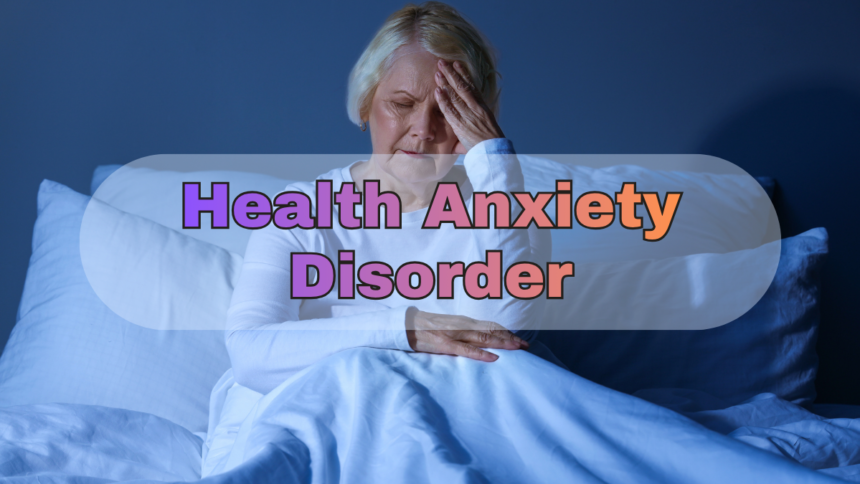
We’ve all been there. You’re working late, perhaps finishing a sprint or reviewing a complex data set, when you notice a small, persistent twitch in your eyelid. Or maybe it’s a strange tingle in your left arm that wasn’t there ten minutes ago. For most people, this is a minor annoyance—a sign they need more sleep or a third cup of water. But for someone living with Health Anxiety Disorder, that twitch isn’t just a twitch. It’s a starting gun.
Within seconds, the “Dr. Google” tabs are open. You’re scrolling through medical forums at 2:00 AM, moving from “muscle strain” to “rare neurological condition” in less than four clicks. Your heart starts to race, your palms get damp, and suddenly, you’re convinced that the worst-case scenario isn’t just possible—it’s happening.
This is the exhausting, revolving door of Health Anxiety (formerly known as hypochondriasis). It’s not about “being a drama queen” or “faking it.” It is a legitimate, distressing condition where the brain’s “threat detection” system is permanently stuck on high. Let’s look at why this happens and explore practical Tips to Health Anxiety Disorder management to help you find your way back to reality.
The Anatomy of the Spiral: Why Your Brain Misinterprets
At its core, Health Anxiety Disorder is a disorder of perception. We all have physical sensations every day—creaky joints, headaches, or a flutter in the chest. Most people’s brains filter these out as “background noise.” However, a brain wired for health anxiety treats these sensations as “high-priority alerts.”
When you focus intensely on a part of your body, you actually begin to feel more there. This is a biological feedback loop. If you focus on your heartbeat, it will likely speed up simply because you are paying attention to it, which then confirms your fear that “something is wrong.”
According to the Mayo Clinic, this condition involves an excessive preoccupation with having a serious undiagnosed medical condition. Even when a doctor provides a clean bill of health, the relief is often short-lived. The “What if?” machine in the brain simply finds a new angle: “What if they missed something? What if the test was a false negative?”
The Physicality of Anxiety: Symptoms That Mimic Illness
One of the cruelest parts of Health Anxiety Disorder is that anxiety itself produces very real, very scary physical symptoms. When you are in a state of high stress, your body is bathed in cortisol and adrenaline. This can cause:
- Chest Tightness: Often mistaken for heart issues.
- Dizziness and Lightheadedness: Leading to fears of neurological problems.
- Digestive Issues: Including nausea or a “dropping” feeling in the stomach.
- Numbness and Tingling: Frequently triggered by hyperventilation (even subtle over-breathing).
When these symptoms appear, they act as “proof” to the anxious mind that a medical emergency is occurring, which spikes the anxiety further, creating a self-sustaining cycle of panic.
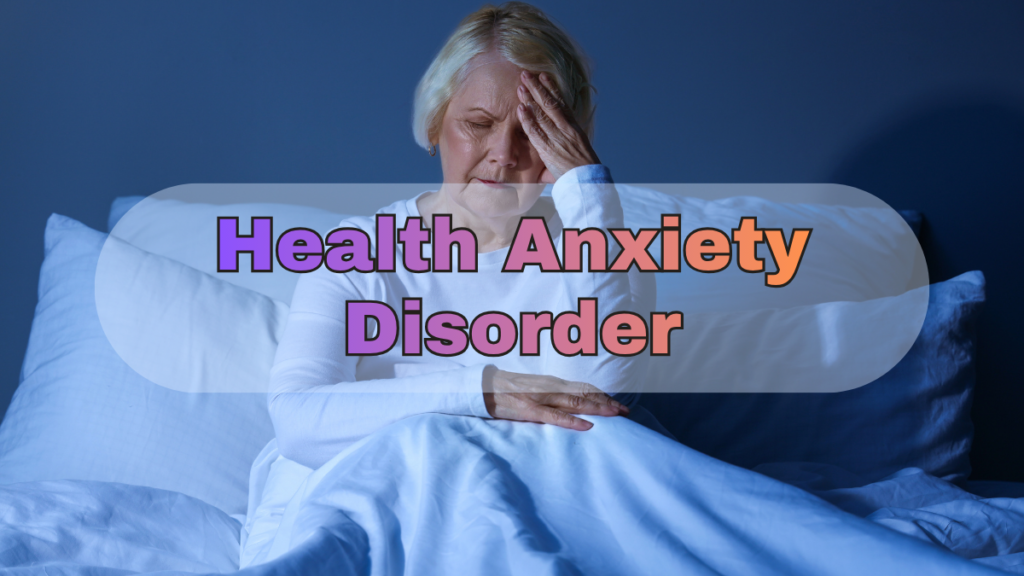
Essential Tips to “Health Anxiety Disorder” Recovery
Reclaiming your life from health anxiety isn’t about ignoring your body; it’s about retraining your brain to respond to it with logic rather than terror. Here are some of the most effective Tips to Health Anxiety Disorder support.
1. The “Google Strike”
If there is one thing that fuels the fire of health anxiety, it is the internet. Search engines are designed to show you the most “relevant” (often the most dramatic) results.
- The Practice: Commit to a 48-hour ban on searching symptoms. If a symptom is truly an emergency, you will know. If it’s something you can “wait and see” on, Google will only make the waiting agonizing.
2. Limit Reassurance Seeking
It’s tempting to ask partners or friends, “Does this look like a weird mole to you?” or to book a third doctor’s appointment for the same issue. While this provides a 10-minute hit of relief, it actually reinforces the anxiety in the long run. It teaches your brain that you cannot handle the uncertainty yourself.
- The Practice: Try to sit with the uncertainty for just 10 minutes longer each time before asking for reassurance.
3. Use the “What Else?” Method
When a scary thought enters your mind (“This headache is a tumor”), force yourself to come up with three alternative, mundane explanations.
- Alternative 1: I haven’t drank enough water today.
- Alternative 2: I’ve been staring at a monitor for six hours.
- Alternative 3: I slept in an awkward position and my neck is tight. By giving your brain other options, you take the “absolute truth” away from the catastrophe.
4. Build a Biological Buffer
As we have explored in our discussions on Magnesium for Anxiety, your physical resilience plays a huge role. A nervous system that is deficient in magnesium or chronically sleep-deprived is much more likely to “catastrophize” a physical twitch.
- The Practice: Prioritize “sleep hygiene” and consider a high-quality magnesium glycinate supplement (after checking with your GP) to help keep your baseline “alarm level” lower.
When to See a Professional
If your worry is preventing you from working, sleeping, or enjoying your relationships, it is time to seek help. Cognitive Behavioral Therapy (CBT) is the gold standard for Health Anxiety Disorder. It helps you identify your “safety behaviors” (like checking your pulse or Googling) and slowly replaces them with healthier coping mechanisms.
The goal of therapy isn’t to guarantee you’ll never get sick; it’s to help you accept the normal uncertainty of being a human being. We are all “biological machines” that make noise and have occasional glitches. Learning to live with that “noise” is where true peace lies.
Conclusion: Reclaiming Your Narrative
Living with Health Anxiety Disorder is like living with a broken smoke detector that goes off every time you make toast. It’s loud, it’s frustrating, and it makes it very hard to focus on anything else. But remember: just because the alarm is going off doesn’t mean there is a fire.
By applying these Tips to Health Anxiety Disorder, you are slowly repairing that detector. You are learning to distinguish between a “sensory blip” and a “medical event.” You are more than your worries, and your body is far more resilient than your anxiety gives it credit for. It’s time to close the tabs, take a deep breath, and come back to the present moment.
Take the Next Step
- Subscribe to our newsletter for more insights into mental performance, digital wellness, and evidence-based health tips.
- Leave a comment: What is the one “symptom” that always triggers your spiral? How do you talk yourself down?
- Share this article: Know someone who is currently trapped in a “Dr. Google” rabbit hole? Send this their way—it might be the reality check they need.