


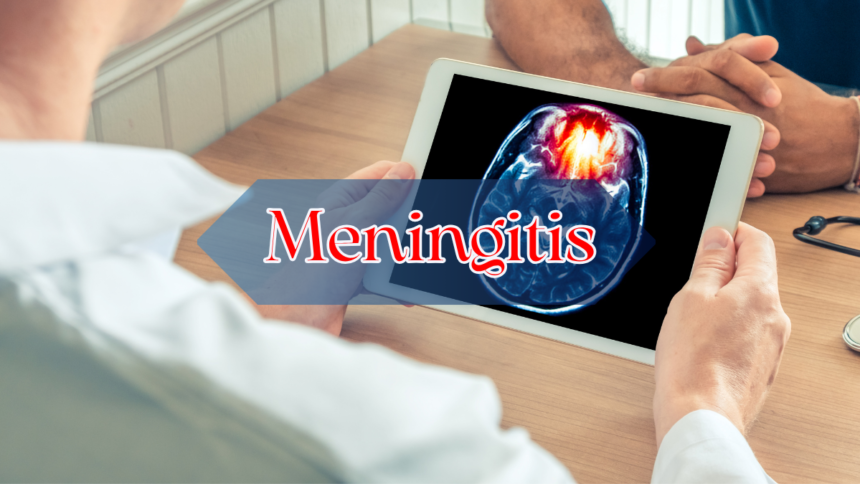
Meningitis
Imagine your brain and spinal cord are the most precious cargo in the world. To keep them safe, nature has wrapped them in a sophisticated, three-layer “security blanket” called the meninges. Usually, these layers do their job in silence, providing a cushion and a barrier against the outside world.
But sometimes, an intruder—a virus, a bacterium, or even a fungus—slips past the defenses. When that happens, the security blanket begins to swell. This inflammation is what we call meningitis.
Because it affects the very command center of your body, meningitis is a medical race against the clock. Whether you’re a student heading off to a crowded dorm, a parent with a toddler, or someone simply looking to stay informed, understanding the “early whispers” of this condition is vital. Let’s look at the science, the signs, and the practical Tips to “meningitis” awareness that can make all the difference.
What is Actually Happening Inside?
When we talk about meningitis, we are describing the body’s inflammatory response. As the meninges swell, they put pressure on the brain and spinal cord. This pressure is what causes the hallmark symptoms of the disease.
There are two main players you need to know about:
1. Viral Meningitis
This is the most common form. While it can make you feel incredibly ill—think of the worst flu of your life—it is rarely life-threatening for people with healthy immune systems. Most people recover with rest and fluids.
2. Bacterial Meningitis
This is the emergency. It can progress with terrifying speed, sometimes becoming fatal within hours. Even with treatment, it can leave behind long-term challenges like hearing loss or learning disabilities. According to the Mayo Clinic, bacterial meningitis requires immediate antibiotic treatment in a hospital setting.
Recognizing the “Red Flags”
The challenge with meningitis is that it often starts out looking like a common cold or the flu. However, there are a few “classic” symptoms that should trigger an immediate call to emergency services.
- The Stiff Neck: This isn’t just a “slept wrong” soreness. It’s an inability to touch your chin to your chest because the nerves in the spinal cord are too inflamed to stretch.
- Photophobia: A fancy word for light sensitivity. If normal room light feels like a physical assault on your eyes, take note.
- The “Glass Test” Rash: In some bacterial cases (specifically meningococcal), a rash of small, purple-red spots appears.
Pro Tip: The Glass Test
If you see a rash, press a clear drinking glass firmly against it. If the spots do not fade (stay visible through the glass), this is a medical emergency.


In-Depth Analysis: Insights and Tips to “Meningitis” Prevention
Staying safe is about more than just washing your hands—though that helps! Here is an analysis of the most effective Tips to “meningitis” management and prevention for you and your family.
1. Vaccination is the Gold Standard
The single most effective way to prevent the most dangerous forms of bacterial meningitis is through the vaccine.
- The Insight: Many people don’t realize there are different vaccines for different strains (A, C, W, Y, and B). If you are a college student or traveling to the “meningitis belt” in sub-Saharan Africa, check your records to ensure you are covered for all major strains.
2. The “Gut Feeling” Rule
In the early stages, a patient might just seem “off.” They might be unusually irritable, lethargic, or confused.
- The Tip: Medical professionals often say that “parental instinct” is a valid clinical sign. If a fever is accompanied by a level of drowsiness where you can’t easily wake the person up, don’t wait for a rash or a stiff neck. Seek help immediately.
3. Practice “Niche” Hygiene
We know about handwashing, but meningitis often spreads through “respiratory secretions.”
- The Tip: In high-risk environments like dorms or barracks, don’t share drinks, lip balms, or toothbrushes. These small habits are the “tripwires” that stop the spread of bacteria.
4. Know the Physical Signs (Kernig’s and Brudzinski’s)
Doctors use specific physical tests to check for “meningeal irritation.”
- Kernig’s Sign: If a person lies on their back and tries to straighten their leg while the hip is flexed at 90°, they will feel sharp pain in the lower back or neck.
- Brudzinski’s Sign: When the neck is bent toward the chest, the patient’s hips and knees will involuntarily flex.
Diagnosis and The Lumbar Puncture
If you end up in the ER, the definitive way doctors check for the disease is through a lumbar puncture (spinal tap). By taking a small sample of the cerebrospinal fluid (CSF), they can see if it’s cloudy (a sign of infection) and identify exactly which bug is causing the trouble.
While the idea of a needle in the spine sounds scary, it is a routine procedure that provides the “roadmap” for the right treatment—whether that’s antibiotics for bacteria or antivirals for specific viruses.
Conclusion: A Community Effort
Meningitis is a reminder of how interconnected we are. Because it spreads through close contact, protecting yourself through vaccination and hygiene is actually an act of protecting your community.
By remembering the classic triad—fever, headache, and stiff neck—and applying these Tips to “meningitis” awareness, you become a vital link in the chain of early detection. We have the tools to fight this; we just need to be fast enough to use them.
Stay vigilant, trust your instincts, and keep your “security blanket” safe.
Take the Next Step
- Subscribe to our newsletter for more evidence-based health guides, wellness breakthroughs, and safety protocols.
- Leave a comment: Have you or a loved one ever had a “close call” with meningitis? What was the first sign you noticed?
- Share this article: You never know whose life you might save by sharing the “Glass Test” or the “Stiff Neck” warning signs.