









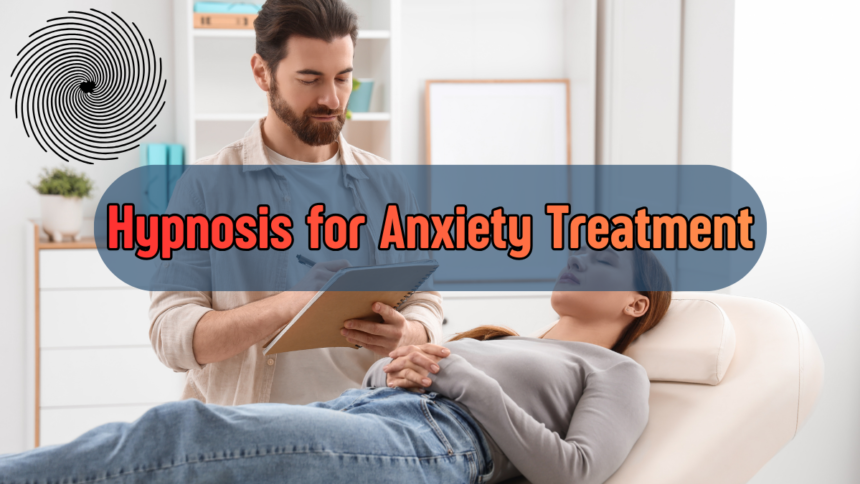
Hypnosis for Anxiety Treatment
Imagine your mind is like a browser with fifty different tabs open. Some are playing music you didn’t ask for, others are flashing “urgent” notifications, and a few are stuck in a loading loop that never seems to end. For many of us, this is the daily reality of living with anxiety. It’s a constant, low-level static that makes it hard to focus, hard to sleep, and even harder to just be.
We often try to “logic” our way out of it. We tell ourselves there’s nothing to worry about, or we try to breathe through the tightness in our chests. But anxiety doesn’t always live in the logical part of our brain. It lives in the basement—the subconscious—where our deepest instincts and patterns are stored. This is where Hypnosis for Anxiety Treatment steps in.
Far from the swinging pocket watches and stage antics you see in movies, clinical hypnosis is a grounded, evidence-based tool that helps you “right-click” on those open tabs and close them, one by one.
What is Hypnosis, Really?
Before we get into the “how,” let’s clear the air on the “what.” Hypnosis is simply a state of focused attention and heightened suggestibility. You actually enter “trance” states multiple times a day—like when you’re so engrossed in a book that you don’t hear someone call your name, or when you’ve been driving on the highway and suddenly realize you don’t remember the last five miles.
In a clinical setting, Hypnosis for Anxiety Treatment uses this natural state to help you relax the “critical faculty” of your conscious mind. This allows helpful suggestions to reach the subconscious, where they can begin to shift the patterns of fear and worry that have become your default setting.
The Science of the “Quiet Mind”
When you are in a state of hypnosis, your brain waves actually shift. You move from the alert, often frantic Beta waves into the more relaxed Alpha and Theta waves. These are the same states reached during deep meditation.
According to the Mayo Clinic, hypnosis can be an effective way to cope with stress and anxiety. Research shows that it can lower heart rate, reduce cortisol levels, and even improve the efficacy of other treatments like Cognitive Behavioral Therapy (CBT). It’s not magic; it’s neuroplasticity in action. You are essentially “re-wiring” your brain to favor the relaxation response over the stress response.
5 Practical Tips to “Hypnosis for Anxiety Treatment” Success
If you’re considering this path, you might feel a mix of curiosity and skepticism. That’s perfectly normal. To get the most out of your sessions, here are some essential Tips to Hypnosis for Anxiety Treatment to keep in mind:
1. Drop the “Mind Control” Myth
The biggest hurdle for most people is the fear of losing control. In reality, all hypnosis is self-hypnosis. A therapist is simply a guide. You cannot be made to do anything that goes against your values or desires. Recognizing that you are in the driver’s seat is the first step toward relaxation.
2. Be Specific with Your Goals
Anxiety is often a vague, shadowy cloud. Before your session, try to pin down exactly where you feel it. Is it a social anxiety that hits before meetings? Is it a “what-if” loop that keeps you awake at night? The more specific you are with your therapist, the more targeted the subconscious suggestions can be.
3. Practice “The Anchor”
Many practitioners will help you create a “physical anchor”—like pressing your thumb and forefinger together—while you are in a state of deep peace.
Pro Tip: Use this anchor in your daily life when you feel a spike of stress. It acts as a “shortcut” to the calm state you achieved during your session.
4. Consistency Over Intensity
One session can be incredibly relaxing, but the real “re-wiring” happens through repetition. Whether you are seeing a professional or using a recorded session at home, consistency is key. Think of it like going to the mental gym; you don’t get a six-pack from one sit-up.
5. Combine with Lifestyle Fundamentals
Hypnosis works best when the body is supported. Maintaining a steady “biological baseline”—adequate sleep, staying hydrated, and perhaps supporting your nervous system with Magnesium—ensures that your brain is in the best possible state to accept new, positive suggestions.
Addressing Common Concerns: “Will I Wake Up?”
People often worry they’ll get “stuck” in hypnosis. Since hypnosis is a state of focused attention, the “worst-case scenario” is that you simply fall asleep and wake up feeling refreshed. You are never truly “out of it”; you are just very, very relaxed.
Another common question is: “Can everyone be hypnotized?” While some people are naturally more “suggestible” than others, almost anyone can reach a level of relaxation that is beneficial for anxiety relief. It’s a skill that can be practiced and improved over time.
The Benefits: Reclaiming the Map of Your Life
Why choose Hypnosis for Anxiety Treatment over other methods? The primary benefit is speed and depth. While talk therapy is excellent for understanding why you feel anxious, hypnosis is designed to change how you feel in the moment. It targets the physical sensation of panic and the automatic “script” of worry.
By working with the subconscious, you can:
- Reduce the intensity of physical symptoms (chest tightness, racing heart).
- Improve sleep quality by “shutting down” the nightly mental loop.
- Increase confidence in social or professional situations. Hypnosis for Anxiety Treatment
- Develop a “toolkit” of mental calm that you can access anywhere.
Conclusion: Turning Down the Static
Anxiety has a way of making your world feel very small. It keeps you on the sidelines, whispering that it’s safer to stay in the browser tabs you already know. But you don’t have to live with the static. Hypnosis for Anxiety Treatment
Hypnosis for Anxiety Treatment is an invitation to step into a quieter, more spacious version of yourself. It’s about teaching your nervous system that it can stand down—that you are safe, you are capable, and you are in control. It’s not about becoming a different person; it’s about removing the layers of worry so the real you can finally step forward.
Take the Next Step
- Subscribe to our newsletter for more evidence-based guides on mental resilience, holistic wellness, and subconscious healing.
- Leave a comment: What is the biggest myth you’ve heard about hypnosis? Let’s bust it together.
- Share this article: If you know someone who has been struggling with the “background hum” of anxiety, send this their way. It might be the first step toward their quiet mind.