








Meditation for Anxiety
We’ve all heard the advice: “Just breathe.” It’s usually shouted at us when we’re in the middle of a full-blown stress spiral, and frankly, it often feels about as helpful as being told to “just relax” while your house is on fire. But beneath the cliché lies a practice that is perhaps the most powerful, evidence-based tool we have for rewiring an anxious brain.
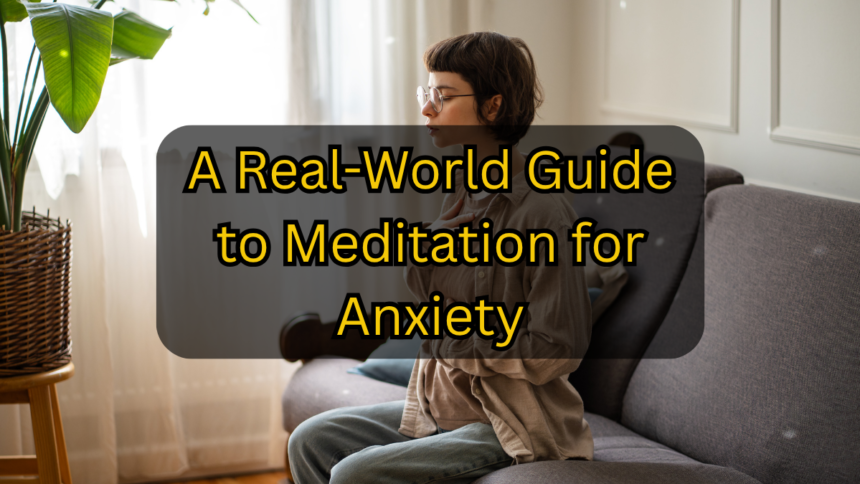
Meditation isn’t about sitting on a mountaintop or magically turning off your thoughts like a light switch. For those of us living in the real world—dealing with deadlines, physical recovery, or the constant hum of a digital life—it is a practical way to train the “muscle” of your attention. This guide explores how to start and provides essential Tips to Meditation for Anxiety to help you find a bit of quiet in a very loud world.
What is Meditation (And What It Isn’t)?
Meditation for Anxiety-The biggest hurdle for most beginners is the “Empty Mind Myth.” People try meditation for five minutes, realize their brain is still obsessing over a text message from 2014, and conclude they are “bad at it.”
In reality, meditation is not about emptying your mind. It is about observation. It’s the process of noticing that your mind has wandered into a “what-if” loop and gently—without judging yourself—bringing your focus back to the present. If you have to do that 50 times in five minutes, you haven’t failed; you’ve just done 50 “reps” of mental exercise.
Shutterstock
How Meditation Rewires the Anxious Brain
Anxiety lives in the amygdala, the almond-sized part of your brain responsible for the “fight or flight” response. In an anxious person, the amygdala is hyper-reactive, seeing “tigers” in every email or physical sensation.
Regular meditation helps strengthen the prefrontal cortex, the logical, “adult” part of the brain. Over time, this creates a stronger “brake” on the amygdala. Instead of an automatic panic response, you develop a “gap” between a thought and your reaction. This is where your freedom lives.
Practical Tips to “Meditation for Anxiety”
If you’re ready to start, don’t worry about being perfect. Focus on being consistent. Here are some actionable Tips to Meditation for Anxiety to help you build a sustainable practice.
1. Start with the “Five-Minute Rule”
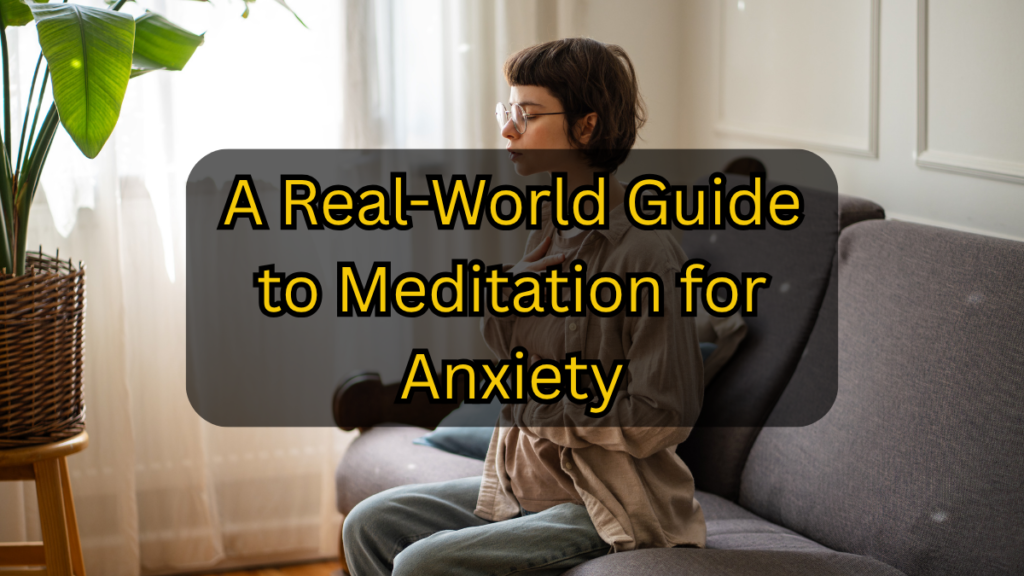
Ambition is the enemy of habit. Don’t try to sit for 30 minutes on day one. Start with five minutes. It’s better to meditate for five minutes every day than for an hour once a week. Set a timer, sit comfortably (you don’t need a special cushion; a chair or the edge of your bed is fine), and just be.
2. Use a Body Scan for Physical Stress
Many people carry their anxiety in their bodies—tight shoulders, a clenched jaw, or tension in the lower back. This is especially true if you are recovering from physical stressors or managing chronic discomfort.
- The Technique: Close your eyes and mentally “scan” from your toes to the top of your head. Notice where you’re holding tension and imagine “breathing into” that space. It’s a powerful way to ground yourself when your thoughts feel too “loud.”
3. Focus on an “Anchor”
Your mind will wander. To help it return, use an anchor. For most, this is the breath—the feeling of air entering the nostrils or the rise and fall of the belly. If focusing on the breath feels restrictive (which can happen during a panic spike), use a sound anchor, like a distant bird or the hum of an air conditioner.
4. Try Guided Sessions First
Silent meditation can be intimidating. Apps like Insight Timer, Headspace, or YouTube videos offer “Guided Meditation for Anxiety.” Having a calm voice walk you through the process can act as “training wheels” for your mind, keeping you from getting lost in your own internal dialogue.
5. Be Kind to Your “Monkey Mind”
When you realize you’ve been worrying for the last three minutes instead of meditating, don’t get angry. That moment of realization is actually the most important part of the meditation. Congratulate yourself for noticing, and simply come back.
Addressing Common Questions
“Can meditation make anxiety worse?”
Sometimes. When we sit in silence, we become acutely aware of the “noise” we usually drown out with scrolling or work. If sitting still feels overwhelming, try Walking Meditation. Focus on the sensation of your feet hitting the ground. It provides the same grounding benefits without the intensity of total stillness.
“When is the best time to meditate?”
Most people prefer first thing in the morning to set the tone for the day. However, if you struggle with “night-time ruminations,” a session before bed can help signal to your nervous system that it’s safe to power down.
The Physical-Mental Connection
It’s worth noting that meditation isn’t just “in your head.” Because the nervous system controls everything from digestion to how we perceive pain, meditation can have profound physical effects. By lowering cortisol levels, you’re not just calming your mind; you’re giving your body a better environment for recovery and general wellness.
Conclusion: One Breath at a Time
Meditation for anxiety is not a “quick fix,” but it is a lasting one. It’s about changing your relationship with your thoughts so they no longer have the power to ruin your day. By applying these Tips to Meditation for Anxiety, you’re taking a proactive step toward a more centered, resilient version of yourself.
Remember: you aren’t trying to become a different person. You’re just trying to be more present in the life you already have.
Take the Next Step
- Subscribe to our newsletter for more evidence-based wellness tips and guided exercises.
- Leave a comment: What is the biggest challenge you face when trying to sit still?
- Share this article with a friend who needs a little more calm in their life today.