



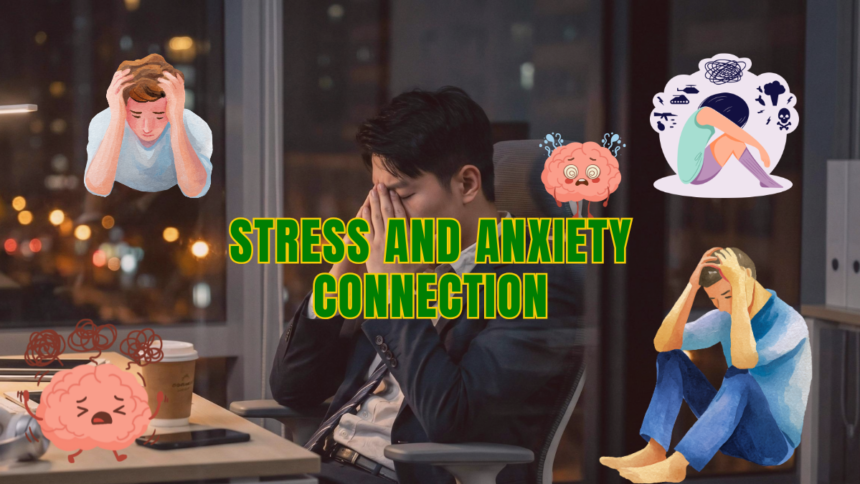
Stress and Anxiety Connection
Imagine you’re driving a car on a busy highway. You see a car suddenly swerve into your lane. Your heart jumps, your grip on the steering wheel tightens, and your focus becomes laser-sharp. Once the danger passes, you take a deep breath, your muscles relax, and your heart rate returns to normal. That was a healthy stress response.
Now, imagine that same feeling of “high alert” persists even after you’ve parked the car. Imagine it follows you into your office, sits with you at the dinner table, and keeps you awake at 3:00 AM, even though there is no immediate danger in sight. This is the heart of the Stress and Anxiety Connection.
While we often use the terms interchangeably, they are distinct forces that feed into one another in a powerful feedback loop. Understanding how to untangle them is the first step toward mental clarity. In this article, we’ll explore the science behind this link and provide actionable Tips to “Stress and Anxiety Connection” management.
1. Defining the Duo: Stress vs. Anxiety
To manage the Stress and Anxiety Connection, we first have to recognize the players.
- Stress is typically a response to an external trigger. It’s the pressure of a deadline, a looming bill, or a difficult conversation. It’s generally short-term and dissipates once the situation is resolved.
- Anxiety is internal. It is your body’s specific reaction to stress. It involves a persistent feeling of apprehension or dread that lingers even when there is no clear threat.
Think of stress as the “push” and anxiety as the “vibration” that continues long after the push has stopped. When stress becomes chronic, it trains your nervous system to stay in a state of constant anxiety, creating a cycle that is difficult to break without intervention.
2. The Biological superhighway: The HPA Axis
Why does the Stress and Anxiety Connection feel so physical? It all comes down to the HPA Axis (Hypothalamic-Pituitary-Adrenal axis). This is your body’s central command system for the stress response.
When you encounter a stressor, your hypothalamus signals your pituitary gland, which then tells your adrenal glands to release cortisol and adrenaline. In a balanced system, once the stressor is gone, the “off switch” is flipped. However, when we are constantly bombarded by modern triggers—notifications, traffic, work demands—the switch gets stuck.
This flood of chemicals keeps your body in “survival mode.” Over time, high cortisol levels can actually shrink the parts of the brain responsible for memory and emotional regulation (the hippocampus) while over-sensitizing the part responsible for fear (the amygdala). This biological shift is the physical foundation of the Stress and Anxiety Connection.
3. The 2026 Context: Digital Fatigue and the “Always On” Culture
In our modern landscape, the Stress and Anxiety Connection is often exacerbated by our environment. We are the first generation of humans expected to be reachable 24/7. This creates a state of “micro-stress” that never truly allows the nervous system to reset.
Every “ping” from a smartphone is a tiny withdrawal from your cognitive energy. Over days and months, these micro-stressors accumulate, lowering your threshold for anxiety. This is why you might find yourself snapping at a loved one over something small; your “stress bucket” is already full, and that final drop caused it to overflow.
4. In-Depth Analysis: Tips to “Stress and Anxiety Connection” Management
Breaking the link requires a two-pronged approach: managing the external “push” (stress) and calming the internal “vibration” (anxiety). Here are the most effective Tips to “Stress and Anxiety Connection” relief:
Somatic Grounding (Bottom-Up)
Since the Stress and Anxiety Connection is physical, we should address it physically.
- The Physiological Sigh: Take a deep breath in through your nose, followed by a second, shorter “sip” of air at the very top. Then, exhale slowly through your mouth. This technique has been shown to rapidly lower heart rate and reset the nervous system.
- Temperature Shock: Splashing ice-cold water on your face or holding an ice cube can stimulate the vagus nerve, forcing your brain to “reset” and pull its focus away from the anxiety spiral.

Cognitive Reframing (Top-Down)
- Name the Source: When you feel the familiar surge of worry, ask yourself: “Is this stress or is this anxiety?” If there is a clear external cause, it’s stress. If you are worrying about things that might happen, it’s anxiety. Labeling the emotion reduces the power it has over you.
- The “Scheduled Worry” Window: Give yourself 15 minutes a day to worry as much as you want. When a stressful thought pops up outside that window, tell yourself, “I’ll deal with that at 4:00 PM.” This gives your brain a sense of control.
Lifestyle Anchors
- Digital Hygiene: Set a “digital sunset” at least one hour before bed. Removing the blue light and the constant stream of information allows your cortisol levels to drop naturally, facilitating deeper, restorative sleep.
- Movement as Medicine: You don’t need a marathon. A 20-minute walk in nature (often called “forest bathing”) reduces cortisol more effectively than many clinical interventions.
5. Building Authority: When to Seek Professional Support
While these Tips to “Stress and Anxiety Connection” are effective for daily management, it is important to cite reputable sources like the American Psychological Association (APA), which notes that chronic stress left untreated can lead to serious health issues, including heart disease and weakened immune systems.
In the modern world of patient care, we are seeing a move toward holistic practice. This means working with providers who don’t just look at your symptoms but also your sleep, diet, and environment. Improving follow-ups with your healthcare provider and using digital tracking tools can provide a clearer picture of your mental health trends over time.
Conclusion: Reclaiming the Driver’s Seat
The Stress and Anxiety Connection is a powerful force, but it is not an unbeatable one. By understanding that stress is the trigger and anxiety is the echo, you can begin to use the right tools at the right time. You aren’t “broken” because you feel overwhelmed; your body is simply trying to protect you in a world that is moving too fast.
Be patient with your progress. Every time you choose a deep breath over a spiral, you are retraining your brain and weakening the bond between stress and worry.
What is the one stressor in your life that you feel leads most directly to anxiety? Knowing your triggers is half the battle. Share your experience in the comments below—we can all learn from each other’s journeys. If you want more weekly insights on navigating the complexities of the human mind, subscribe to our newsletter today.