






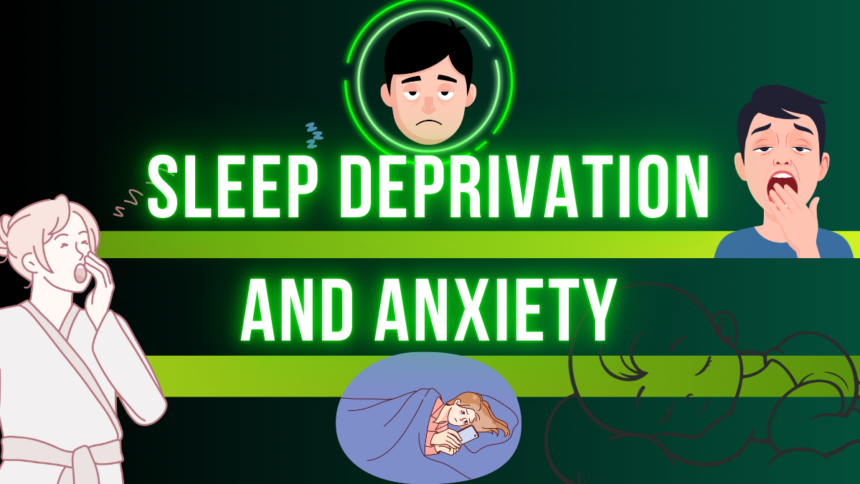
Sleep Deprivation and Anxiety
We’ve all been there. It’s 3:15 AM. The house is silent, the world is asleep, but your brain is wide awake, replaying a minor awkward conversation from three years ago or worrying about a meeting that isn’t happening for another three days. You check the clock—a fatal mistake—and realize you only have four hours left before your alarm goes off. Suddenly, the anxiety isn’t just about the meeting; it’s about the fact that you aren’t sleeping.
This is the “chicken and the egg” of mental health. Does anxiety keep you awake, or does the lack of sleep make you anxious? The truth is, it’s both. Sleep Deprivation and Anxiety are two sides of the same coin, feeding into a feedback loop that can leave you feeling exhausted, irritable, and physically “on edge.”
In this guide, we’re going to explore the neurobiology of the sleepless mind and provide actionable Tips to “Sleep Deprivation and Anxiety” management to help you break the cycle and reclaim your nights.
1. The Science of the “Sleepless Brain”
When you don’t get enough sleep, your brain doesn’t just feel “foggy”—it actually changes how it processes emotions. Two key areas of the brain are at the center of this struggle: the amygdala and the prefrontal cortex.
The Overactive Alarm
The amygdala is your brain’s emotional rapid-response center. Its job is to spot threats. Research shows that after just one night of poor sleep, the amygdala becomes 60% more reactive. This means that things that wouldn’t normally bother you—a rude email, a traffic jam, a messy kitchen—suddenly feel like major crises.
The Missing Brake
Normally, your prefrontal cortex (the logical part of your brain) acts as a “brake,” telling the amygdala to calm down. But when you are suffering from Sleep Deprivation and Anxiety, the connection between these two areas weakens. Your “brakes” fail, leaving your emotions to run wild without any logical oversight.
2. The Biological Toll: Cortisol and the “Tired but Wired” Feeling
Why do we sometimes feel incredibly tired but find it impossible to fall asleep? This is often due to a surge in cortisol, the body’s primary stress hormone.
Under normal conditions, your cortisol levels should be highest in the morning (to help you wake up) and lowest at night. However, chronic sleep loss acts as a stressor, causing your body to pump out extra cortisol in the evening. This creates that “tired but wired” sensation where your body is exhausted, but your nervous system is convinced it needs to stay awake to guard against a perceived threat.
3. Breaking the Cycle: Tips to “Sleep Deprivation and Anxiety”
Reclaiming your sleep isn’t about “trying harder” to sleep—in fact, effort is the enemy of rest. Instead, it’s about creating the biological conditions that allow sleep to happen. Here are the most effective Tips to “Sleep Deprivation and Anxiety” relief:
Use the “15-Minute Rule”
If you’ve been lying in bed for more than 15 or 20 minutes and your mind is racing, get out of bed. Your brain is a master of association. If you stay in bed while anxious, your brain begins to associate the bed with anxiety rather than sleep. Go to another room, keep the lights low, and do something boring (like reading a technical manual or folding socks) until you feel “sleepy-tired,” then return to bed.
The Cognitive Shuffle
One of the best Tips to “Sleep Deprivation and Anxiety” is a technique called the “Cognitive Shuffle.” Anxiety involves “linear” thinking (A leads to B, which leads to disaster). To break this, imagine random, unrelated objects: A cow… a toaster… a cloud… a paperclip. This scrambled thinking mimics the state the brain enters right before falling asleep, tricking your nervous system into powering down.
Master Your “Digital Sunset”
In 2026, our biggest sleep thief is the glowing rectangle in our hands. The blue light from screens suppresses melatonin, the hormone that tells your body it’s time to sleep. Beyond the light, the content of social media or news is often designed to trigger an emotional response. Aim for a “digital sunset” at least 60 minutes before bed. Swap the scrolling for a physical book or a guided meditation.
4. Modern Patient Care: A Holistic Perspective
We are moving away from the idea that sleep issues are “just in your head.” In the landscape of 2026, holistic practice recognizes that sleep is a pillar of physical health as much as mental health.
Innovative patient care now utilizes “Sleep Architecture” tracking. By using wearable devices to monitor your REM and Deep Sleep cycles, you can identify if your anxiety is being fueled by a lack of specific types of rest. Improving follow-ups with your healthcare provider—sharing this data instead of just saying “I’m tired”—allows for a much more targeted approach, whether that involves Cognitive Behavioral Therapy for Insomnia (CBT-I) or addressing underlying issues like sleep apnea.
5. Building Authority: When to Listen to Your Body
While these Tips to “Sleep Deprivation and Anxiety” are powerful, it is important to cite reputable sources like the National Sleep Foundation and the American Academy of Sleep Medicine. They remind us that sleep isn’t a luxury—it’s a biological necessity.
If you find that your anxiety and sleep loss are interfering with your ability to work, maintain relationships, or care for yourself, it is time to build authority over your health by consulting a professional. There is no shame in needing a “reset,” whether through short-term medication or structured therapy.
Conclusion: Rest is a Radical Act
In a world that prizes productivity and constant connection, choosing to sleep is a radical act of self-care. Sleep Deprivation and Anxiety can make you feel like you are losing your grip, but remember: you aren’t broken, you’re just tired. By understanding the science of the amygdala, managing your evening cortisol, and using grounding techniques like the cognitive shuffle, you can start to quiet the midnight noise.
Be patient with yourself. You didn’t fall into this cycle overnight, and it may take a few weeks to climb out. But the view from a well-rested mind is worth every bit of the effort.
What is the one thought that usually keeps you awake at night? Knowing your triggers is the first step toward disarming them. Leave a comment below and share your story—sometimes just naming the worry makes it feel smaller. For more weekly insights on mastering your mental health and finding your balance, subscribe to our newsletter today.

