

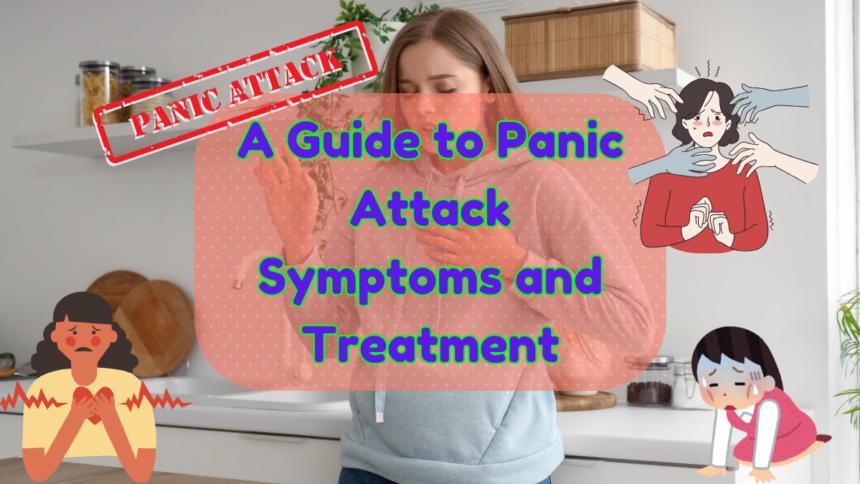
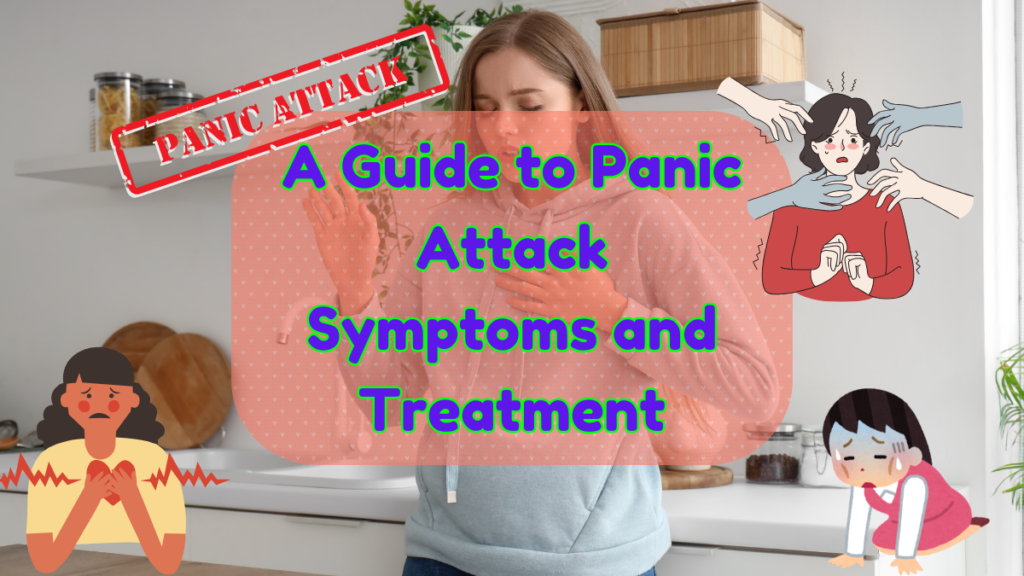
Standing in the Eye of the Storm: A Guide to Panic Attack Symptoms and Treatment
It starts with a flicker—a slight tightness in the chest or a sudden, unexplained sense of dread. Within seconds, the flicker becomes a forest fire. Your heart hammers against your ribs like a trapped bird, your breath grows shallow, and the world around you begins to feel distorted or distant. For many, the most terrifying thought isn’t the symptoms themselves, but the belief that something catastrophic is happening, like a heart attack or a total loss of control.
If you have ever experienced this, you know that a panic attack is one of the most intense and lonely experiences a human can have. But here is the truth you need to hold onto: even when it feels like your world is ending, your body is actually trying to protect you. It’s just doing it at the wrong time.
In this post, we’re going to dive deep into the essential Tips to Panic Attack Symptoms and Treatment, helping you decode the physical signals and providing a toolkit to bring yourself back to solid ground.
What is a Panic Attack? The Biological “False Alarm”
A panic attack is a sudden episode of intense fear that triggers severe physical reactions when there is no real danger or apparent cause. Biologically, your brain’s amygdala—the almond-shaped security guard of the mind—has detected a threat and hit the “Panic” button.
This floods your system with adrenaline, preparing you to fight a predator or run for your life. In our modern world, this response can be triggered by chronic stress, caffeine, or even a sudden change in body temperature. When this happens without a clear external threat, we call it a panic attack.
Recognizing the Signs: Common Panic Attack Symptoms
One of the most important Tips to Panic Attack Symptoms and Treatment is learning to identify the symptoms early. When you can name what is happening, you strip the experience of some of its power.
The Physical Impact
- Heart Palpitations: A racing or pounding heart that feels like it’s “skipping” beats.
- Shortness of Breath: Feeling like you can’t get enough air or are suffocating.
- Chest Pain: Sharp or dull pain that often leads people to worry about cardiac issues.
- Trembling or Shaking: Visible shaking in the hands or a “quaking” feeling inside the body.
- Sweating and Chills: Sudden hot flashes followed by cold shivers.
- Nausea: A “knot” in the stomach or a feeling of lightheadedness.
The Psychological Impact
- Fear of Dying: An overwhelming sense that the end is near.
- Derealization: Feeling as though your surroundings aren’t real, or you are “watching” yourself from outside your body.
- Fear of Losing Control: The terrifying thought that you might “go crazy” or do something embarrassing.
The Road to Recovery: Modern Panic Attack Treatment
The good news is that panic attacks are highly treatable. You aren’t “broken,” and you don’t have to live in fear of the next episode. Effective treatment usually involves a combination of professional guidance and lifestyle shifts.
Cognitive Behavioral Therapy (CBT)
CBT is the most effective form of professional treatment. It works by helping you understand that the physical sensations of panic, while uncomfortable, are not dangerous. Through “exposure therapy,” a therapist helps you slowly re-experience the sensations of panic in a safe environment, teaching your brain that the “alarm” is false.
Medication
In some cases, a healthcare provider may prescribe medications like SSRIs (Selective Serotonin Reuptake Inhibitors) to help stabilize the brain’s chemistry. These can be particularly helpful if panic attacks are frequent or have led to Agoraphobia (fear of leaving safe places).
The Role of Technology in Holistic Care
In the modern landscape of mental health, we are seeing a shift toward more integrated, holistic practices. Digital tools and mobile applications are now being used to enhance patient care and improve follow-ups. For example, apps that allow you to track your triggers or practice guided breathing can act as a “therapist in your pocket,” providing support between clinical visits and helping you maintain your progress.
In-the-Moment Tips: How to Stop a Panic Attack
When you are in the middle of a surge, you need practical tools. Here are three proven Tips to Panic Attack Symptoms and Treatment that you can use anywhere:
- Acknowledge and Name It: Instead of fighting the feeling, say to yourself, “I am having a panic attack. It is uncomfortable, but I am safe, and it will pass.” Fighting the panic only adds more adrenaline to the fire.
- The 5-4-3-2-1 Grounding Method: Force your brain to switch from “internal fear” to “external reality.” Name 5 things you see, 4 you can touch, 3 you hear, 2 you smell, and 1 you can taste.
- Find a Focal Point: Pick one object (like a clock or a picture on the wall) and describe every detail about it to yourself—the colors, the shadows, the texture. This helps redirect your cognitive energy away from the internal symptoms.
Conclusion: You Are More Powerful Than Your Panic
Panic attacks thrive on the fear of the unknown. By educating yourself on Panic Attack Symptoms and Treatment, you are already beginning to dismantle the cycle of fear. Remember, a panic attack is like a wave—it peaks, it feels overwhelming, but it always recedes.
Be patient with yourself. Recovery is a journey of retraining your nervous system to feel safe again. Whether you choose therapy, lifestyle changes, or digital wellness tools, know that peace is possible.
What is your “go-to” strategy for staying calm during a stressful moment? Share your thoughts in the comments below—your story might be exactly what someone else needs to hear today. Don’t forget to subscribe to our newsletter for more insights on mental health and holistic living.