









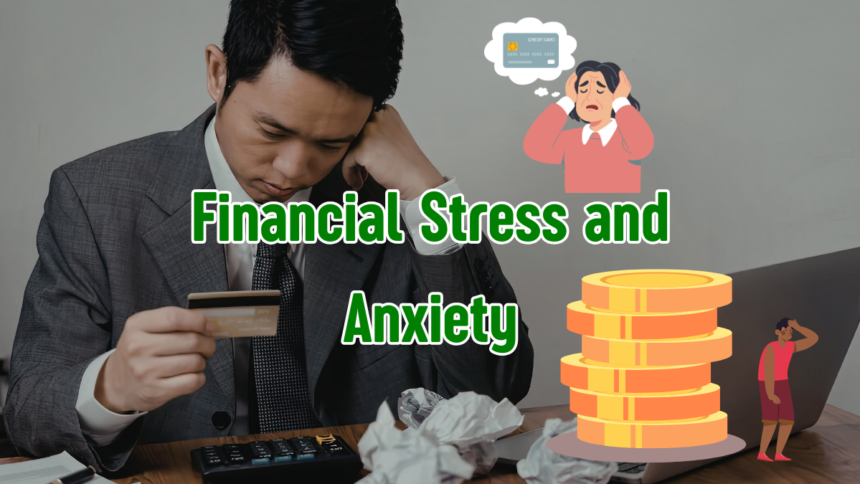
Financial Stress and Anxiety
We’ve all experienced that specific, cold jolt of electricity that runs through the body when a surprise bill hits the inbox. Or the way your stomach performs a slow, heavy somersault when you realize you’ve spent more this month than you intended. For many, money isn’t just a medium of exchange; it is a primary source of “survival noise” that never quite shuts off.
In a world that feels increasingly expensive and unpredictable, Financial Stress and anxiety have become a near-universal human experience. It isn’t just about the numbers in your account; it’s about what those numbers represent: safety, freedom, and the ability to care for the people we love. When that sense of safety feels threatened, our brains don’t just see a spreadsheet—they see a predator.
In this guide, we’re going to look at why money triggers our deepest fears and provide actionable Tips to “Financial Stress and anxiety” management to help you stop the spiral and start building a more grounded financial life.
1. The Survival Brain: Why Money Feels Like Life or Death
To understand why we get so worked up over a budget, we have to look at our evolutionary history. Thousands of years ago, “resources” meant food, shelter, and warmth. If you ran out of resources, you didn’t survive the winter.
Today, money is the ultimate proxy for those resources. When we experience Financial Stress and anxiety, our amygdala (the brain’s alarm system) treats a low bank balance with the same intensity it would treat a physical threat. This is known as “Scarcity Mindset.”
When we are in this state, our IQ can actually drop temporarily. We become less creative, more impulsive, and worse at long-term planning. It’s a cruel irony: when we need our best thinking to solve financial problems, our brain is often too busy panicked to provide it.
2. The Physical Toll of Economic Pressure
Financial Stress and anxiety don’t just stay in your head. They manifest in the body in very real ways:
- Sleep Disturbances: Tossing and turning while mentally calculating interest rates.
- Muscle Tension: That permanent knot in your shoulders or the clenching of your jaw.
- Digestive Issues: The “nervous stomach” that flares up whenever money is the topic of conversation.
- Avoidance: Letting mail pile up unopened because looking at it feels physically painful.
3. In-Depth Analysis: Practical Tips to “Financial Stress and Anxiety”
If you feel like your financial situation is holding your mental health hostage, it’s time to change the power dynamic. Here are the most effective Tips to “Financial Stress and anxiety” management to help you regain control:
Face the “Monster” (Gently)
The single biggest driver of anxiety is avoidance. The more we ignore our bank statements, the larger the “monster” grows in our imagination.
- The Tip: Set a “Money Date” with yourself. Give it 20 minutes, once a week. Put on your favorite music, grab a coffee, and simply look at the numbers. Don’t judge them; just observe them. By making this a routine, you de-sensitize your brain to the fear.
The “Values-Based” Budget
Traditional budgeting feels like a diet—it’s all about what you can’t do. This only increases stress.
- The Tip: Instead of focusing on restriction, focus on your values. One of the best Tips to “Financial Stress and anxiety” reduction is to look at your spending and ask: “Does this purchase actually bring me joy or security?” When you spend in alignment with your values, the guilt associated with money begins to fade.
Automate Your “Safety Signal”
Decision fatigue is real. Every time you have to manually move money or decide which bill to pay, you use up mental energy that could be spent on your well-being.
- The Tip: Automate whatever you can—savings, bill payments, or even a small $5 weekly transfer to an “emergency” fund. Automation removes the friction of choice and provides a consistent “safety signal” to your nervous system.
4. The 2026 Landscape: Digital Currency and Modern Pressures
In 2026, we are dealing with a whole new set of financial stressors. From the volatility of digital assets to the “lifestyle creep” fueled by social media influencers, the pressure to “keep up” is at an all-time high.
Modern patient care now recognizes that you cannot treat chronic anxiety without addressing the social and economic determinants of health. This is why more mental health professionals are adopting a holistic practice that includes “Financial Therapy.” This isn’t about accounting; it’s about untangling the emotional stories we tell ourselves about money—stories like “I’ll never have enough” or “My worth is tied to my income.”
5. Building Authority: When to Call for Reinforcements
While these Tips to “Financial Stress and anxiety” can help you manage daily worry, some situations require professional intervention. According to the American Psychological Association (APA), financial stress is a top cause of relationship strain and depression.
If you find yourself using credit to pay for basics, or if money worries are leading to thoughts of hopelessness, it’s time to seek support. This could mean:
- Credit Counseling: Non-profit organizations that help you restructure debt without judgment.
- Financial Therapy: Specialists who help you bridge the gap between your bank account and your nervous system.
- Improving Follow-ups: Stay consistent with your professional help. Just as wealth is built through compound interest, mental health is built through small, consistent check-ins.
Conclusion: Reclaiming Your Worth
Money is a tool, not a master. Financial Stress and anxiety are incredibly convincing liars; they want you to believe that your current situation is your permanent identity. But you are more than your credit score, and your value as a human being is not a fluctuating market price.
By applying these Tips to “Financial Stress and anxiety”—facing the numbers, automating safety, and focusing on values—you can start to lower the volume on the survival noise. You deserve to live a life where you can breathe deeply, even on the days you have to pay the bills.
What is the one small financial task you’ve been avoiding lately? Could you commit to just five minutes of looking at it today? Leave a comment below and let us know your “win”—no matter how small. For more weekly insights on mastering the gut-brain-wallet connection, subscribe to our newsletter today.