









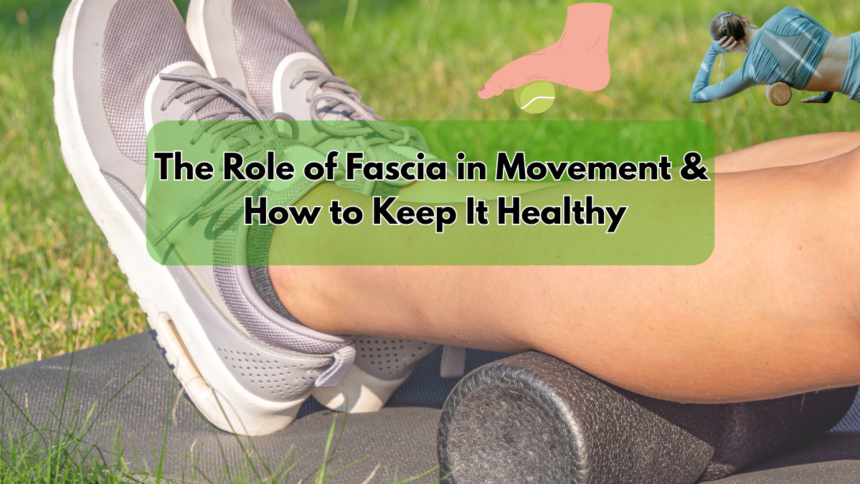
The Role of Fascia in Movement & How to Keep It Healthy
Have you ever woken up feeling stiff, as if your muscles were bound by invisible ropes? Or maybe you’ve noticed that no matter how much you stretch, certain areas just don’t loosen up? The culprit might not be your muscles—it could be your fascia, the often-overlooked connective tissue that plays a crucial role in movement, flexibility, and overall mobility.
In this post, we’ll dive deep into what fascia is, how it affects your movement, and most importantly, how to keep it healthy so you can move with ease and avoid pain.
What Is Fascia? The Body’s Hidden Web

Fascia is a thin, fibrous network of connective tissue that wraps around every muscle, bone, nerve, and organ in your body. Think of it like a biological cling wrap—it holds everything together while allowing smooth, gliding movements.
For years, fascia was dismissed as just “packing material,” but recent research has revealed its critical role in:
- Supporting posture and alignment
- Transmitting force during movement (like a spring that stores and releases energy)
- Providing sensory feedback (helping you sense position and movement)
- Protecting muscles and joints from excessive strain
When fascia is healthy, it’s flexible, hydrated, and elastic—but when it’s tight or damaged, it can lead to stiffness, pain, and restricted movement.
How Fascia Impacts Movement
1. Fascia & Flexibility
Ever notice how some people seem naturally flexible while others struggle to touch their toes? A big part of that comes down to fascial elasticity. Unlike muscles, which can contract and relax, fascia changes more slowly—it adapts to how you move (or don’t move).
- Sedentary lifestyles cause fascia to stiffen and stick together (like dried glue).
- Repetitive movements (like sitting at a desk or running without variation) can create adhesions, leading to restricted motion.
2. Fascia & Strength
Fascia isn’t just passive tissue—it stores and releases elastic energy, helping with explosive movements like jumping or sprinting. Well-trained fascia can improve athletic performance by making movements more efficient.
3. Fascia & Pain
Tight or knotted fascia can:
- Cause chronic pain (like lower back stiffness or plantar fasciitis)
- Create referred pain (discomfort in one area due to tension elsewhere)
- Limit recovery after injuries
Video Credits
How to Keep Your Fascia Healthy
Now that we know how important fascia is, here’s how to maintain healthy fascia and prevent problems:
1. Stay Hydrated
Fascia is mostly water-based, and dehydration makes it stiff and brittle. Drink plenty of water and eat hydrating foods (like cucumbers, watermelon, and leafy greens).
2. Move Frequently & Variably
- Avoid long periods of sitting—fascia adapts to your habits, so mix up your movements.
- Try dynamic stretching (like yoga or tai chi) instead of just static holds.
- Incorporate multi-directional exercises (lunges with twists, crawling patterns) to keep fascia supple.
3. Foam Rolling & Self-Myofascial Release
Using a foam roller, massage ball, or percussion gun can help:
- Break up adhesions (those “knots” you feel)
- Improve blood flow to the tissue
- Restore mobility in tight areas
Pro Tip: Roll slowly—fascia responds better to sustained pressure than quick, aggressive movements.
4. Stretch (But Do It Right)
- Focus on fascial chains (long, continuous stretches rather than isolated muscles).
- Try PNF stretching (contract-relax techniques) to improve elasticity.
5. Heat Therapy & Massage
- Warm baths, saunas, or heating pads help relax fascial tension.
- Professional myofascial release therapy can address deep restrictions.
6. Nutrition for Fascial Health
- Collagen-rich foods (bone broth, fish, eggs) support connective tissue repair.
- Anti-inflammatory foods (turmeric, ginger, omega-3s) reduce stiffness.
Final Thoughts: Listen to Your Fascia
Fascia is the unsung hero of movement—when it’s healthy, you move freely; when it’s neglected, it can hold you back. By staying hydrated, moving dynamically, and incorporating fascial release techniques, you can keep this vital tissue in top shape.
Your turn: Have you noticed fascial tightness affecting your movement? What strategies have worked for you? Share your thoughts in the comments!
And if you found this post helpful, share it with a friend who might be struggling with stiffness—they’ll thank you later!



