





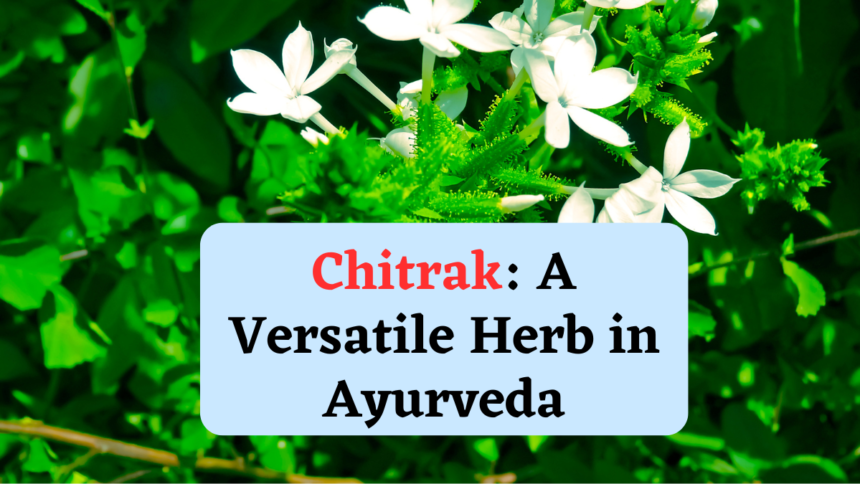
Chitrak: A Versatile Herb in Ayurveda
Introduction
Chitrak: A Versatile Herb in Ayurveda, also known as Plumbago zeylanica, is a medicinal herb with a long history of use in Ayurveda, the traditional Indian system of medicine. People believe this flowering plant, with its vibrant blooms, possesses a range of therapeutic properties that can address various health concerns, Chitrak: A Versatile Herb in Ayurveda.

Ayurvedic Properties of Chitrak
According to Ayurveda, Chitrak has specific qualities that influence the body’s three doshas: Vata, Pitta, and Kapha. Its inherent characteristics are described as:
- Laghu (Light): Enhances lightness and ease within the body.
- Ruksha (Dry): Contributes to a drying effect, potentially beneficial for excess Kapha.
- Tikshna (Sharp): Possesses piercing or scraping qualities, which can be helpful in clearing congestion.
Traditional Uses of Chitrak
Chitrak finds application in various Ayurvedic formulations. The root, considered the most potent part of the plant, is commonly used for:
- Digestive Issues: Chitrak’s deepan (appetizing) and pachan (digestive) properties are believed to aid digestion, addressing problems like indigestion, constipation, and diarrhea.
- Respiratory Problems: Its Kapha-balancing nature is thought to be beneficial in managing coughs, colds, and bronchitis.
- Skin Conditions: Chitrak’s potential antiseptic and blood purifying effects may be helpful in treating skin diseases.
- Other Uses: Ayurvedic practitioners may also recommend Chitrak for rheumatism, jaundice, urinary stones, and even as a detoxicant.
Important Considerations
While Chitrak offers a variety of potential benefits, it’s crucial to remember:
- Consult an Ayurvedic Doctor: Self-medication with Chitrak is not recommended. Due to its potency, it’s essential to consult a qualified Ayurvedic doctor to determine the appropriate dosage and form for your specific needs.
- Potential Side Effects: Chitrak can have side effects like irritation, vomiting, or diarrhea in high doses. Pregnant and lactating women should avoid it due to its stimulating properties.
Conclusion
Chitrak is a fascinating herb with a rich history in Ayurveda. Its diverse range of applications makes it a valuable tool in an Ayurvedic practitioner’s arsenal. However, responsible use and professional guidance are key to reaping its potential benefits while avoiding any adverse effects.
Chitrak (Plumbago zeylanica) in Ayurveda: FAQs
What is Chitrak?
Chitrak, also known as Plumbago zeylanica, is a flowering herb used in Ayurveda for its medicinal properties.
What are the Ayurvedic properties of Chitrak?
Ayurveda considers Chitrak to be “Laghu” (light), “Ruksha” (dry), and “Tikshna” (sharp), influencing the Vata, Pitta, and Kapha doshas.
What are the traditional uses of Chitrak?
- Digestive Issues: May aid digestion, constipation, and diarrhea.
- Respiratory Problems: May help manage coughs, colds, and bronchitis.
- Skin Conditions: May be helpful for skin diseases due to its potential antiseptic and blood purifying properties.
- Other Uses: Consult an Ayurvedic doctor to use this for rheumatism, jaundice, urinary stones, and as a detoxicant.
What are some important considerations before using Chitrak?
- Consult an Ayurvedic Doctor: Chitrak is potent and requires professional guidance for dosage and form.
- Potential Side Effects: High doses may cause irritation, vomiting, or diarrhea. Pregnant and lactating women should avoid it.
Is Chitrak safe for everyone?
No, Chitrak is not safe for everyone. Pregnant and lactating women, and those with specific health conditions, should avoid it. Consult an Ayurvedic doctor for personalized advice.
Where can I find Chitrak?
Chitrak is an Ayurvedic herb and may be available at some health stores or from specialized Ayurvedic practitioners. However, due to its potency, it’s best to consult a doctor before purchasing.