









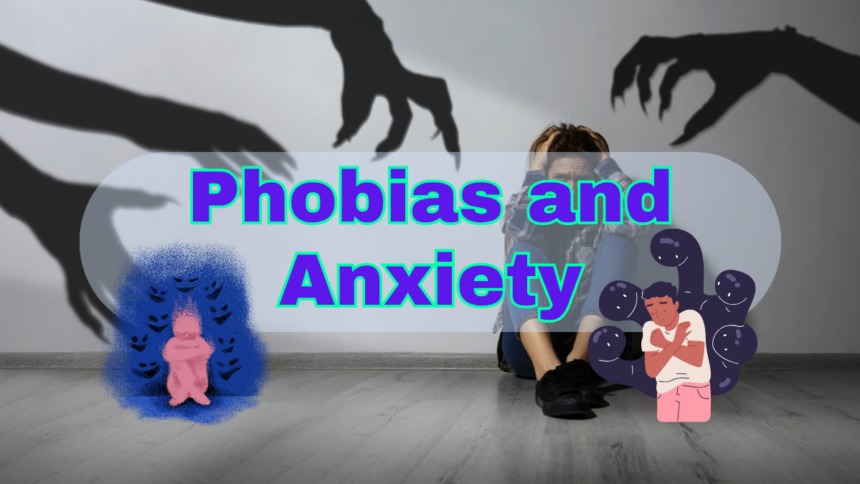
Phobias and Anxiety
Imagine you’re walking down a quiet street, and a small dog on a leash yaps at you. For most, it’s a momentary startle—a quick blip on the radar before returning to thoughts of lunch or an upcoming meeting. But for someone living with a specific phobia, that tiny bark can trigger a full-scale biological “red alert.” The heart races, the palms sweat, and the only thought in the brain is escape.
Fear is a natural, healthy response to danger. It’s the reason our ancestors didn’t try to pet saber-toothed tigers. However, when fear becomes detached from actual danger and starts to dictate where you can go, what you can do, and how you live your life, it moves into the realm of Phobias and Anxiety.
If you’ve ever felt like your world is shrinking because of a specific fear—whether it’s heights, spiders, flying, or social situations—you aren’t alone. Let’s pull back the curtain on how these fears work and look at grounded, actionable Tips to Phobias and Anxiety to help you reclaim your territory.
Fear vs. Phobia: What’s the Difference?
It’s common to say, “I’m phobic of spiders,” but there is a clinical distinction between being afraid and having a phobia.
- Fear: You see a spider, you feel a bit “icky,” and you ask someone else to move it. You might even do it yourself with a tissue.
- Phobia: You see a spider (or even a picture of one) and experience an intense, irrational desire to flee. You might avoid entering your basement for weeks because you saw a web there once.
A phobia is essentially an “anxiety disorder” focused on a specific object or situation. According to the Mayo Clinic, phobias involve a persistent, unrealistic fear that interferes with your daily functioning. When you spend significant energy avoiding the “trigger,” you are in the cycle of Phobias and Anxiety.
The Anatomy of an Irrational Fear
Why does the brain do this? It usually comes down to a hyper-reactive amygdala—the almond-sized part of your brain that processes emotions and survival instincts.
limbic system. Cross section of the human brain
When you have a phobia, your amygdala has “tagged” a specific item as a life-threatening danger. Even if your logical prefrontal cortex knows that a ladybug can’t hurt you, the amygdala has already sent the signal to your adrenal glands to dump stress hormones into your blood. This leads to the physical symptoms we often associate with panic:
- Shortness of breath
- Trembling or shaking
- A feeling of impending doom
- Nausea or “jelly legs”
Essential Tips to “Phobias and Anxiety” Management
The good news is that the brain is plastic—it can be retrained. You don’t have to be a prisoner to your triggers forever. Here are the most effective Tips to Phobias and Anxiety support.
1. Exposure Therapy: The Gold Standard
The most common reaction to a phobia is avoidance. Unfortunately, avoidance tells your brain, “We only survived because we ran away,” which reinforces the fear. Exposure therapy (or systematic desensitization) involves slowly and safely facing the fear.
- The Practice: If you fear dogs, you might start by looking at a cartoon of a dog. Then a photo. Then a video. Then watching a dog through a window. Slowly, your brain learns that the “threat” doesn’t lead to a catastrophe.
2. Cognitive Reframing
Our fears are built on “faulty logic.” We tell ourselves stories like, “If I get on that elevator, the cable will snap.”
- The Practice: Challenge the narrative. Research the actual statistics (for example, elevators are statistically one of the safest modes of transport). Replace the “What-if” with “What is.” Instead of “What if I fall?” try “I am standing on a solid floor, and there is a railing.”
3. The “Biological Buffer”
General anxiety often lowers the “gate” for phobias. When you are already stressed, tired, or running low on essential nutrients, your phobia feels much more intense.
- The Practice: Supporting your nervous system with Magnesium and maintaining steady blood sugar levels can help prevent the “spike” of a panic response. When your baseline anxiety is lower, you have more “mental bandwidth” to deal with your specific phobia.
4. Grounding and Breathwork
When you are in the middle of a phobic response, your body is in “fast-forward.” You need to hit the “manual override.”
- The Practice: Use Box Breathing (inhale 4, hold 4, exhale 4, hold 4). This physically forces the heart rate down and interrupts the panic signal being sent to the brain.
Common Questions and Concerns
“Can I ever really be cured?”
“Cured” is a strong word, but “managed” is absolutely possible. Most people find that through consistent work, the phobia moves from being a “life-altering terror” to a “minor nuisance.” According to the NIMH, about 12.5% of U.S. adults will experience a specific phobia at some point, and many successfully overcome them.
“Why did this start now?”
Phobias can develop after a traumatic event, but they can also appear out of nowhere during times of high generalized stress. If your “stress bucket” is already full, your brain might latch onto a specific fear as a way to “organize” that anxiety.
Summary of Phobia Support Strategies
| Strategy | Goal | How it Works |
| Exposure | Habituation | Gradually teaches the brain the trigger isn’t fatal. |
| CBT | Logical Reframing | Challenges irrational “What-if” stories. |
| Grounding | Immediate Relief | Uses sensory input to pull you out of panic. |
| Breathwork | Physical Calm | Manually slows the heart rate and cortisol levels. |
Conclusion: Reclaiming Your Map
Living with Phobias and Anxiety can make your world feel like it’s filled with “No-Go” zones. You avoid certain parks, certain flights, or certain social circles. But every time you successfully navigate a trigger—even in a small way—you are reclaiming a piece of your map.
The journey to a “fear-less” life isn’t about the absence of fear; it’s about the presence of courage and tools. By applying these Tips to Phobias and Anxiety, you’re telling your amygdala that you are the one in charge. You’ve got the toolkit, the logic, and the breath to handle whatever comes your way.
Take the Next Step
- Subscribe to our newsletter for more in-depth guides on mental resilience, holistic health, and evidence-based recovery.
- Leave a comment: What is one “small win” you’ve had against a fear recently?
- Share this article: If you know someone who has been feeling “stuck” lately, send this their way—it might be the nudge they need.